
“He who puts security before liberty deserves neither.” –Dennis Edney Q.C. quoting Benjamin Franklin
Last week Dennis Edney Q.C. delivered the 2018 Milvain Lecture at the University of Calgary. His topic was The Rule of Law in an Age of Fear and his defence of Omar Khadr.
Edney discussed the dangerous rise of populist politicians who exploit fear and bigotry to erode the rule of law and destabilize democracy in the hope of replacing it with an autocracy. A frightened population will hasten the erosion of democracy by accepting drastic measures that curtail human rights and freedoms in the “interests of national security”.
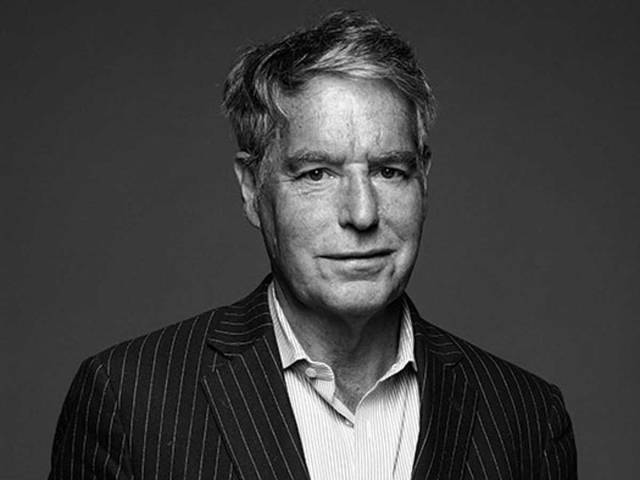
Dennis Edney Q.C.
Edney urged his audience to reject the decline of democracy by treating each other humanely, as individuals rather than faceless members of an amorphous religious group.
Which brings us to Edney’s 15-year battle to get Omar Khadr out of Guantanamo Bay.
The Khadr case
The Khadr case is a classic test of the rule of law.
Canadians who don’t understand or respect the rule of law think Khadr is a terrorist who deserves to rot in Guantanamo; Canadians who respect the rule of law see Khadr as a Canadian whose Charter rights were violated by the Canadian government.
Omar Khadr, a Canadian citizen, was 10 when his father took him to the Middle East. Some news reports say Khadr’s father was a terrorist but Edney has never found any evidence to support this allegation.
Khadr was 15 when he was captured in a firefight at a suspected al-Qaida compound. An American soldier was killed by a grenade, Khadr was seriously wounded. Edney says Khadr was “the last man standing” after the battle and was taken to Guantanamo Bay where he was put into solitary confinement and interrogated every three or four days for years.
Edney describes Guantanamo as an evil lawless place where 1000 Muslim men and boys were kept in wire cages and freezing cells. They had no access to lawyers, due process or judicial oversight. The rule of law did not exist at Guantanamo.
And yet Canada did not object to its creation, remained silent when a Canadian was incarcerated there and repeatedly refused to ask the Americans to send Khadr back to Canada.
Dennis Edney Q.C.
Edney’s campaign to repatriate Khadr started the way all political activism starts, with letters to the federal government and requests for meetings with Edney’s MP, Anne McLellan. His letters and meeting requests went unanswered.
Edney then asked the Khadr family for permission to bring an application on Khadr’s behalf. That kicked off a round of court applications and visits to Guantanamo that spanned 15 years, drained Edney’s financial resources, and put a significant strain on his professional and personal life.
But he persisted, despite being saddled with American military lawyers who’d never run a trial or were too busy frolicking on the beach to show up on time for a hearing. Edney didn’t protest when he was escorted to Khadr’s cell by 12 soldiers who were assigned to “protect” him. He didn’t fuss when the US government diverted his flight to Florida and interrogated him for a day about his dealings with Khadr. He knew if he caused trouble he’d never be allowed back into Guantanamo.
The Rule of Law
The turning point came in 2008 when Prime Minister Harper said he would not request Khadr’s repatriation. He was satisfied with US assurances that Khadr was receiving “good treatment”.
Khadr was in solitary confinement, chained to the floor in a freezing cell and subjected to interrogation designed to make prisoners “more compliant.” Edney filed an application arguing the Canadian government had violated Khadr’s Charter rights.
The application worked its way through the appeal process and landed in the Supreme Court of Canada which ruled that agents from CSIS and DFAIT (the Department of Foreign Affairs and International Trade) had indeed violated Khadr’s Charter rights by interrogating a youth without access to counsel who’d been subjected to sleep deprivation (also known as the “frequent flyer program”) knowing full well that Khadr’s statements would be shared with his American captors.
The SCC did not order Harper to request repatriation because it did not want to interfere with the Crown prerogative over foreign affairs. Instead it issued a declaration stating the government had violated “the most basic Canadian standards about the treatment of detained youth suspects” and left the remedy up to the government’s discretion.
Eventually Edney negotiated a deal (which was supported by Hillary Clinton) whereby the US government would allow Khadr to return to Canada if he pleaded guilty to five war-crime charges and received an 8-year sentence.
Khadr returned to Canada in 2015 and was released on bail into Edney’s custody.
Based on the SCC’s ruling that the government had violated Khadr’s Charter rights, Khadr sued the federal government for $20 million. The Liberal government settled the suit for $10.5 million and apologised to Khadr.
Courage
Edney says the biggest threat to democracy comes from within. Citizens don’t understand the origin of their rights or are misinformed or too apathetic to demand their rights be protected. They’re prepared to trade away their rights in return for the illusion of security.
Instead of giving way to fear and bigotry Edney called for humanity and respect.
He ended his speech with this:
“Courage doesn’t always roar–sometimes it’s just a little voice at the end of the day that says, “I’ll try again tomorrow.”







 Susan on the Soapbox