Smith’s 11 Minute Phone Call with the Pastor

“That’s an astounding thing to say from the Premier of the province.” – Law prof Eric Adams

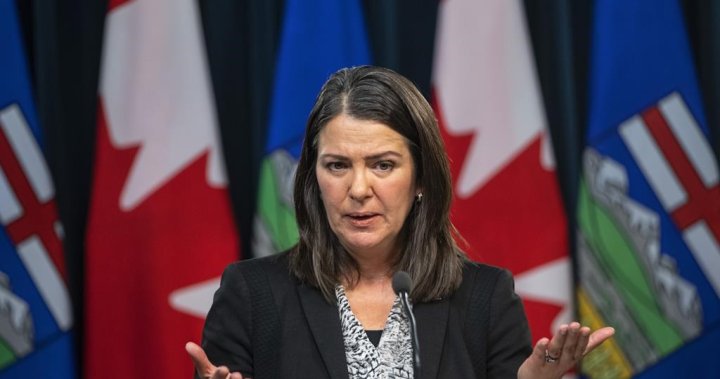
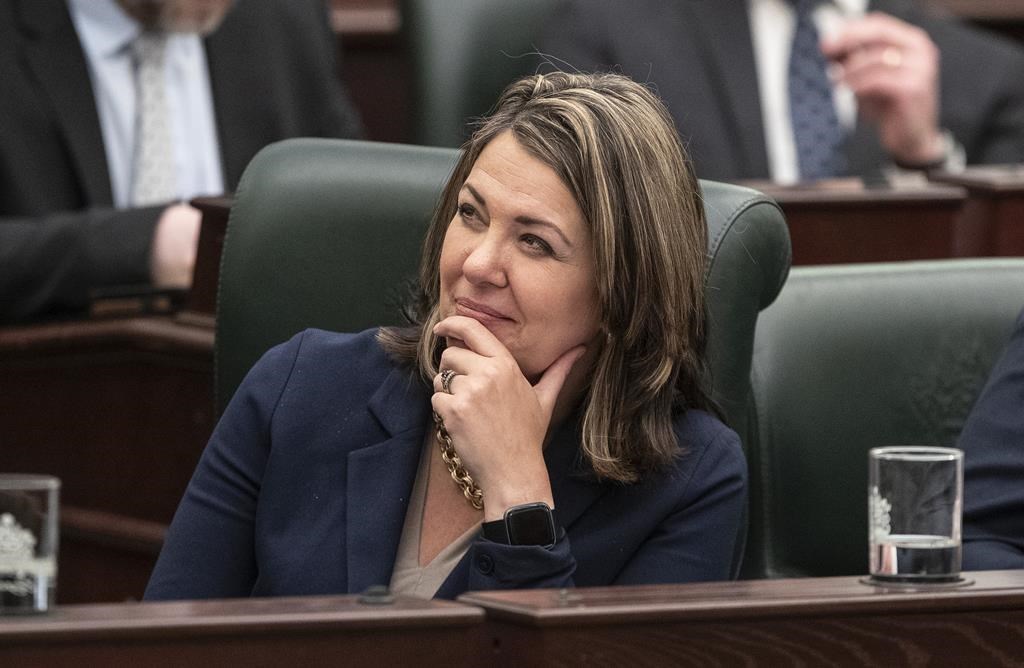
On March 29 Danielle Smith issued a press statement to pre-empt a CBC story about a conversation she had with street-pastor Artur Pawlowski. People thought she was bracing for renewed accusations that she did indeed talk to Crown prosecutors about charges brought for violations of covid restrictions.

Well, that’s the least of Smith’s problems.   
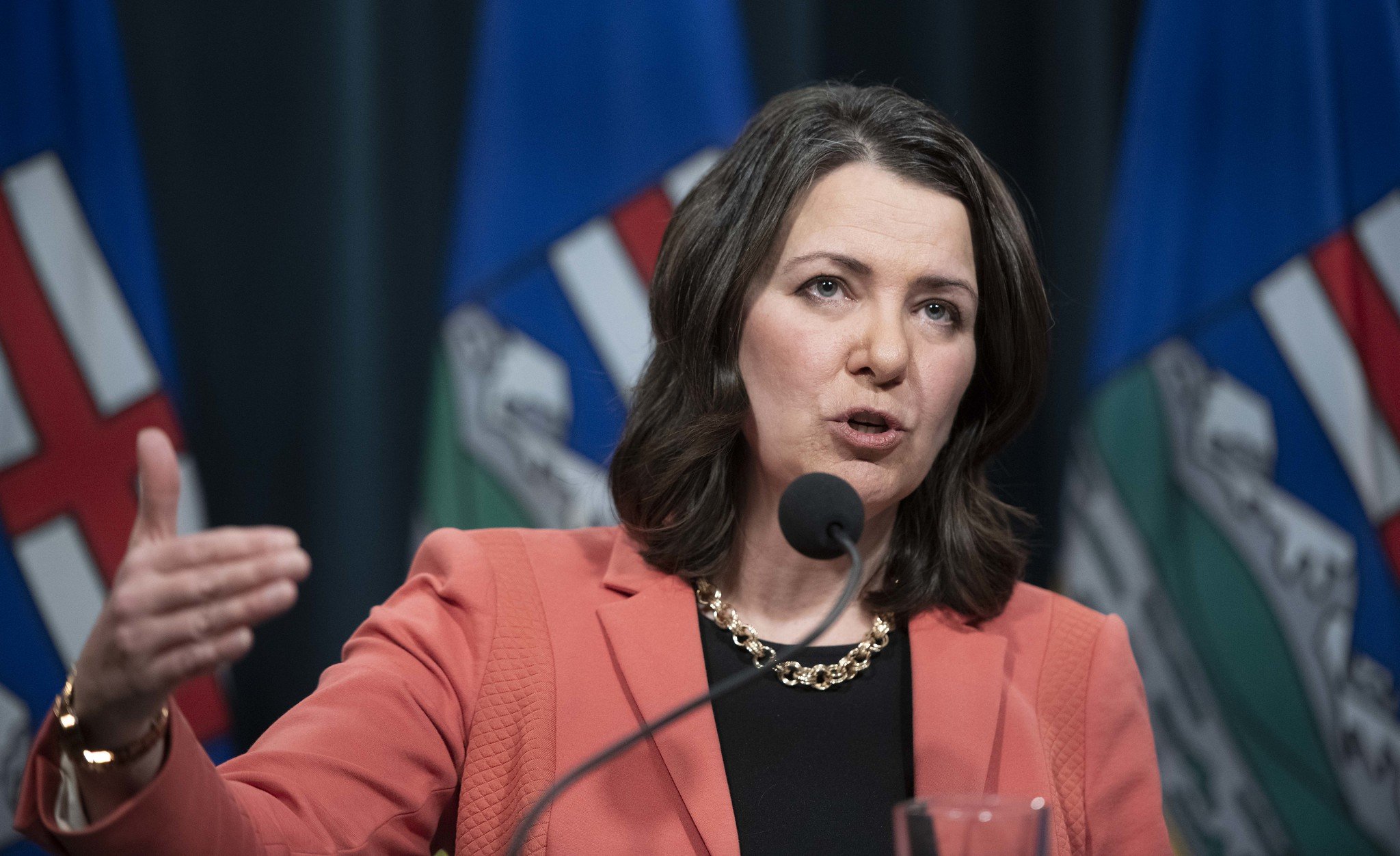
Danielle Smith

The Statement

In her statement Smith said:

“Later today, in an effort to continue their campaign of defamatory attacks against me and my office staff, the CBC intends to release an article about a conversation I had with an individual named Artur Pawlowski. 

Artur Pawlowski is not your run of the mill pastor. He’s an anti-abortion, anti-gay, anti-covid vaccines/restrictions street-pastor facing criminal charges relating to his involvement in the Coutts border blockade.

Smith should never have taken the call.

Not only did Smith take it, she was sympathetic, almost deferential, throughout the entire conversation.

“During a live press conference on Feb. 9, 2023, I referenced this very conversation where Mr. Pawlowski expressed his frustration to me with pandemic-related public health orders.

True, but I don’t recall Smith saying that Dr Dennis Modry* introduced Pawlowski by saying “Artur has a problem that you may be able to help out with.” Oh really, how, by interfering with the administration of justice?  

“This should come as no shock since I spent a lot of time before and during my leadership campaign talking to hundreds of Albertans about COVID-related public health orders and violations. 

The fact Smith spent a lot of time before and during her leadership campaign talking about this is irrelevant because this specific conversation occurred after she became premier not before.  

“As I have previously stated, I had my staff work with the Ministry of Justice to determine if anything could be done to grant amnesty for those charged with non-violent, non-firearms COVID-related charges. 

True, apparently the Dept of Justice was so concerned about Smith’s promise of amnesty that they “proactively” put together a PowerPoint presentation on the topic to show her she did not have the powers of an American president or governor or even a Canadian governor general and could not grant anyone amnesty.

She also learned that there were only two questions she could ask with respect to prosecutions: (1) is the prosecution in the public interest and (2) is there a likelihood of conviction.

“As also indicated previously in multiple interviews, I received a legal brief from the Ministry of Justice recommending against pursuing amnesty further, as several matters involving this issue were and still are before the courts. I have followed that advice.  

What the legal brief has to do with the matters before the courts is beyond me.

But while we’re on the topic of legal advice. Pawlowski and Modry told Smith that Leighton Grey**, a criminal lawyer, told them about a court decision on masking that would give Smith the power to drop these prosecutions immediately without taking “a political hit.”

Smith agreed to get her right hand man, Rob Anderson, to follow up Grey’s advice. This despite the fact Smith has an army of lawyers in Justice telling her she needs to stay out of specific cases. Furthermore if Grey’s argument had merit one would expect Pawlowski’s own counsel to have raised it.  

“At no time have I spoken with the anyone from the Alberta Crown Prosecution Service, nor to my knowledge have any of my office’s staff. Allegations to the contrary are defamatory and will be dealt with accordingly.”

Fine, let’s assume Smith was “imprecise” when she told Pawlowski and Modry that she spoke to “our prosecutors…almost weekly.”

Let’s talk about Smith response (precise? imprecise?) when Pawlowski complained that the prosecutor, on Justice Minister Shandro’s instructions, did a document dump that was costing him $150,000 to review.

She said she didn’t think the directive came from Shandro but she’d check. She also said she’d expressed her dissatisfaction about the document dump to the deputy minister. What did she say, smarten up, you’re running up the accused’s legal bills?

She agreed to circle back with Anderson on Pawlowski’s suggestion that she meet publicly and say its time to move forward, to end the “witch hunt.” Then raised the Trudeau SNC Lavalin case as something she needs to watch out for. Hello!?!

And Smith made the precise/imprecise comment she should really be worried about.  

She commiserated with Pawlowski and Modry about how frustrating it was to deal with a bunch of charges that were politically motivated but couldn’t be politically ended.  

As law prof Eric Adams puts it, in essence Smith, the head of government, is saying the system is corrupt. He and other law professors worry that Smith may have compromised the case.

Which brings us back to where we started.

What just happened?  

As premier, Smith had a conversation with Pawlowski who was awaiting trial on criminal charges in connection with the Coutts trucker blockade.

She made a number of statements including one that law prof Eric Adams says effectively claims “the system is corrupt.”

Smith’s conversation with Pawlowski was surreptitiously recorded.

The recording was posted on Pawlowski’s social media.

Law profs have said that Smith’s comment may have compromised the Crown’s case against Pawlowski.

Get the feeling someone’s been had here?

Get the feeling it’s Danielle Smith?

Get the feeling Albertans are in deep trouble with Smith as premier?

Damn right.

*Smith’s friend, Dr Dennis Modry, was the head of a pro-separatist group at the time,

*In June 2020 Grey resigned from a committee charged with recommending new judges after the  CBC asked about Grey comparing a new covid vaccine to Auschwitz tattoos and posted a video calling Black Lives Matter a “leftist lie” controlled by a Jewish philanthropist.

Posted in Crime and Justice, Danielle Smith, Law, Politics and Government | Tagged , , , , , | 101 Comments

A Simple Question (well, three simple questions)

Something is happening with Alberta’s anesthesiologists and it’s not clear what.

Last week, David Shepherd, NDP health critic, asked Jason Copping, the UCP health minister three simple questions:  

  • will surgeries in AHS publicly funded hospitals be postponed because AHS is redeploying anesthesiologists to for-profit chartered surgical facilities (CSF)?
  • has AHS given CSF guarantees to supply anesthesiologists?
  • will CSF do the simpler procedures for patients with fewer complicating factors (allowing them to bill for higher volumes) leaving the more complex surgeries to AHS  hospitals?

Mr Copping’s short answer was “no”.

Mr Copping

His long answer was a mishmash of words to the effect that:  

  • CSF are part of our publicly funded health care system, no different than going to your doctor or previous governments had done with CSF and  
  • AHS will continue to schedule surgeries with the most urgent and those waiting the longest going first, either at a hospital or a CSF whichever is most appropriate,

In other words: Nothing to see here folks, move along.

Really?

AHS signed four CSF contracts for orthopedic surgery since May 2021. The earlier contracts were for one to two year terms, renewable for 6 months. They did not compel AHS to deliver a minimum number of surgeries and could be terminated with relative ease.

The latest contract with Canadian Surgery Solutions was signed on Jan 1, 2023. It has a 6 year term, requires a minimum number of surgeries per year and has the most onerous termination clauses I have ever seen.

Complex cases not welcome

All four contracts state that patients (they’re called “clients”) must meet two criteria before they’re accepted for surgery.

Clients must: (1) provide informed consent and (2) be medically stable and show no evidence of any contraindications that may put the client at risk for surgery in the CSF.

In other words Mr Copping misspoke. The CSF is free to keep the simple, uncomplicated cases and reject the more complex cases.  

Has AHS guaranteed a supply of anesthesiologists?

Some CSF contracts do not obligate AHS to provide a minimum number of surgeries, so it stands to reason that AHS would not allocate more surgeries to CSF than its anesthesiologists could handle.

However, this is not the case with the Canadian Surgery Solutions Ltd. contract which stipulates a “volume floor” (defined as the minimum number of surgeries AHS must allocate per year).

If AHS doesn’t have enough spare anesthesiologists floating around, it would have to pull some out of the AHS public hospitals and put them into the CSF operating rooms so it would not be in breach of its “volume floor” contractual obligation.

AHS may not call that a guarantee, but it’s pretty damn close to one.   

So again Mr Copping was less than forthright.

Postponing AHS surgeries?

All the CSF contracts require the for-profit surgical facility to collaborate with AHS on staffing to ensure the pool of doctors and other health care professionals required to staff AHS hospitals is not “materially adversely impacted.”

If the CSF’s staffing needs materially adversely impact the AHS pool, the CSF must stop recruiting.

So far, so good, but…

AHS agreed to a minimum volume floor of surgeries in the Canadian Surgery Solutions contract in January 2023 when it knew full well that its pool of doctors, including anesthesiologists and other health professionals was stretched to the limit; to the point where Alberta is actively recruiting across Canada and the world to make up the shortfall.  

Perhaps Mr Copping can explain how AHS will redeploy staff out of its public hospitals to work at CSFs without having to resort to postponing and cancelling surgeries.   

Then there’s this

The Canadian Surgery Solutions contract and the Alberta Surgical Group – Heritage Valley contract appear to allow surgeries to proceed even if the physician administering the IV sedation is not an anesthesiologist as long as there are two staff members certified in Advanced Cardiac Life Support present in the surgical suite.

I’m not a doctor, maybe this is fine, all I know is this was not an option under the other CSF contracts which also specify that anesthesiologists administering a general anesthetic on children must be assisted by RNs experienced in venipuncture and airway management and that the recovery room nurse must be certified in Paediatric Advanced Life Support.

What’s all this going to cost?

Mr Copping said CSF were part of our publicly funded health care system, no different from going to your doctor.

That’s not quite right.

A CSF, unlike my doctor, will receive a service fee when it treats orthopedic patients…sorry I mean, clients.

The service fee under the four contracts that have been posted to the AHS website run to a minimum of $167,115,856.

That’s $167 million in tax dollars going directly out of our pockets into the pockets of the shareholders of these for-profit CSF companies.

So Mr Copping is wrong. AHS provides publicly funded and publicly delivered healthcare, whereas CSF provides publicly funded privately delivered healthcare.

There’s a $167 million difference.

Mr Copping says the Alberta’s government is committed to ensuring everyone has access to the care they need, where and when they need it.

What he hasn’t explained is how CSF will shorten wait times for Albertans with complex medical histories who do not meet the CSF’s criteria for admission.

Or why CSF will not negatively impact wait lists for all surgeries, not just orthopedic surgeries, in AHS not-for-profit public hospitals.

Over to you Mr Copping.

Posted in Alberta Health Care, General Health Care | Tagged , , , , | 70 Comments

Who Do You Trust?

In less than 70 days Albertans will decide whether Daniel Smith’s UCP or Rachel Notley’s NDP will form the next government.

Political junkies like me have pretty much made up our minds about who’s getting our vote, but we’re always interested in what others are thinking. which was why I tuned into a presentation by political scientist, Lisa Young, and journalist, Graham Thomson.     

Values:

Young provided a summary of the values of the two parties.   

The UCP value freedom (cue the UCP MLAs supporting the truckers and Smith’s pledge to make anti-vaxxers a protected class under the Human Rights Act), the private delivery of public services, staunch  support for oil and gas—after three long unproductive years the War Room is still up and running—and “Albertanism,” (Young described this as the belief that the Alberta government can meet Albertans’ needs better than the feds can). Not surprisingly the UCP’s relationship with the feds is marred by confrontation and performative measures like the Sovereignty Act, the referendum on equalization and numerous court challenges.   

Premier Smith

Young described the NDP as pragmatic. They’re deeply committed to the public delivery of public services, want legislated standards for healthcare, an increase in the number of primary care offices and publicly funded birth control. They support oil, gas and renewables, and value equity, diversity and inclusion (we saw this in Notley’s cabinet choices). While Notley opposed some federal energy policies, she’s more cooperative with the feds than the UCP.

Stranger than fiction

Graham Thomson reflected that in all his years covering Alberta politics it’s never been crazier than this. Kenney was ousted by the far right and moderate conservatives who felt he was too dictatorial and didn’t deliver the grassroots democracy he’d promised.

Smith who should have been un-electable after she crossed the floor to join the Prentice PCs (in return for the promise of cabinet posts that failed to materialize) made an amazing recovery.  

Thomson said this was because the other leadership candidates focused on May 2023—which one of them was best positioned to beat Notley in the next election; while Smith focused on Oct 2022, how could she get enough votes to win the leadership.

Smith succeeded (barely) by winning over the Free Alberta/Take Back Alberta crowd by promising her Sovereignty Act would rid Alberta of Ottawa once and for all. The fact it couldn’t deliver didn’t matter as long as enough voters thought it could.   

Thomson says Smith is using the “goodies for everyone” budget in the same way. It’s a fragile budget that will collapse if oil drops below $75 per barrel. But this doesn’t matter, the only purpose for the budget is to carry Smith to victory on May 29, 2023.  

The one thing Young and Thomson didn’t discuss was trust. Who do the voters trust to be the better leader? To do a better job for all Albertans?

Trust

Leaving aside the fact that Smith can’t open her mouth without sticking her foot in it, consider Smith’s election strategy to date. It’s a combination of:

  • Buying our votes with temporary programs that will literally expire right after the election.
  • Refusing to discuss issues Albertans care deeply about, such as:
    • losing their CPP (the government report on whether this is a good idea won’t be released until after the election, but a preview of what we can expect can be found in the Free Alberta Strategy coauthored by Smith’s right hand man, Rob Anderson
    • spending millions on a provincial tax collection agency (thereby forcing Albertans to file their taxes twice, but hey, what’s a little more red tape among friends)  spending millions on a provincial police force (despite the fact that most Albertans don’t want one) and
    • RStar, a $20 billion handout to deadbeat companies that refuse to obey the law and clean up their own mess.    
  • Gaslighting Albertans by:    
    • asserting AHS was responsible for the crisis in healthcare. Smith fired the AHS board and appointed an administrator who tinkered with the system for 90 days and declared the crisis had passed.    
    • ‘modernizing’ the education curriculum and ‘investing’ in education. And yet teachers don’t support the new curriculum, post secondary institutions are struggling and Calgary, the largest city in Alberta with 8000 more students attending school this fall will get one new school and one modernized school.
    • insisting Alberta has the best environmental and oil and gas regulations on the planet and the feds are wrong to interfere but turning a blind eye to unreported tailings leaks and resorting to bailouts like RStar to make oil and gas companies comply with the law.

It’s hard to trust a candidate who buys votes, hides their true agenda and gaslights the public. Nevertheless Smith is confident she’s got the rural vote and enough Calgary votes to win.

I’m not so sure.

This week I attended a fund raiser for Samir Kayandegat, the NDP candidate for Calgary-Elbow, and when I spotted a die-hard conservative in the room, I wondered whether Smith might be taking Calgary for granted.

Posted in Danielle Smith, Energy & Natural Resources, Politics and Government | Tagged , , | 71 Comments

The Reno

Ms Soapbox is on week six of an eight week renovation. The sad little room in the photo is what is left of her writing room. She’s taken to working in the basement wrapped in a blanket and her energy is flagging.

While this situation lends itself to all sorts of clever analogies of life in Alberta under the UCP, at this point Ms Soapbox is simply going to wish everyone a happy Sunday and go watch some golden statues get handed out to people she doesn’t know in movies she hasn’t seen.  

Talk to you next Sunday.

Susan  

PS Feel free to share you reno stories with me…as they say misery loves company.

Posted in Disasters, Humour, Uncategorized | Tagged , | 39 Comments

Budget ’23: The Same Old Razzle Dazzle (with sprinkles on top)*

I’m not sure what Trevor Tombe did that caused Danielle Smith to say he was becoming one of her favourite economists, but it certainly wasn’t this.

In a recent article about Budget 2023 Tombe said the budget moved Alberta into a “new fiscal reality where we are more reliant on resource revenues and more exposed to risks.”

More reliant on roller coaster resource revenues, more exposed to risks?

Not exactly a selling point for UCP politicians heading into the May election.

But then again, this is Danielle Smith’s pre-election budget, it’s got a little bit of this and a little bit of that to convince Albertans that she and the UCP deserve another four years in government.

Give ‘em the old hocus pocus*

Let’s look at what Finance Minister Toews said when he rolled out the budget on Feb 28:**

“Budget ’23 is about the future.”

No, it’s not. It’s mired in the past. It sticks with the non renewable revenue model we’ve had for decades and puts a paltry $1.8 billion (one-fifth of the amount Peter Lougheed would have set aside) in the Heritage Trust Fund.

If this is our future, we’re in big trouble, because every boom is followed by a bust and we still won’t have a rainy day fund to draw on.   

Finance Minister Toews

“It’s about doing more of what has worked these past four years.”

Really? What would that be? The UCP government’s prolonged and nasty attacks on those who provided healthcare and education (the two biggest spend areas in the budget) during the three years of the pandemic?

The UCP government’s sorry record at protecting the environment and First Nations and others from the devastating environmental impact of an under-regulated industry?

How about the cruel cuts to AISH and other social services in order to demonstrate fiscal prudence while at the same time cutting corporate taxes which made it even harder to balance the budget?

Over to you, Mr Toews, razzle dazzle us.    

[It’s about doing] more to champion Alberta’s incredible value proposition around the world.

Ah yes, the champions of Alberta. Our official champion is Invest Alberta, a Crown corporation created by Jason Kenney in 2020. It’s first CEO, David Knight Legg, was a key Kenney advisor. He stepped down after less than a year and was replaced by Rick Christiannse.

Invest Alberta’s work is augmented by the appointment of tried and true champions, generally party hacks, who are given plum posts in places like Washington DC and Houston to boost the province.

Oh and let’s not forget the War Room which is busy championing when it’s not stuffing its foot in its mouth.  

The problem with all this championing is that it’s impossible to measure whether it has any effect…other than providing a way to repay those who’ve been loyal to the party.

So sure, Mr Toews, feel free to do more championing.

[It’s about doing] more to attract investment.

Budget ’23 says Alberta has the lowest corporate tax rates in Canada which in turn  attracts corporations that create jobs.

The budget also lists some small investments like the $15 million going to the Investment and Growth Fund, $5 million in advertising and an Agri-Processing Tax Credit.

That’s it. There’s nothing new or innovative here.  

[It’s about doing] more to ensure Albertans have the services they need.

Sticking with Health, the biggest budget area, the budget sets out many healthcare initiatives, including boosting access to surgeries, reducing wait times, and improving primary health care, yet not one of these initiatives is as well funded as the government’s RStar pilot project ($100 million) which, if implemented, will force Albertans to give $20 billion in royalty credits to oil and gas companies to get them to comply with the law.  

If the promise to ensure Albertans have the services they need is sincere, it should be backed by meaningful dollars. It’s not.

[It’s about doing] more to give a hand up to the vulnerable among us.

Again, using the RStar yardstick, with the exception of giving social sector workers a raise, there is nothing in Budget ’23 that comes close to the RStar $100 million investment, leading us to conclude that this another meaningless commitment to help the vulnerable.   

Bead and feather them*

Budget 2023 is pre-election budget disguised in sequins, beads and feathers. It promised a “new fiscal framework to help deal with Alberta’s unique economic and revenue volatility.”

It does the opposite.  

Trevor Tombe says in the past a $1 change in the price of oil typically meant less than a $200 million increase or decrease to government revenues.

Today a $1 change is worth $630 million up or down.

And by 2025 (just 2 years from now) that $1 change will increase or decrease the government revenues by a whopping $850 million.

To paraphrase Tombe, if you thought the roller coaster was scary in the past, just wait.

Or maybe don’t wait.

In May we’ll have a chance to choose between Smith’s UCP who are ready to throw us on the roller coaster for one last ride or Notley’s NDP who have a vision for a stable less risky future.

I’m tired of the razzle dazzle, aren’t you?

*Apologies to Richard Gere in the musical Chicago

**Alberta Hansard, Feb 28, 2023, p 466

Posted in Alberta Health Care, Danielle Smith, Economy, Education, Energy & Natural Resources, Environment, Politics and Government | Tagged , , , , , | 101 Comments

The Day Premier Smith Lost All Credibility

Albertans are asking a lot of questions about RStar, the $100 million pilot program designed to give owners of inactive wells a royalty credit on new wells if they clean up their old wells which they’re legally obligated to clean up in the first place.

The question asked by a savvy caller on Smith’s radio show was: why is she pampering oil companies by offering them corporate welfare instead of showing “strength” and forcing them to clean up their mess.

Why? Here’s why!

Smith’s convoluted and illogical answer was:   

  • 2 years ago when she was doing “business advocacy,” junior oil companies were decimated and facing a $20 billion deficit and ta-da! RStar! Fine, but that doesn’t explain WHY the taxpayer should clean up the mess the junior oil companies are obligated by law to clean up.  
  • legislation now requires companies to spend money to clean up existing liabilities. That’s nice, but that still doesn’t explain WHY the taxpayer should bear the company’s clean up burden.  
  • no one wants to touch wells that have been abandoned since 1980. Excuse me? What they “want” and what they are legally obligated to do are two different things. The law requires companies to clean up their mess. RStar will require taxpayers to do it for them.

Earlier in the week Smith issued a statement purporting to clear up “inaccurate claims” about RStar.

She said the royalty credit on new wells would not be available unless the amount spent on cleaning up pre-1980 abandoned wells is “over and above the amount the…companies are legally required to spend on regular well site rehabilitation.”

This raises even more questions.

Why would a company spend more than it’s legally required to spend to clean up a well site? Is the royalty credit so lucrative that a company would happily overspend on cleanup to get its hands on the royalty credit? Or is the cost of “regular well site rehabilitation” less than the cost to clean up a pre-1980 abandoned well? Pardon me if I sound skeptical.

And if that’s not enough…

Maybe it’s something about being back on the radio, but once Smith gets going she finds it hard to stop.

She said First Nations and municipalities like Medicine Hat would like to pursue development opportunities but are hampered by abandoned and orphaned wells. Sorry, this still doesn’t answer the WHY question.

And then she lost the thread completely.

She told the savvy caller that there’s a $50 to $300 million clean up job right here in Calgary’s West Village which is hampering Calgary’s development plans.

What?

The West Village site was polluted by a wood treatment plant that operated from 1924 to 1962. It used creosote to preserve wood products like railway ties and power poles. The creosote leached under the Bow River and affected the North Bow communities. The contaminated soil was walled off in the mid ‘90s but never removed.

Surely Smith is not saying the creosote soaked West Village site would be eligible for RStar?  (A wood treatment plant is not an abandoned well). So why is she talking about it?

Perhaps she got her wires crossed.  

The City of Calgary has been negotiating with the Flames Hockey team for a new arena. The Flames liked the West Village site but the City preferred East Village/Victoria Park.

The West Village site was dropped until this February when Smith expressed interest in it. She speculated it would cost up to $300 million to remediate the site but this amount could be reduced with new remediation technologies.

Perhaps she got the Flames mixed up with an oil company like CNRL.      

Or perhaps she has no idea what she’s talking about.

Either way her credibility on RStar is completely shot. The proposal violates the polluter-pay principle and the capitalism principle that private companies should take full responsibility for the liabilities they  accept and the Mom principle that if you made the mess, you clean it up.

The more Smith tries to clear up the “inaccurate claims” RStar is attracting, the more befuddled she sounds.

One thing is perfectly clear, however. The Smith government fully supports corporations that privatize profits and socialize costs.

That’s something to remember on Election Day, May 29.

Posted in Danielle Smith, Energy & Natural Resources, Law, Politics and Government | Tagged , , , , , | 78 Comments

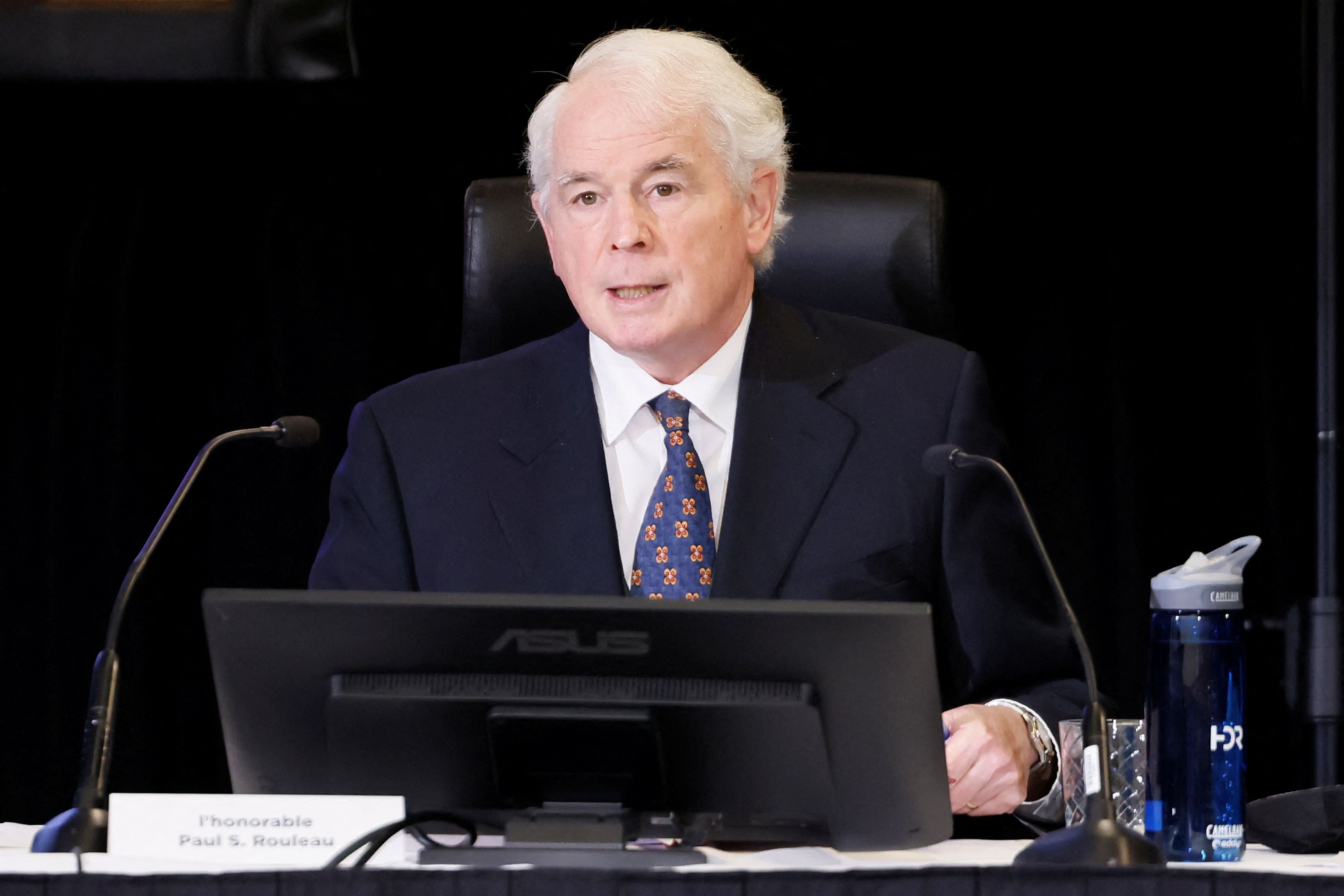
The UCP Government Responds to Justice Paul Rouleau’s Report on the Emergencies Act  

On Friday Justice Paul Rouleau released his report of the inquiry into the Trudeau government’s decision to invoke the Emergencies Act in response to the convoy protests in Ottawa and elsewhere in Canada.

Rouleau determined the Feds’ decision met the “very high threshold” necessary to invoke the Act.

The Alberta government is not pleased with Rouleau’s decision and Justice Minister Shandro issued a brief statement.

Mr Justice Rouleau

Shandro says: Alberta’s government maintains that the federal government’s consultation with provinces was inadequate…

Rouleau determined the Feds consultation could have been better but was adequate given its context. There was “substantial intergovernmental engagement” between politicians and government officials to ensure existing legal tools were being used and resourced. The First Ministers Meeting came as no surprise to the provinces.  

Rouleau says Alberta, like some other provinces, maintained that everything was under control. However, he notes the following facts that contradict Alberta’s position:  

  • hundreds of protesters blockaded the Coutts border for days
  • although a few UCP MLAs showed up to have informal discussions with the Coutts protesters, the Alberta government was not present at the blockade in any official capacity.
  • the Alberta government’s plan to hire tow truck operators fell apart and the RCMP asked the Canadian Armed Forces for heavy equipment, but didn’t get any
  • the Alberta government asked the Feds for towing equipment but didn’t get any. It eventually bought 12 trucks but couldn’t find trained operators.  
  • the RCMP filed charges against some Coutts protesters after discovering a cache of weapons and a conspiracy to murder police officers

Shandro says: …unnecessarily invoking the Emergencies Act set a dangerous precedent. The decision to invoke the act violated the constitutionally guaranteed rights of Albertans and gave the federal government the ability to seize property without due process of law.

This is a weird one. I’m not sure if Shandro is saying the Feds’ decision to invoke the Act was unconstitutional (the Act was passed in accordance with Parliamentary procedure in 1988 and the decision to invoke it in Feb 2022 was made in accordance with its provisions) or he’s complaining that by invoking the Act the Feds violated constitutionally guaranteed rights (which, within strict  limitations, is the purpose of the Act).  

Also it’s unclear which Albertans’ rights were violated (Albertans protesting at Coutts? Albertans occupying Ottawa? Albertans who were horrified by the occupation and cheered when the Feds invoked the Act?).

Shandro says: As a result, the conclusion reached by the inquiry does not affect Alberta’s decision to participate in legal challenges initiated against the federal government by the Canadian Constitution Foundation and the Canadian Civil Liberties Association last year.

Obviously Rouleau did not address this point, but the position taken by the CCF and the CCLA that the threat did not meet the threshold required by the Act suits the UCP’s anti-Trudeau narrative so they’re going for it.

Shandro says: “The 56 recommendations in the report show that there were many issues with the way the federal government used the Emergencies Act. My department will be reviewing the report and its recommendations, and I call on the federal government to do the same.

Of the 56 recommendations made by Rouleau, 24 fall within the Feds’ sole jurisdiction (they relate to information gathering and amendments to the Emergencies Act). The rest require joint action on the part of the feds and the provinces, territories, and indigenous governments in the areas of policing, critical trade corridors, social media and cryptocurrency. The fact these recommendations were made is not an indictment of the Trudeau government’s actions.

The Feds committed to review the report and respond to its recommendations within a year. Shandro has committed to review the report but has not committed to a “comprehensive, public response” within a year as Trudeau has done.  

Shandro says: “One thing is clear: the federal government must involve provinces and territories in the decision-making process for future emergencies. Matters like infrastructure, policing and the economy have provincial impacts and Alberta must have a seat at the table when decisions are being made that affect our province and our people.

See above. Rouleau said the Feds have an obligation to “consult” and they met that obligation. In other words, Alberta had a “seat at the table.”This is puffery.

Shandro says: “I will continue to be a voice for the priorities, interests and concerns of Alberta and to protect Albertans’ freedoms from federal government intrusions.”

Rouleau determined that the Feds met the extremely high threshold to invoke the Act.  

Consequently this is more puffery. It adds nothing meaningful to the Alberta government’s statement other than to repeat its tired “stay in your lane” mantra.

If Rouleau had ruled otherwise the UCP would have had another cudgel with which to whack the Feds and the so-called Trudeau-Notley alliance in the run up to the May 29 election.

That didn’t happen so the UCP government cobbled together this sad little statement.

We’ve come to expect nothing less.

Posted in Crime and Justice, Law, Politics and Government, Uncategorized | Tagged , , , , , | 60 Comments

The RStar Debacle (Who’s going to clean up this mess?)

“A long time ago in a galaxy far, far away…” — opening scene, Star Wars  

The first thing I thought of when I heard the word RStar was the opening sequence in the first Star Wars movie: yellow letters scroll up the screen and the audience learns about the evil Galactic Empire and its ultimate weapon, the Death Star.

And while Danielle Smith’s RStar doesn’t have the power to annihilate the entire planet, it goes a long way towards dragging Alberta deeper into the muck of cronyism and the erosion of the rule of law.  

Why?

Because under RStar, an industry designed program, the government would grant oil and gas companies royalty tax credits (valued at $20 billion) to incentivize them to clean up the abandoned wells they are legally obligated to clean up anyway.

Danielle Smith

There are so many reasons why RStar is a really bad idea.

Lobbyist to premier

Prior to Smith becoming premier she was a lobbyist for the industry. She lobbied Sonya Savage, Kenney’s energy minister, to implement RStar. Savage demurred saying RStar didn’t align with Alberta’s royalty structure and would violate the polluter pay principle. No kidding!

After Smith became Alberta’s premier, she replaced Savage with Peter Guthrie who knows nothing about the industry but is happy to push RStar.   

Why does Smith think RStar is such a good idea (leaving aside the obvious, that she likely made some promises and now she has to deliver)?   

“Joint obligation”

Smith starts by saying RStar will incentivize reclamation for the “worst” abandoned wells which were approved in the 1980s when environmental laws were more lax than they are  today. Since the companies drilled under these “lax” environmental laws, Albertans have a “joint obligation” to help the companies bear the cost of reclamation.

This is nuts.

The industry is well aware that environmental laws (like all laws) may become more stringent over time. They call this “regulatory risk” and disclose this risk to their shareholders.

Cenovus, for example, specifies “abandonment and reclamation” and “regulatory compliance” as two of the many risks that may have a “material adverse effect” on the company.*

Contrary to what Smith says, there is no excuse for a company to be caught flat footed by the tightening of “lax” environmental laws. And there’s absolutely no reason why the Alberta taxpayer should step in if a corporation failed to anticipate the need to properly abandon its wells at the appropriate time.

If a company acts irresponsibly, that’s on them, not on us.  

Incidentally if Smith wants to ensure ‘lax’ environmental laws don’t bite the industry in the butt in the future, she can pass tougher environmental laws today and avoid the problem altogether.   

Reclamation boom

Smith says the $20 billion in royalty credits will create 366,000 jobs and $8.5 billion in royalties (how she came up with these numbers is unclear).

Fine, but more jobs and royalties don’t justify forcing Albertans to shoulder part of the burden of cleanup when an industry-funded cleanup program will have the same effect.   

The Alberta Liabilities Disclosure Project says industry-funded cleanup would result in an annual economic boom of 10,000 full-time jobs, $780,000,000 in employment income and a $2 billion contribution to Alberta GDP every year for 25 years. ALDP provides the calculations to backup its assertion, which is more than we can say for Smith.

Hypocrisy   

What makes RStar doubly painful is the hypocrisy of the government that touts the industry’s ESG rankings and spends millions on War Rooms and satellite offices in Washington and Houston to spread the word that Alberta is “the world’s best choice for responsible, sustainable and long term energy supply” while at the same time rolling out a pilot plan to “incentivize” industry with our tax dollars to get them to comply with existing laws.

To put it bluntly, Smith just skewered the “Alberta is the world’s best choice for energy” message.

Principles  

In addition to it being immoral to pay someone to obey the law, Smith’s RStar proposal violates the “core capitalist principle that private companies should take fully responsibility for the liabilities they willingly accept.”

It also violates the polluter pay principle which holds that oil and gas companies are legally responsible for the retirement of their infrastructure.

Both principles support the argument that cleanup funds should come from the company owning the well, not the public.

A simple solution

We could spend hours turning ourselves into pretzels trying to understand Smith’s loopy justification for RStar.

Or as Mark Dorin of the Polluter Pay Federation suggests, we could demand two things:

  • For abandoned wells: The government should enforce the law requiring oil and gas companies to clean up their mess by properly abandoning wells and reclaiming well sites.   
  • For orphan wells: The government could put pressure on industry to increase its contributions to the orphan well fund to clean up the mess left behind when companies go bankrupt or are insolvent.

It’s industry’s turn

The Alberta government has given the Orphan Well Association $335 million in loans since 2017. The federal government announced a $200 million loan to OWA and an additional $1 billion to Alberta’s oilfield service companies for cleanup and reclamation work.

It’s time for the industry (which is recording windfall profits) to pitch in.

Remember that scene at the end of Star Wars, where Luke Skywalker dropped a proton torpedo into a port that started a chain reaction that blew up the Death Star…

…this is a possibility Danielle Smith should take into account.

*2021 Annual Report, p 59   

Posted in Crime and Justice, Danielle Smith, Energy & Natural Resources, Environment, Law, Politics and Government | Tagged , , , , , , , , | 108 Comments

Woke? What?

Woke (/ˈwoʊk/ WOHK): adjective: aware of and actively attentive to important facts and issues (especially issues of racial and social justice)—Merriam-Webster  

I don’t read publications like the Western Standard or the Dorchester Review as a rule but thanks to the imbroglio over Law Society Rule 67.4, I made an exception.

Rule 67.4 gives the Law Society the authority to mandate continuing professional development programming including the Indigenous cultural competency course called The Path.

The Path was a response to the Truth and Reconciliation Committee’s call to action #27. It was developed by an Indigenous consulting firm and covers the history and contemporary realities of First Nations, Inuit and Metis in Canada.

It is a free 5-hour online course which can be taken in 1-hour chunks and is virtually impossible to fail. Lawyers had up to 18 months to complete the course, failing which they’d be suspended.  

And this is a problem, why?

Fifty-one lawyers (petitioners) petitioned the Law Society to repeal Rule 67.4 because:

The course is mandatory. Some lawyers say they have no issue with its content, nope, none whatsoever, they’re just worried the Law Society could use Rule 67.4 to force lawyers to take courses that are “political propaganda” and that smacks of the kind of mandatory education found in repressive regimes like China. This is the slippery slope argument, but we’re lawyers, so who cares.   

Interestingly, the same argument could be made about the Law Society’s mandatory professional development course for lawyers who wish to become principals mentoring and supervising articling students, but for some reason, this course is not a problem.

The course is an example of woke woo woo. Lawyer Glenn Blackett (of the Justice Centre for Constitutional Freedoms) sets out his reasons for repealing Rule 67.4 in the Western Standard and the Dorchester Review. It’s part of the “radical, activist and authoritarian movement known as ‘wokeness’”. It is “re-education, or indoctrination, into a particular brand of wokeness called “decolonization” and, like a cancer, it threatens to “distort the law within the very system entrusted to protect it.”

He argues The Path’s post modernist ideology is based on “metaphysical relativism” and “moral relativism” which holds that “there’s no such thing as the real world or right and wrong.”

The relevance of these complex philosophical doctrines is not explained, instead Blackett offers support for his position by plucking sentences from The Path like:   

“We can look at science and at origin stories as simply different ways to describe where we’ve come from.”  

(I suppose this isn’t the time to bring up that other origin story, the one where Earth is 6000 years old and we all descended from two people who lived in the Garden of Eden).

Four hundred lawyers and 124 non-active lawyers and students have written an open letter urging the Law Society to keep the training requirement.

The matter goes before the Law Society on Monday, Feb 6 where it will be put to a vote.

Why this matters

This is about more than a handful of lawyers objecting to doing their part to deliver on the TRC’s call to action.

It’s about lawyers who would politicize the Law Society’s effort to promote reconciliation.

In addition to urging lawyers to vote to repeal Rule 67.4, Blackett wants “liberally-minded” lawyers to put their names on the ballot for the 2023 Bencher Election, presumably to oust the “woke” Benchers who’ve foisted this “wokeness” upon them.

(Benchers are elected every 3 years, 20 are elected by the profession and 4 are appointed by the Justice Minister, who, you will recall, is currently under investigation by the Law Society).

So Lawyers, when you receive your LSA notice in the fall listing the candidates who‘d like to serve as Benchers you may want to check whether they support professional training in the history and treatment of Indigenous peoples in Canada and vote accordingly.

To paraphrase the historian Timothy Snyder, it’s nuts to assume that those who came to power through institutions won’t change or destroy those very institutions, especially when that’s exactly what they’ve said they’re going to do.

I’m no longer an active member of the Law Society and I can’t vote on Feb 6, but I am confident that the majority of my colleagues will vote to keep Rule 67.4 so the Law Society can continue to offer training like The Path.

I’m less sure about the Smith government who will come under intense pressure to interfere with the Law Society’s ability to regulate itself if Monday’s vote does not satisfy Blackett et al.

If Smith yields to this pressure, we will have further proof that democracy is under siege in Alberta.

Posted in Crime and Justice, Law | Tagged , , , , , | 73 Comments

Shandro’s Disciplinary Hearing

The “boiling frog syndrome” is a metaphor used to describe the failure to act against a problematic situation which will increase in severity until reaching catastrophic proportions.—Wikipedia.  

Let’s talk about Tyler Shandro’s disciplinary hearing.

While it’s easy to get drawn into the melodrama and pathos (key elements in a good soap opera) this is deadly serious because it raises the question: how the hell did we get here?

How is it that the Justice Minister finds himself in front of the Law Society’s discipline committee?

Tyler Shandro Justice Minister

Shandro’s hearing

The Law Society is investigating three complaints arising from Shandro’s stint as Health Minister, namely:

  • he brought the reputation of the profession into disrepute by turning up at the private residence of a member of the public and engaging in inappropriate conduct
  • he used his position as Minister of Health to get personal cell phone numbers and contacted members of the public outside of regular working hours, and
  • he responded to an email sent by a member of the public to his wife by threatening to refer that individual to the authorities if they did not address future correspondence to his office as Minister of Health.  

To my mind the first allegation (confronting Dr Zaidi in his driveway) has a different flavour than the remaining allegations which allege a cabinet minister used the power of his office to contact and threaten citizens. Having said that it’s hard to separate the individual from his office when the office is that of a government cabinet minister.  

The Law Society hearing has been adjourned and it’s not clear when it will resume. Meanwhile the allegations hang over Shandro’s head.

Fault

It’s easy to lay the blame on Shandro, after all he was the one crying (or not) in Dr Zaidi’s driveway. However, he’s in this mess because of the extraordinary lack of judgment and the utter contempt of his bosses for democracy and good governance.

Jason Kenney should never have offered Shandro the position of Health Minister when it came to light that Shandro (together with his wife and sister-in-law) owned an interest in a private company that sells health insurance to corporations and individuals. The fact that the Ethics Commissioner ruled this did not violate the Conflict of Interest Act was cold comfort to those who felt Shandro’s credibility as Health minister had been compromised.  

Then when an independent inquiry found Justice Minister Kaycee Madu attempted to interfere with the administration of justice and there was a reasonable perception that he had interfered with the administration of justice, Jason Kenney should not have offered the position to Shandro who was facing three complaints alleging violations of the Law Society’s Code of Conduct.  

As ABlawg points out, the Justice minister is the “chief law officer of the Crown with the responsibility to uphold the rule of law.” Kenney should not have put the Law Society in this position and Shandro should not have accepted the appointment.

Then Danielle Smith made the same offer and Shandro accepted it again.

The law profs described Kenney’s actions (and by extension, Smith’s) as “disrespect for the processes of a professional disciplinary body, a body that also plays an important role in maintaining the rule of law in Alberta.”

And therein lies the problem.

Lack of respect

The UCP government under Kenney and Smith has no respect for democratic institutions, norms, and conventions, let alone the rule of law.

They’ve demonstrated this again and again.   

One of the first things Kenney did after the UCP formed government was hand out earplugs to his caucus so the poor dears wouldn’t have to listen to the Opposition debate on a bill impacting union rights.

Since then the UCP government’s attack on democracy and the rule of law has escalated.

The Kenney government used the covid crisis as an excuse to grant itself the power to amend legislation whether it touched on public health or not.

The Smith government passed the Sovereignty Act so it could ignore federal laws it didn’t like. It also tried, but failed, to give Cabinet the power to pass new legislation in secret.

And, last but not least, Smith admitted, then denied, contacting Crown prosecutors with respect to ongoing prosecutions of covid-related health restrictions and criminal charges (mischief, weapons, conspiracy to commit murder) in connection with the blockade at Coutts. And the so-called independent review of her staff’s emails is a joke.

Boiled frog anyone?

All this happened in four short years, leading me to wonder whether Albertans are boiled frogs, incrementally becoming so blasé about the erosion of the rule of law and democratic institutions, rules and conventions that they don’t notice they’re being cooked alive.

But here’s the thing. The boiled frog story is a myth.

Dr Victor Hutchinson of the University of Oklahoma says if you plunk a frog into a container of tepid water, the frog will become more active as the water heats up and eventually it will jump out.

If, on the other hand, there’s no way out of the container, the frog is doomed.

There’s an election coming up in May. Albertans have a way out of the container. Surely, we’re as smart as frogs.  

Posted in Danielle Smith, Law, Politics and Government | Tagged , , , , , | 66 Comments