Guest Blog: An Open Letter from WCPH

I know I said we were taking a break during the month of December but last week I received a copy of a letter written by Lloyd and Linda Lovett on behalf of the Whitemud Citizens for Public Healthcare that eloquently expressed the concerns that many of us have with the state of healthcare in this province.

Here it is.   

The WCPH letter

“Most of us in Whitemud Citizens for Public Healthcare (WCPH) have invested a considerable part of our adult lives in health care and related vocations in the Province of Alberta. We are conscious of the co-operation, collaboration, and discourse by which health care in this province and in all of Canada has grown, improved, and adapted over many lifetimes. We are proud of the efficiencies and the universality of the public, egalitarian, single payer nature of it. Our goal is to encourage governments in their support of health care in Alberta through adequate funding and through support of recruitment, training, compensation and care of health care practitioners throughout the scope of professions, vocations and trades.

“We are also aware of the adaptive needs of public health care in Alberta as our population grows and ages. We know that events, often rare like the COVID-19 pandemic, test the system and provide us with opportunities to conduct informed, related system-wide evaluations of our infrastructure and practices, as well as those of the Government of Alberta. Without properly appointed and executed evaluations, confidence in the system will decline in every quarter.

“As we have implied, effective and universally available health care in Canada is a value that we uphold. We uphold it in Alberta and we uphold it as a program that exists organically with health care infrastructure in other provinces, all through discourse, collaboration, and co-operation.  We are then dismayed whenever fighting and over-the-top partisanship change health care issues into political issues. For example, the most recent adaptation proposals, supposedly to meet present needs, have been manifest more as careless reorganization into packages meant for sale to private health care, even as they risk increased costs and decreased effectiveness for Albertans.

“And, for example, we are dismayed that the recent so-called evaluation of government administration of the health care system during COVID-19 has become a highly partisan report. The report’s writer offers it to the Conservative Party of Canada for use against their political opponents.

“A century ago in 1924 diphtheria became a reportable notifiable disease throughout Canada. That year 9,057 cases were reported, the highest number ever reported in Canada. In January of 1929, in an open cockpit aircraft, legendary bush pilot and World War 1 fighter pilot Wop May, with Vic Horner, flew diphtheria serum/vaccine 800 km from Edmonton to Fort Vermillion, virtually saving that community and surrounding Indigenous communities.

“There are still some cases of that particular disease reported around the world, though very few in Canada. The tremendous success in reduction of cases by immunization, especially in Canada, was achieved through collaboration, co-operation, discourse, and courage, in health care supported by government. It was not achieved by fighting between governments, and not by overheated partisanship.”

[Signed] Linda and Lloyd Lovatt on behalf of The Whitemud Citizens for Public Health, Edmonton”

Why I’m sharing this letter

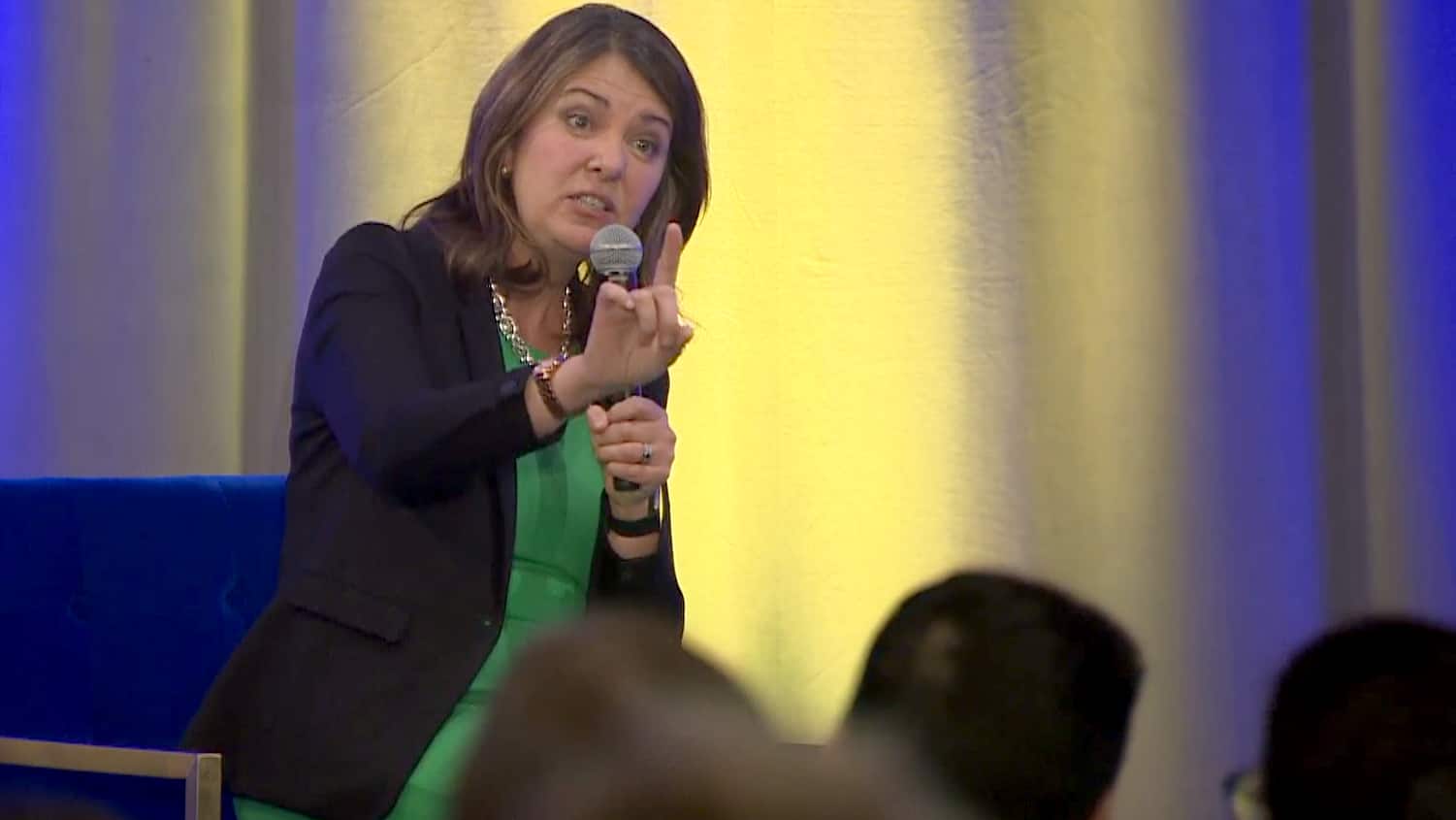
WCPH was formed in 2009 in response to the efforts of the Stelmach government to “fix” public health. Now 14 years later we’re even worse off than we were before. As the nurse who texted into Danielle Smith’s PR show said, “We don’t need you to burn down the house. We need you to build it up.”

It’s time for Albertans to stand up for our publicly funded and publicly delivered healthcare system. One way to do that is to support groups like WCPH. You can find out more about WCPH here. https://www.facebook.com/groups/247338238324
Posted in Alberta Health Care, Danielle Smith, General Health Care, Guest Bloggers, Politics and Government | Tagged , , , | 29 Comments

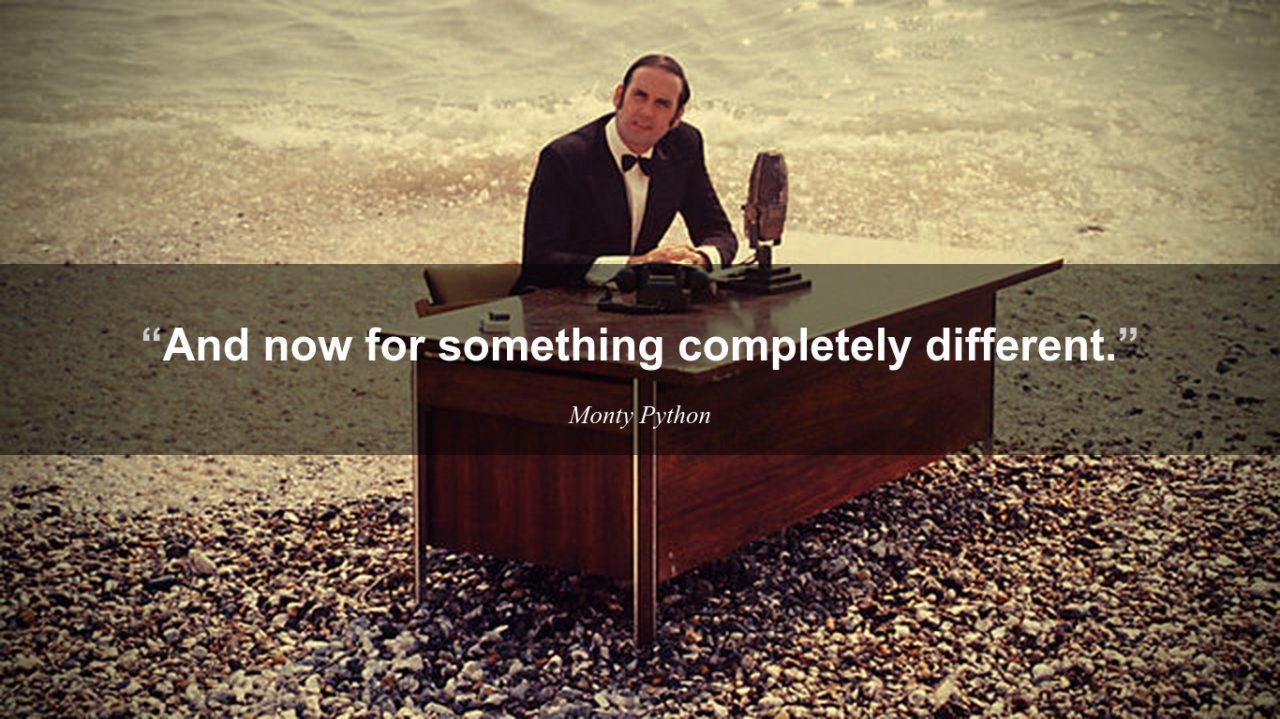
And Now for Something Completely Different

Politics in Alberta feels like a Monty Python comedy sketch, only not as funny. But that’s not why I’ve used John Cleese’s signature line as the title of today’s blog post.

I’ve been thinking a lot about “something completely different” ever since I started French classes last September. It turns out sitting in a classroom with a dozen other people who are desperately trying to understand what the teacher just said is a great way to take your mind off the troubling events swirling around us. At least for a couple of hours.  

So for the month of December we’re taking a break.

That doesn’t mean the Soapbox is closed. We’re always interested in hearing your thoughts on the events of the day and why they’re important. So we’re turning the stage over to you.

Feel free to comment about anything you’d like (within reason). I’m especially interested in what everyone is doing to stay sane in these crazy times.

As I said, what I’m doing is taking French. In our last class we played a game where someone picked a letter of the alphabet and the class had to come up with a verb, a sport/leisure activity, something you could eat, and something you’d find in your house that started with that letter before the klaxon went off. The person with the most points won.

It’s amazing how competitive a bunch of adults trying to learn French can be.

Okay, now it’s your turn. Do you have some thoughts you’d like to share about politics? If not, what are you doing that’s completely different?

The Soapbox is yours.

Posted in Politics and Government, Uncategorized | Tagged | 58 Comments

We Value Your Feedback

When someone tells you Danielle Smith is a shrewd politician remind them of how she botched the APP consultation process.    

Last week, the Dinning panel wrapped up the last of its five telephone townhalls. When pressed by the NDP to explain why the UCP refused to hold in-person townhalls to get Albertans’ views about leaving the CPP Smith replied that her government has had its “conversation” with Albertans and it was now “looking forward” to the federal government’s opinion on what the asset withdrawal number should be.

This from a premier who categorically rejects the federal government’s opinion (even before it is made into law) on everything from climate change targets to covid policy and is so incensed by the federal government’s intrusion (real or imagined) into Alberta’s jurisdiction that it’s passed sovereignty legislation that purports to allow Alberta to ignore any federal laws it doesn’t like.

Never mind, when it comes to the APP Smith is prepared to wait meekly for the feds to chime in.

Why the change in demeanor?

Perhaps the Finance Minister’s comments* in the House provide a clue.

The cold hard facts

So far the government has done three things in support of its APP plan.

It created a survey that did not allow Albertans to choose to stay with CPP. It’s spending $7.5 million in advertising to convince Albertans the APP is a good idea and it’s  engaged in (limited) public consultation.  

Danielle Smith and Jim Dinning

The Finance Minister described this consultation as follows:     

  • Five telephone townhall meetings that were attended by 76,825 Albertans, of which about 150 had a chance to discuss their opinions live or hear their comments read out live, and
  • 3,745 individual comments, including questions, suggestions, and feedback, both online and on the phone

That’s nice, but what did these people say?

The NDP consultation process

The NDP on the other hand sent out a pension survey which gave Albertans the choice of staying with the CPP or moving to the APP and an overwhelming majority of the 37,000 individual responses said they wanted to stay with CPP.

Furthermore, the NDP is prepared to accommodate Albertans’ desire for in-person townhalls. They’ve scheduled six in-person townhalls—the one in Edmonton was attended by almost 500 people—and they’re planning to schedule more.  

So this is where the “shrewd politician” characterization comes in.

If Smith was truly a shrewd politician, she would have listened to the polls which have consistently shown that the majority of Albertans do not want to leave the CPP.

Furthermore, if she felt she had to go ahead to appease members of her base, she would not have engaged in a sham consultation which opened the door to the NDP embarking on a real face-to-face consultation that allows them to demonstrate that they, unlike Smith and the UCP, are truly interested in Albertans’ feedback.

We value your feedback

But wait, Albertans still have an opportunity to provide feedback to the government.

The government has created a “workbook” which sets out background information and a series of questions Albertans can consider in providing their input into the “potential creation” of an APP. The deadline for sending the completed “workbook” back to the government is Feb 28, 2024.

Gosh, I don’t know.

We can fill out a “workbook” or we can attend an NDP hosted face-to-face townhall to discuss leaving the CPP.

Which do you think is a sincere effort to gather our feedback?

And which do you think will reflect more favourably on the political parties when the next election rolls around?

Well done, NDP. Well done.

*Hansard Nov 23, 2023, p. 234

Posted in Danielle Smith, Politics and Government | Tagged , , , | 59 Comments

Danielle Smith Says the Darndest Things

Last week Danielle Smith was interviewed by Matt Galloway, the host of CBC’s The Current. Listening to her I was reminded of Art Linkletter’s show Kids Say the Darndest Things. Unfortunately the things Smith said weren’t funny.

Here’s a sample.

Leaving CPP

Smith said Alberta is entitled to 53% of the CPP’s assets and that the CPPIB’s number of 16% was pulled out of the air.

She said if Ottawa’s number isn’t close to Alberta’s number, Alberta will go to court for a “fair adjudication.”

She also said the reason why the majority of Albertans (and people like Pierre Poilievre) don’t support Alberta leaving CPP is because they need “more communication.”

But when it comes to determining the impact on the rest of Canada of Alberta walking off with 53% of CPP’s assets, Smith was adamant. The impact would be “minimal”. She quantified the impact at “about $175 per person” to put someone in the same position they’d been in before.

What is she, psychic?

She doesn’t know Ottawa’s number and she doesn’t know how courts will calculate the right number, but she can pinpoint the impact on the rest of Canada at “about $175/person.”  

Apparently, it’s okay to “pull numbers out of the air” when it’s Smith doing the pulling.

The carbon tax/national unity

The discussion about the carbon tax exemption for home heating fuel got interesting when Galloway asked whether Smith’s argument that the exemption should be applied uniformly across Canada (it’s a matter of national unity) was disconnected from her pitch to pull Alberta out of CPP.

Heavens no.

Smith said national unity doesn’t mean Ottawa gets to do whatever it wants. Besides she had plenty of examples of Alberta engaging collaboratively with the feds. We’d signed a $24 billion health care deal, the feds were “very helpful” fighting our fires, and they were joint investors in housing and major projects.

Based on her examples, Smith thinks national unity means Alberta can do whatever it wants and still call on the feds to pay for it.  

“Tell the Feds” ad campaign

Galloway said Smith’s “tell the feds” campaign suggested the clean electricity regs could pitch the entire country into blackouts. Why was she was using “scare tactics”?

Because it’s true, she replied.  

Gobsmacked, Galloway repeated the question: ”It’s true there could be blackouts across the country because of…?”

Because Alberta had experienced eight grid alerts last year, she said.  

Just to be clear.  Alberta and Saskatchewan are the only two provinces that are heavily reliant on natural gas power generation, the rest of Canada relies on multiple sources for power generation including hydro and nuclear.  

Either Smith doesn’t know that Alberta is not a template for the rest of Canada or she doesn’t care what she says in the heat of the moment.

Moratorium on wind/solar

Galloway moved on to Smith’s moratorium on wind and solar. What was the purpose of the moratorium?

She babbled on about the “wind don’t blow and the sun don’t shine all the time” then said she needed more natural gas power plant applications in the queue and there were none. Eventually it became apparent that she imposed the moratorium on new wind and solar applications to give the natural gas guys time to catch up.

In other words, she’s fine with her government meddling in the marketplace when it’s in aid of fossil fuel companies but won’t stand for it when it’s in aid of renewable energy.

Net zero

Galloway asked whether Smith’s plan to reach net zero by 2050 matched the urgency Alberta experienced in our fire/smoke filled summer. She replied her urgency is matched to the efforts of  China and India which are targeting net zero by 2050 or later.  

So instead of helping Canada lead the way to net zero she’s prepared to impede Canada’s progress. She’d rather drag Canada down than pull China and India up.

Tucker Carlson

In response to why she’s going to share the stage with Tucker Carlson—a man who’s attacked Ukraine, vilely diminished women, endorsed the Jan 6 attempt to overturn the presidential election, and spouted the white supremacist great replacement theory—she said she wants to get Alberta’s story out and if she refused to be interviewed by people she disagreed with she might not have come on Galloway’s show.

There is so much wrong with this response that we’ll simply note that Galloway has never made racist, misogynist, tinfoil hat conspiracy comments. Perhaps what Smith found distasteful was Galloway’s political ideology, something she assumed from the fact that he worked at the CBC.

Compassionate conservatism

Galloway closed by asking Smith to define what she means by “compassionate conservatism.”

Smith stated Alberta was addressing mental health with “compassionate intervention” which can result in mandatory incarceration and treatment for certain individuals, then expanded her definition to include growing the economy and building wealth to generate revenue that’s used to deliver the best health care system and education system.

Given that Alberta is the richest province in the country and its health care system and education systems are teetering on the brink, it’s hard to envision how we’ll be better off with more “compassionate conservatism.”

But hey, Danielle Smith says the darndest things, eh?

Posted in Danielle Smith, Politics and Government | Tagged , , | 70 Comments

Here We Go Again: Restructuring AHS

According to Danielle Smith, AHS isn’t “truly accountable” and it’s been a “management problem” for quite some time. So she’s going to blow it up.

This week some brave soul leaked a 36-page slide deck asking cabinet to approve a “package of reforms to refocus the health care system to achieve better outcomes for Albertans” and to signal this decision to the public.

Cabinet, bless their pathetic little hearts, approved it.

The slide deck

Instead of fixing AHS’s “management problem” and increasing its accountability, Smith is going to replace AHS with four new organizations: acute care, primary care, continuing care, and mental health & addictions.

These organizations will report to the Integration Council (made up of two cabinet ministers, various deputy ministers and assistant deputy ministers, other leaders and yet to be named sub-committees and councils), plus a Procurement & System Optimization Secretariat, plus 13 Advisory (not decision making) Councils and an expanded Health Quality Control Council.

The premier in action

That’s a lot of councils, secretariates, sub-committees, cabinet ministers, deputy cabinet ministers and assorted “leaders” to manage a service that was once managed by AHS and its board.

According to the slide deck additional changes to Public Health, EMS, and Lab and Diagnostic Imagining will be coming down the pike as well.

No one is disputing that AHS could do a better job, however, speaking as someone who’s been through more than her fair share of corporate reorganizations in the private sector, this reorg promises to be a disaster.

Why? Because it doesn’t track the reorg recommendations made by top tier management consultants like McKinsey who say in order to be successful a reorg must follow a few basic rules.

Rule One: Know why you’re reorganizing

Everything Smith has said to justify this reorganization—refocusing on patient-centered care, improving health outcomes, empowering health care workers—has been said before. The only new element is her complaint that AHS is a “management problem.”

No management consultant worth his big paycheque would recommend a massive reorganization to fix a “management problem.” Why throw the baby out with the bathwater? Just fix your management problem.

Rule Two: Understand the existing organization before you create a new one

Smith did not conduct any meaningful consultation with doctors, nurses, front line workers, or the public with respect to AHS’s existing delivery model. Consequently we can only assume the deficiencies listed in the slide deck are based one someone’s impressions, biases, or beliefs.

McKinsey warns against basing a new structure on one’s untested hypothesis and intuitions, noting that “In our experience, companies make better choices when they carefully weigh the redesign criteria, challenge biases, and minimize the influence of political agendas.”

Influence of political agendas, need we say more?

Rule Three: Establish short- term and long-term metrics

This one is pretty obvious. You need metrics so you’ll know where you are and whether the organizational changes you are making are taking you in the right direction. If someone thought  metrics would be a good idea, they failed to include them in the slide deck.

Rule Four: Identify and mitigate risks

The slide deck identifies the following risks: (1) fragmented health care deliver, (2) system disruption, (3) system failure, (4) delays in implementation, (5) public perception, and (6) carve-out risks.

Hold on. System failure?

If this was a presentation to the executive team in the private sector the CEO would stop right there. He’d demand an assessment of the risk. Is it 10%, 50%, 90%? He’d want to know what the Integration Council (which is identified as the body responsible for mitigating this risk) is doing to prepare for it. What mechanisms are in place to warn the Council that the system is on the verge of collapse? What plans has the Council made to response quickly when the alarm bells go off?

The slide deck says this group of bureaucrats will spend their time sitting around identifying efficiencies and eliminating barriers. That simply doesn’t cut it.

(Frankly, the CEO would have little confidence in the government’s ability to mitigate the risk of system failure given its abysmal handling of the transfer of public lab service to DynaLife.)   

Moving on.

The risk of public perception will be addressed by a “full scale stakeholder and communication program.” More lectures in telephone town halls I presume.

The carve-out risks will be managed by a “dedicated transformation office, supported by merger and acquisition experts who will lead separation efforts and ensure compliance to all legal and policy requirements.”

Pardon?

Our private sector CEO would stop right there. He’d ask for more information about the “carve-out” risk because it sounds like the government is getting ready to sell off parts of our public healthcare system. That’s a topic that deserves its own comprehensive slide deck.

Bottom line

The slide deck raises more questions than answers. The most important question is: Does anyone really know what’s going on.

This is a huge reorganization project and yet in the Legislature Smith downplayed it saying “we are making incremental change.” Doctors, nurses, and others working on the front line need not worry because the changes will proceed “slowly over time.”  

Nope, that’s not what the slide deck says.

Then there’s the kicker. When Rachel Notley questioned Smith’s decision to appoint Lyle Oberg, a proponent of privatized health care and a partner in Canada’s first private, for-profit hospital, as the chair of the AHS board, Smith replied “There will be no privatization.”

I’m sorry but the carve-out risk description in the slide deck begs to differ. I’ll just park that promise in the drawer next to the “nobody is touching anyone’s pensions” promise.

Danielle Smith says she’s going to improve health care by replacing the centralized AHS with a politically controlled centralized bureaucracy. Four Edmonton hospitals are at 150% capacity and the slide deck indicates that she’s not spending another dime on hiring and retaining more doctors, nurses, and front line staff.

In what universe does this make any sense?

Posted in Alberta Health Care, Danielle Smith, General Health Care, Politics and Government | Tagged , , , , | 88 Comments

Danielle Smith Addresses the UCP/TBA AGM

I watched Danielle Smith’s speech to her supporters at the UCP AGM and all I could think of was Salvador Dali’s painting of the clocks.   

Time was melting, the landscape was warped.  

Going backwards

Smith told the crowd that in the next Legislative session the Smith government will go backwards to fix the problems created by previous conservative governments (my words, not hers).

The government will go back:  

  • to 2019 so Smith can reverse the Kenney government decision to give free rein to auto insurance companies which allowed premiums to jump by 30%, and  
  • to 2008 so Smith can reverse the Klein government’s decision to centralize AHS (this will take 18 to 24 months and will create further instability in healthcare), and
  • to the 1990s so Smith can reform the electricity market to bring down prices and rid it of “market manipulation” and other unsavoury practices that resulted when the Klein government deregulated it.  

Don’t get me wrong, reducing costs to consumers and improving healthcare delivery are good things, but every time Smith says she’s going to fix something—Turkish pain meds for kids, the DynaLife labs fiasco spring to mind—it blows up in her face.  

Wasting time (and money)

Smith vowed to continue the good fight. To stop the “powerful forces in this country” (the so-called NDP/Liberal coalition and eco-extreme dogmatists) who are determined to destroy Alberta’s economy and our way of life.

It’s unlikely that the “powerful forces” are quivering in their boots given the sorry performance of the War Rooms, the Allen Commission, the Manning Covid Inquiry, etc. To say nothing about the millions being wasted on Smith’s nation-wide campaign to push Albertans out of CPP, even Pierre Poilievre doesn’t support the idea.     

Looking forward   

Smith said this is “Alberta’s century.” Alberta will do so well in the future that millions of people will immigrate here.   

She predicted that Alberta will grow to 10 million by 2050, making it Canada’s second largest province, (The government website puts the medium case population number at 7.1 million by 2051).

She told her supporters that the newcomers are “our people” and we should “reach out and welcome them.”

She also cautioned that this growth will require massive investments in infrastructure, not just schools and hospitals, but commuter rail links, links between the Calgary airport and downtown Calgary, passenger rail service to Canmore/Banff, and high-speed rail through the Calgary-Red Deer-Edmonton corridor to accommodate the 6 to 7 million people who will eventually reside there.

So here’s the thing. The government website says 55% of this growth will come from international migration and 81% of this increase (6 to 7 million) will settle in urban centres, primarily along the Calgary, Red Deer-Edmonton corridor.

This creates two issues for the UCP.

First, as Lisa Young points out, the newcomers will not share “the UCP members’ pasty complexions.” Notwithstanding Smith telling the crowd they should welcome newcomers, the party passed resolutions that would ban race-based admissions to post-secondary institutions and would close all Equity Diversity and Inclusion offices on campus.

That’s not exactly welcoming, is it.

Second, if 81% of the newcomers settle in the Calgary-Red Deer-Edmonton corridor, they’re more likely to vote with their progressive neighbours, you know, the people who ensured that the NDP took every seat in Edmonton and over half the seats in Calgary.  

So where does this leave the UCP/TBA? Will they support Smith’s dream of an Alberta that opens its arms to international immigrants and invests piles of cash in the infrastructure necessary to accommodate them and us?

Who’s in charge

It all depends on who’s in charge.

On the eve of the UCP AGM, David Parker, the leader of TBA, said, “This weekend begins a new age in Alberta. The Age of Democracy. After this AGM, the grassroots of the UCP will be in charge. Those who do not listen to the grassroots or attempt to thwart their involvement in the decision making process, will be removed from power.”

In a democracy the people elect politicians to govern and vote them out if they’re not satisfied with how they’re being governed. In Parker’s world the TBA-endorsed candidates on the UCP Board will determine whether a democratically elected politician stays or goes.

Alberta is beginning to look like a Salvador Dali landscape. Time is warped and the ground is unstable.

If Smith bows to Parker and enacts legislation to ban race-based admissions and close Equity Diversity and Inclusion offices we can all kiss “Alberta’s century” goodbye.     

Posted in Alberta Health Care, Danielle Smith, Economy, Education, Politics and Government, Uncategorized | Tagged , , , , , | 88 Comments

Danielle Smith Goes to the Pembina Climate Summit

Perhaps Danielle Smith forgot she where she was when she told the attendees at the Pembina Climate Summit that clean electricity by 2035 was impossible and anyone who thought otherwise was a fantasist.

The Summit attendees paid $400 to $600 for the one-day event which brings together “thought leaders from industry, government, civil society groups, Indigenous Governments and rural communities to hear success stories, identify opportunities and challenges, and explore solutions related to Alberta’s clean energy future.”

Premier Smith lectures the crowd

They came to explore solutions, not to be told by the premier they were out to lunch.

It’s impossible

Smith sounded even sillier when she explained why it was impossible.

My gosh, she’d have to build four hydro-electric dams the size of Churchill Falls or the equivalent amount of nuclear energy in 12 years. That was impossible, she turned to the audience, wouldn’t you agree?

Not surprisingly, they didn’t agree. Instead they reminded her about solar and wind power, you know, that stuff she’s put a moratorium on for seven months.

Hah, she said (or words to that effect), what do you know that my industry experts don’t know?

By this point she’d locked on to Derek Power, CEO of PowerNetworks, a company in the renewable energy sector.

Power said he had 17 years of experience in solar rooftop installation.

Double hah! she said (or words to that effect). What if there’s no sun or wind?

Batteries, Derek Power replied.

Triple hah!! she said (or words to that effect) and launched into a speech about the high cost of industrial-scale batteries, ending her spiel by saying she refused to indulge “fantasy thinking”.

Apparently, Smith would rather wait for expensive and yet to be proven technologies like Direct Air Capture (it can be used to make vodka!) that Pathways Alliance will start to explore in 2041.

Later, Derek Power said Smith was disrespectful of the energy experts in the room and dismissive of existing renewable and energy storage technologies while promoting “novel technologies.”  

He’s right.

And that’s not all she’s dismissive about.

12 years

Smith said 2035 was impossible because she refused to consider anything other than Big Oil’s expensive and novel technologies which won’t be ready to roll in 12 years.   

So let’s talk about that.

Dave Kelly, the host of the Summit reminded Smith that saying something was “impossible” ran counter to the story Albertans tell themselves: that they’re “can-do” people, nothing is impossible.

He talked about Peter Lougheed’s decision to develop the oilsands in 12 years in the face of ferocious opposition from the conventional oil sector. It took more than 12 years, but Lougheed’s faith in Albertans’ “can-do” spirit resulted in the innovations we see in the sector today.

Kelly said we’re on the cusp of something remarkable, he asked Smith why she couldn’t harness Albertan’s “can-do” spirit and show Canada and the world what we can do to reduce emissions today.

Smith reply was tragic. Nope, she said, it’s 2050, period.

The only path to reducing emissions that she’ll consider is Big Oil’s Pathways Alliance path. One that relies on yet-to-be developed,  novel and expensive technology that won’t be ready in time. She won’t even try to reach the 2035 target. It’s simply impossible.  

Bottom line

Of course we can see what’s she’s doing.

By digging in her heels (and slapping a moratorium on solar and wind projects) Smith is giving Big Oil a free pass.

This is disrespectful and dismissive of not just the experts and academics who attended the Climate Summit.

It’s a kick in the teeth to all Albertans who would be willing to apply their drive and expertise (that famous “can-do” spirit) to making meaningful emissions reductions a reality.

Posted in Climate Change, Danielle Smith, Environment, Politics and Government | Tagged , , , , , | 68 Comments

The Alberta Pension Plan: Pierre Poilievre Weighs In  

It took Danielle Smith five months to go from “Nobody is touching anyone’s pension” to “Look! It’s a shiny new APP! Albertans will get much more and it will cost much less!!”  

And she had the LifeWorks report to backup her claim. LifeWorks says Alberta is entitled to 53% of the CPP fund. Consequently employer and employee contributions will go down; heck, seniors might even get a $10,000 bonus. What’s not to love.  

Well, there are the concerns raised by people like economist Trevor Tombe who says Alberta’s share of the CPP fund is closer to 20 to 25%. And the CPP Investment Board who suggests it’s actually 16% and even Smith’s former finance minister Travis Toews put the number at 12%.

Pshaw!

It doesn’t matter that no one knows how much Alberta will get if we leave CPP. It doesn’t matter what additional risks we’ll be taking on. It doesn’t even matter that once we’re out, we can’t get back in. All that matters is Smith wants our feedback. It is our pension and our choice after all.  

Smith has posted a handy dandy survey on the government website. It doesn’t ask whether you want to stay in CPP, instead it wants your feedback on how the new APP should be structured.  

She set up the Dinning Panel to “listen” to our concerns via 5 telephone townhalls.  Mr Dinning isn’t fussed by the fact that telephone townhalls may not be as informative as in-person townhall meetings. In fact he says 14,000 Albertans “weighed in” on the first telephone meeting. They raised 30 questions and left 450 comments. Fantastic, but what did the remaining 13,520 have to say?

Everything was steamrollering ahead until Justin Trudeau finally turned his attention to the matter—although to be fair he does have an awful lot on his plate right now.

Poilievre and Smith

Trudeau sent Smith an open letter saying “Alberta’s withdrawal would weaken the pensions of millions of seniors and hardworking people in Alberta and right across the country. The harm it would cause is undeniable.”

He added that he’d instructed his cabinet and officials to take all necessary steps to ensure Albertans and Canadians are fully aware of the risks of APP and “to do everything possible to ensure CPP remains intact.”

Smith replied that Trudeau’s response was “inappropriate in tone” and “overwrought” and warned that any attempt to block Alberta from withdrawing would be viewed as an attack on Alberta’s constitutional and legal rights and would be “met with serious legal and political consequences.”

With that all eyes turned to Pierre Poilievre who’d been conspicuously quiet on the issue.

After the typical it’s-all-Trudeau’s-fault rant Poilievre sided with Trudeau (not that he’d admit it). He encouraged Albertans to stay in the CPP and promised to “protect and secure the CPP for Albertans and all Canadians, by treating every province fairly and freeing Alberta to develop its resources to secure our future.”

I guess that means Poilievre doesn’t agree with Smith that Alberta should get 53% of the CPP fund or that Albertans have paid more than their fair share into the fund or that the Alberta government should have control over its share of the fund (whatever that may be) so it can invest in projects that are in Alberta’s sole interest.

Smith said she appreciated the “tone and sentiment” expressed by Poilievre regarding the destructive Liberal-NDP policies imposed on Albertans and Canadians.

I don’t care what Poilievre’s tone was, the bottom line is the federal conservative leader categorically rejected Smith’s plan to pull out of the CPP.

What this tells us

Anyone with half a brain would have seen this coming.

The only way Poilievre will replace Trudeau is if he convinces all Canadians that he’ll look after their interests better than Trudeau did.

The last thing Poilievre is going to do is side with Alberta—a province that consistently votes conservative but doesn’t have the heft to put a federal conservative government into power—and hang Ontario and the rest of Canada out to dry.

People say Smith is a shrewd politician, but she doesn’t seem to understand that the Conservatives can lose with Alberta on side and the Liberals can win without it. Unless that changes, Poilievre will never support Alberta if it means risking his support in the rest of the country.     

How’s them apples.

Posted in Danielle Smith, Politics and Government | Tagged , , , , , , , , | 94 Comments

Protecting the Environment: There has to be a better way

In 2019 the federal government enacted the Impact Assessment Act which regulated “designated projects” (think: oil sands, mining and other major projects within provincial boundaries). The Kenney government tagged it the “No More Pipelines Act” and brought a reference case to the Supreme Court of Canada arguing that the IAA was unconstitutional.

Last Friday the Court released its opinion.

In a 5-2 decision the majority determined that the IAA (with respect to designated projects) was indeed unconstitutional because the Act was not sufficiently focused on environmental effects within federal jurisdiction and the definition of “effects within federal jurisdiction” was overly broad.

Now, before Danielle Smith breaks out the champagne it’s important to note that the IAA remains valid and the federal government has committed to addressing the Court’s concerns by amending the IAA’s overly broad language, a task the law profs at UofC say should be “relatively manageable.”

This was an interesting case, not just because of the 5-2 split. All the justices hear the same legal arguments, read the same factums, and review the same caselaw and scholarly articles and yet the dissenting justices found the IAA to be constitutional. This gives me hope because the dissenting opinions of today have a way of becoming the majority opinions of tomorrow.  

The Court’s take on environment    

The Court outlined some legal principles and reinforced some of it key decisions relating to environmental law, including the following:

  • Three decades ago, the Court acknowledged that the protection of the environment has become one of the major challenges of our time.
  • Environmental protection is a fundamental value in Canadian society.
  • The Canadian judiciary, together with the other branches of government, plays an important role in protecting the “right to a safe environment.”
  • The Constitution Act 1867 delineates federal and provincial jurisdiction for a great many things, but the “environment” is not one of them. As a result, the federal and provincial governments pass laws relating to the environment through their other constitutional powers listed in section 91 (federal) and section 92 (provincial).  
  • Consequently the “environment” is a shared and overlapping responsibility which cuts across sections 91 and 92.   
  • Depending on the circumstances, the federal and provincial governments will both have legislative authority over the same activity or project. Or to put it another way, just because a project is wholly within a province’s boundaries and is primarily subject to provincial jurisdiction does not make it immune from valid federal legislation. So no, Danielle, the IAA decision did not give Alberta the green light to do whatever it wants within its borders.  
  • Such shared responsibility is neither unusual nor unworkable in a federation such as Canada.
  • However, let’s be honest, sharing responsibility for the environment can cause friction between the provincial and federal governments.
  • This friction can be resolved (1) in the courts or (2) through negotiation conducted in the spirit of cooperation and harmony. (May I suggest we go with (2), environmental protection is too important for politicking).  

Which brings us back to where we started.

The federal government passed the IAA in 2019 as part of a package to protect the environment and address climate change. The Court is of the opinion it’s unconstitutional and the feds will amend the Act to rectify this.

We’re on the same expensive and time consuming path with the federal regulations relating to emissions from electricity generation and the emissions cap on the oil and gas sector.

While I wasn’t thrilled with (and had difficulty following) the Chief Justice’s reasoning that led him to conclude the IAA was unconstitutional, I did agree with two things he said:

“Environmental protection is a fundamental value in Canadian society and one that is shared by Canadians from coast to coast” and “It is open to Parliament and the provincial legislatures to exercise their respective powers over the environment harmoniously, in the spirit of cooperative federalism.”

So can we please stop using the environment as a political football and get down to business mitigating the impacts of climate change?

And if that’s a bridge too far, can we vote in a government that believes climate change is real and is prepared to work with the feds to combat it, because folks, we’ve got a long way to go and not much time to get there.

Posted in Climate Change, Danielle Smith, Energy & Natural Resources, Environment, Law, Politics and Government | Tagged , , , , | 33 Comments

Happy Thanksgiving!

Happy Thanksgiving everyone.

After a few missteps–the fresh cranberries turned into cranberry soup and the cook burned his hand when he was basting the turkey–everything came together. The meal was perfect and we had a lovely celebration with our family and friends.

I know not everyone is as fortunate as we are, and I hope that we can work together to ensure everyone will be in a better place soon.

All the very best from our family to yours.

Susan

Posted in Celebrations, Uncategorized | Tagged | 17 Comments