The Value of Money

Dr David Dick is fascinated by money.

Ms Soapbox isn’t…or wasn’t until she tried to understand why Albertans kept telling pollsters they’re okay with the NDP’s plans for greening the environment, funding education and healthcare and protecting paid farm workers as long as it doesn’t cost the taxpayers any more money. (Some Albertans swear they’ll slash their charitable contributions to zero if the NDP asks for another dime.)

Ms Soapbox knows that the keep-your-hands-off-my-money mantra is popular with the conservatives but she’s never quite understood the rationale. Is it that more money equals greater happiness? More security? Higher status? What?

This is where Dr Dick comes in.

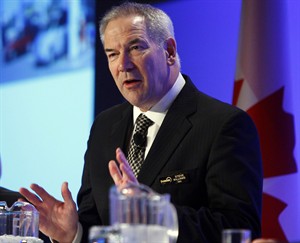
David Dick is a professor at the University of Calgary with a joint appointment in philosophy and the Haskayne School of Business. He’s also a very nice guy, who’s just as comfortable delivering a speech to Calgary businessmen as he is roaring down the highway on a Harley.

Framing the issue

Dr Dick examined the relationship between money and altruism. He says altruistic and financial motivations are not opposites, but simply different ways of thinking about the same thing.

david-dick-sm

Dr David Dick

Dr Dick illustrates this point with the seminal research of Richard Titmuss. Titmuss examined Britain’s voluntary blood donation program to see whether paying for blood donations would increase the blood supply. He concluded that payment would have the opposite effect. It would drive down the number of donors, not increase it.

The reason for this counter-intuitive result is that paying a donor to donate blood changed the donation from an altruistic act (“I’m saving a life”) to a financial transaction (“I make $25/hour. Getting jabbed by a needle and hanging around a blood donor clinic for an hour and a half simply isn’t worth my time”).

That got Ms Soapbox thinking. Perhaps conservatives (or at least some of them) aren’t just greedy people taking care of their own bank accounts at the expense of the greater good. Perhaps they’re simply looking at public goods as a financial transaction.

Re-framing the public good

Ms Soapbox is not an expert in the economics of altruism or public goods so she’ll stick with the following simple definitions (thank God for google). Altruism is the unselfish concern for the welfare of others. A public good is a commodity or service paid for with tax dollars and provided without profit to all members of society. The two concepts come together in that they both depend on one’s willingness to share with others.

Over the last few decades the progressive conservative government conditioned Albertans to think of the environment, healthcare, education, in fact all public goods, as a financial transaction. The value of the public good was determined by Albertans’ willingness to fund it under Alberta’s low tax and low royalty regime. This low tax/low royalty regime was The Holy Grail because Albertans became convinced that it would make them fabulously wealthy (some might call it the progressive conservative version of The American Dream).

3dobhio

Premier Notley

When we consider the public good in financial terms, then environmental regulations could not impede the pace of oilsands development, healthcare became a cost reduction exercise which increased privatization and shaping educational programs was nothing more than an exercise to churn out students who were attractive to Alberta employers.

The new NDP government has taken a different tack.

It’s asking Albertans to consider the environment, quality education, top tier healthcare and other public goods as values to be cherished.  Values that are driven by an unselfish concern for the welfare of all Albertans and not simply a financial calculation intended to maximize the wealth of the lucky few.

Rachel Notley is asking Albertans to consider what’s the right thing to do; not what’s the cheapest thing to do.

It’s not going to be easy.

Over 60,000 Albertans lost their jobs this year when Alberta’s one-trick-pony economy went bust. More lay-offs are coming in 2016.

It’s hard to be unselfish in these circumstances, but we need to remember another thing Dr Dick said: Money is simply a tool to achieve the things you value, it is not a value in and of itself.

If we value the environment and the well-being of our fellow Albertans, those with more will help those with less. And none would threaten to cut their charitable contributions when the government asks those with means to share a little bit of their wealth for the common good.

Money is a tool to achieve the things you value, it’s not a value in and of itself no matter how much you’ve got stashed in your bank account.  
Posted in Economics, Economy, Politics and Government, Uncategorized | Tagged , , , , , | 47 Comments

Bill 6: What are we really talking about?

“Between what was explicitly stated, and what was intended, fear and miscommunication has filled the gap.” – Rachel Notley on Bill 6

Safety is paramount. Everyone says so. And yet all hell broke loose when the NDP government tried to bring Alberta alongside the rest of Canada by introducing Bill 6 to protect the safety of paid farm workers and provide compensation in the event of injury or death.

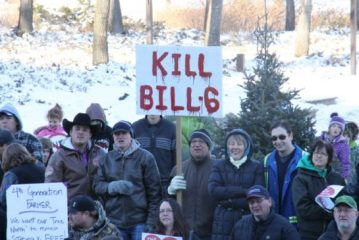
edmonton-kill-bill-6-size-xxlarge-promoFarmers are rallying on the steps of the Legislature and in town halls across the province waving Kill Bill 6 placards. The government is scrambling to produce amendments to address the areas that lack clarity and the Wildrose is having a field day.
What’s really at play here?

This is going to be fixed

Rachel Notley takes full responsibility for her government’s bungling of the communication process. Her government has learned an important lesson—even the best intentioned proposals will fly off the rails if they’re not introduced with the proper consultation. And while we’re on the topic of consultation, there’s a big difference between “consultation” and “information sharing”. The former is a two-way dialogue, the latter is not.

It is highly likely that the government’s amendments will address the concerns expressed by the Wildrose on behalf of the farmers* including the Bill’s failure to distinguish between family farms and commercial operations which created the fear that:

  • Farmers won’t be able to call on their neighbours for help
  • Farmers won’t be able to deliver calves at 2 a.m. or harvest around the clock
  • Farm children will be prevented from going to 4H
  • Enterprising farm children (like the little girls who own 70 chickens and sell eggs) will have to comply with OH&S regulations, and
  • Rodeos and “You Pick” berry farms will become a thing of the past

“Educate, not legislate”

The Wildrose prefers to “educate not legislate”, arguing that Bill 6 is unnecessary because farmers shouldn’t be forced to implement safe practices, they will do so voluntarily.

No doubt this is true for the majority of farmers, but it’s not true across the board.

The Wildrose raised two troubling examples which illustrate this.

Wildrose MLA Mark Smith said that many farm accidents are caused by poor decision making and “that’s just the nature of life.” He illustrates his point with a graphic description of how his uncle lost his arm trying to unclog a baler (he tried to free himself by cutting off his hand but failed).

Under Bill 6, the loss of a limb won’t be dismissed as “the nature of life”. It will trigger an OH&S investigation and reinforce the importance of adhering to safe practices like shutting off machinery before poking around.

Wildrose MLA Ron Orr said farmers are an independent breed who know and “embrace” the risks of farming. He characterized Bill 6 as an effort to “bubble wrap” farm children to protect them from these risks.***

Bill 6 doesn’t apply to the family farm, so it’s difficult to see when farm children would be caught by Bill 6, however if a commercial farm uses child labour children (who lack the maturity to accept and embrace risk) will be protected.

wildrose

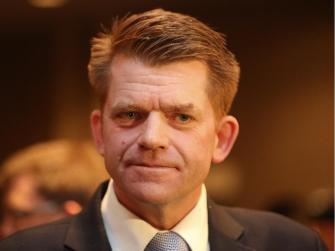
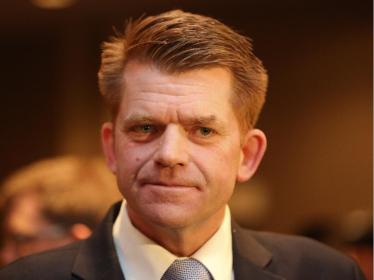
Brian Jean Wildrose Leader

The biggest problem with the “educate, not legislate” argument is that it doesn’t address the issue of compensation in the case of injury or death.

Some farmers argue that Workers’ Compensation is inadequate and they should be free to choose their own insurance.

This is a valid point, but it assumes all farmers have private insurance and that in all cases the insurer will pay the claim. Anyone who’s had any experience with private insurers knows that the first thing an insurance company does when a claim is made is review the policy to see if coverage can be denied.

Bill 6 requires non-family farms to carry Workers’ Compensation. It turns compensation into a safety net, not a sieve.

The farming way of life

The Wildrose is adamant that Bill 6 will destroy the farming way of life.

Wildrose MLA, Grant Hunter says Bill 6 isn’t just going after the farmer’s pocketbook, “It’s going after their heart, their passion, and their way of life” and farmers will never give up because “it’s not easy to give up on your passion because it takes a piece of your heart with it.”****

Notley’s proposed amendments should allay such fears, which are understandable given the botched rollout of Bill 6.

However it’s hard to understand the positions taken by Hunter’s colleagues, Mr Orr and Mr Strankman.

Orr says owner-operated family farms are free enterprise endeavors. He says the NDP Regina Manifesto (the founding document of the CCF written in 1933) demonstrates that Notley intends to replace the free-enterprise farm system with socialistic “economic planning.” He tells farmers that the NDP intend “to destroy you.”*****

Strankman raises a fear of unintended consequences. He says farmers keep “predator control devices” (hunting rifles?) in their closets, trucks and tractors. Who know what might happen if an OH&S inspector happens to pop in and see one?******

At the same time these Wildrose MLAs are trying to convince Alberta farmers that they’re fighting off the socialist hordes, others like Derek Fildebrandt admit the majority of the concerns relate to how Bill 6 was communicated, not its “nitty-gritty” content.*******

Notley’s response

The Notley government’s botched consultation/communication plan created tremendous anxiety.  The Wildrose seized the opportunity to score political points by inflaming Alberta farmers with misinformation and socialist fear mongering.

notley

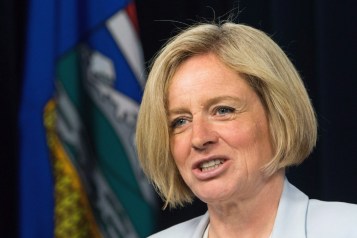
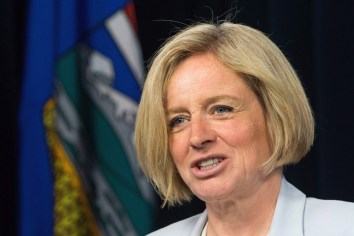
Rachel Notley

But Notley won’t kill Bill 6 or delay it. History has shown that approximately 170 farm workers will be injured and seven or eight will die between January and April 2016. Notley won’t trade the suffering of 170 farm workers and their families to appease the Wildrose and farmers who don’t support what Bill 6 is intended to accomplish.

She will, however, engage in fulsome consultations to ensure the regulations drafted in support of Bill 6 address everyone’s concerns.

Notley is taking a principled position that demonstrates leadership after getting off to a very shaky start.

The same can’t be said for Brian Jean and his Wildrose party.

*examples cited by the Wildrose, see Hansard Dec 2, 2015

**Hansard, Dec 2, 2015, 829    

***Hansard, Dec 2, 2015, 820

****Hansard, Dec 3, 2015, 860

*****Hansard, Dec 2, 2015, 819

******Hansard, December 1, 741

*******Hansard, Dec 2, 2015, 814

Posted in Politics and Government | Tagged , , , , , , | 39 Comments

Notley Reads the Tea Leaves: The Climate Leadership Plan

Last Sunday hell froze over, or so it seemed to many Albertans.

Alberta’s NDP premier, Rachel Notley, unveiled her government’s Climate Leadership Plan. She was surrounded by representatives from NGOs and aboriginal groups as well as the CEOs of Suncor, Shell, Cenovus and Canadian Natural Resources Limited. No one batted an eyelash as Notley rolled out the government’s plan to:

  • Implement an across the board carbon tax ($3 billion annually) starting in 2017
  • Phase out coal-fired power plants by 2030
  • Set a 100 megaton cap on oilsands emissions
  • Achieve a 45% reduction in methane emissions by 2025
  • Reinvest revenues in renewable energy programs and innovation and technology

Given Big Oil’s vitriolic reaction to Notley when she took power a mere six months ago one has to wonder what happened.

The sweet spot

Notley has an uncanny ability to read the mood of the people, analyze a situation and determine just how far she can go before she hits a wall. With the Climate Leadership Plan she nailed it.

notley

Rachel Notley

Environmentalists are happy because for the first time in recorded history Big Oil appears to accept the premise that the environment does not have to be sacrificed for the economy.

And while Notley’s plan is by no means perfect, it gives Notley an opportunity to demonstrate that an energy-based economy can implement effective climate regulations.

James Coleman, writing in the U of C law blog says Notley’s climate plan may be the most important climate announcement of the year because it may encourage other jurisdictions to follow suit.  No doubt that’s why she called it the Climate Leadership Plan.

Most importantly, environmentalists believe that Notley’s plan is the beginning of a process to transition Alberta away from fossil fuels to a more stable and diversified economy.

Big Oil is on board because it had no choice.

Oilsands producers are relieved they don’t have to bear the brunt of the $3 billion/year carbon tax (we’re all paying it).  The 100 megaton cap on oilsands emissions will allow them to continue to expand—43% by 2030. And shutting down the coal plants is someone else’s problem.

But most importantly their existing strategy to increase market access and improve their reputation was a dismal failure.

Big Oil assumed that getting the federal and provincial Conservative governments to streamline the regulatory approval process would speed up market access. It didn’t. They failed to account for public resistance.

Big Oil decided the cause of this resistance was stupidity. They called it a lack of “energy literacy”—the public simply didn’t understand that escalating environmental degradation was the price of prosperity.

02580872091524_low

Steve Williams Suncor

The public disagreed. Then oil prices tanked, putting paid to the prosperity argument once and for all.

Eventually a light bulb went on. Last spring executives like Suncor CEO Steve Williams announced that “Climate change is happening. Doing nothing is not an option.”

So far, so good, but in a recent article celebrating Mr Williams as the CEO of the year, Mr Williams predicted that Suncor will be mining the oilsands for the next 200 to 300 years.

Reading the tea leaves

Ms Soapbox thinks Mr Williams is delusional. Here’s why.

The public, particularly the younger generation, is becoming less enamored with fossil fuels in general and the oilsands in particular.

Jamil Jivani, the co-chair of the Future of Canada’s Oilsands, says younger workers are reluctant to work in the energy sector. They think it’s a dying industry. They’re not interested in squeezing more productivity or money out of old energy. Instead they’re looking for “completely new ways of making money, and new frontiers in the energy economy not yet embraced, or possibly even conceived.”*

Where will they go?

Well, they could follow Jatin Nathwani’s advice and shift from transporting fossil fuels to moving electrons generated by hydro, nuclear, geothermal, wind and solar power. Nathwani, a professor and Chair of Public Policy for Sustainable Energy at Waterloo says Canada has the technological and scientific wherewithal to do it.

Or younger workers can seek out “new energy” entrepreneurs like Elon Musk who invested the millions he made from the sale of PayPal in Tesla, an electric car company, and SpaceX, a space exploration company.

elon-musk1

Elon Musk

Musk believes that in a few years over half the new cars sold in the US will be electric cars. (Musk is pretty successful at anything he does. NASA is so impressed with SpaceX that it gave him a contract to transport astronauts and supplies to the international space station).

The demand for electric cars will get a boost from jurisdictions like California, which recently passed laws providing rebates to drivers who buy or lease zero-emission vehicles.

Electric cars won’t solve our climate change problems, but they are an indication that the public is moving in a greener direction.

Hidebound oil executives may believe that Big Oil will be toiling in the oilsands for another 200 years, but wise governments are preparing now for the economic disruption that will come with the advent of “new energy”.

Rachel Notley knows how to read the tea leaves. Her Climate Leadership Plan is the first step to ensure Alberta will be ready when “new energy” arrives on our doorstep.

Well done Rachel. Well done.

*Daily Oil Bulletin, Nov 17, 2015

Posted in Energy & Natural Resources, Environment, Politics and Government, Science | Tagged , , , , | 16 Comments

Refugees? Paris? Wait, what?

What’s the difference between these two sentences?

Sentence “A”: “You terrorist, you don’t belong here.”

Sentence “B”: “You might be a terrorist, you don’t belong here.”

Sentence “A” was uttered by two white males who attacked a 31 year old Muslim woman on her way to pick up her child from school. They ripped off her hijab, beat her and then for good measure robbed her.

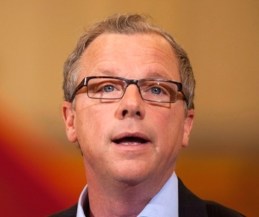
Sentence “B” is the reason Saskatchewan premier Brad Wall wants Prime Minister Trudeau to suspend his plan to bring 25,000 refugees to Canada by year end.

The concern

Mr Wall says bringing large numbers of refugees into Canada “could severely undermine the refugee screening process” and in the next breath says the Paris attacks “are a grim reminder of the death and destruction even a small number of malevolent individuals can inflict upon a peaceful country and its citizens.” He implied that Mr Trudeau is putting Canadians at risk in order to fulfill a campaign promise.

brad-wall

Brad Wall

Mr Wall would have a point if Mr Trudeau undermined the refugee screening process, but he didn’t. In fact, Bob Paulson, head of the RCMP, and Michel Coulombe, CSIS director, agree that the government’s plan is feasible.

If Mr Trudeau hasn’t compromised the screening process, why is Mr Wall calling for a halt?

Political opportunism

Paris was attacked on Friday Nov 13. Mr Wall fired off his letter two days later.

It sounds suspiciously like Sentence “B”: “You might be a terrorist, you don’t belong here”, but it could be a cynical attempt to frighten Canadians and score points with his conservative supporters.

Meanwhile French President Francois Hollande said France would not turn its back on refugees despite the horror of last Friday, which leaves Mr Wall a little exposed.

Alberta’s reaction

All the leaders of Alberta’s political parties took a moment in the Legislature to condemn the terrorist attacks.*

Premier Notley reiterated her support for the refugee resettlement plan saying that Alberta had welcomed refugees for decades and that here they can “begin a new life, a safe life, a life of promise and opportunity.” She noted that refugee families contribute to Alberta’s communities, its culture and its prosperity.

Wildrose leader Brian Jean invoked the ghost of Stephen Harper.

wildrose

Brian Jean

He echoed Mr Harper’s view that “this international movement of evil has declared war…on the western world…on nations that are free, democratic, and tolerant…on each and every single one of us in Canada.” He issued a call to arms—“with each such declaration of war…now is the time to fight back”—and confirmed his support for Mr Wall’s call for a suspension.

PC leader Ric McIver said he believed that terrorists wanted to divide our society and make us afraid. He urged Canadians and Albertans to stand together and reconfirm their belief in equality for all regardless of race, creed, colour, religion or gender.

Liberal leader David Swann rejected the rhetoric of war pointing out that the West had contributed to the violence in the Middle East. He and Greg Clark, the Alberta Party leader, supported the need to help those fleeing violence without compromising Albertan’s security.

But Brian Jean wouldn’t let up. The next day he demanded specifics on the security screening process, where the refuges will go and how the government would provide housing, healthcare, education and social supports to the refugees.

Ms Notley assured him her government was working closely with the federal government on these issues and that she’d share more information as soon as it became available.

Later Mr Jean told the media Ms Notley’s answers were “fluff” and reiterated his belief that “Western civilization is under attack.”

What’s the difference?

There is no difference between Sentence A and Sentence B.

people-tyler-trump

Donald Trump

“A” is used to justify a hate crime, “B” is used to justify abandoning desperate refugees; both sentences are rooted in fear. Fear can make societies do crazy things. Donald Trump says it may be time to “register” all Muslims. When asked how this is different from Nazis labelling Jews he said “you tell me”.

But Albertans have another choice.

We can choose Sentence “C”. When Premier Notley rejected Premier Wall’s call for a halt she said, “We cannot have our decisions being driven by fear.”

She’s right. Now is not the time to talk of war, to pump up fear and fly into fits of insanity like our neighbours to the south.

Albertans are better than that…aren’t we?

*Quotes from Hansard, Nov 16, 2015, p 463 and Nov 17, 2015, p 494

Posted in Crime and Justice, Politics and Government | Tagged , , , , , , | 25 Comments

Brian Jean Embarks on Post Truth Politics

“Fact-checking was a great development in accountability journalism…[but] one-off fact-checking is no match for the repeated lie.”    

Brian Jean, leader of the Wildrose opposition, published an article in the Calgary Herald last week. It was heavy on the repeated lie and light on everything else.

Jean’s premise is: pipelines create jobs, Rachel Notley’s NDP government doesn’t support pipelines therefore, by extension, the NDP government is killing jobs and the economy.

Really? Let’s fact check his argument:

Fact Checking

Jean says “Without question, the biggest Alberta-based job-creation program that can be conceived of by any level of government over the next decade is building pipelines to get our products to tidewater.” And there’s the fatal flaw in Jean’s logic—governments DON’T build pipelines, the private sector does.  

Brian Jean Wildrose Party Leader

Jean describes the benefits of an industry not “suffocating” from low oil prices, higher taxes and pending royalty changes. He fails to acknowledge that the biggest impact on profitability is low oil prices and that OPEC, not Notley, holds the hammer on prices.  

Jean blames Alberta’s lack of pipelines on Notley’s “failure to aggressively advocate for critical pipeline projects” thereby threatening “Alberta’s long-term economic prosperity.”

He sets out examples of Notley’s failure “to aggressively advocate”. I’ve set out facts to refute his argument:

  • Notley was “ideologically and irrationally” opposed to Keystone while in opposition and failed to advocate for it when she became premier.
    • To suggest that a provincial premier, let alone the leader of the third party in opposition can influence a US president is ridiculously naïve. Prime Minister Harper, ex-premiers Jim Prentice and Alison Redford, Canada’s ambassador to the US, Gary Doer, and Rob Merrifield, Prentice’s man in Washington, all had a go at it. They got absolutely nowhere.
  • Notley refused to support Northern Gateway.
    • So what? The National Energy Board approved Northern Gateway in June 2014. It will go ahead if Enbridge satisfies the NEB’s conditions, reaches an accord with the First Nations and persuades the Trudeau government to accept the NEB’s recommendation. Notley’s position on Northern Gateway is irrelevant.
  • Notley “muddied the approval process for Kinder Morgan’s Trans Mountain pipeline expansion” by suggesting the terminal be moved to Delta, BC—this would delay the project and cost billions.
    • Notley is not a participant in the NEB process. She has zero impact on the NEB’s decision.
  • Notley’s support of Energy East is suspect because it “is facing hurdles from the NDP’s provincial cousins in Manitoba”.
    • That’s pathetic. Notley doesn’t control the Manitoba NDP anymore than they control the Alberta NDP.
  • Notley “opened the door to allowing Quebec…to dictate terms and conditions for Energy East’s approval.”
    • Notley said Quebec is more likely to support Energy East if Alberta shows it’s protecting the environment. She said she understands Quebec’s desire to see the pipeline create more jobs. She did not give Quebec a veto no matter how hard Jean spins it.
  • Notley needs to defend Alberta by telling the world Canada “has the absolute best environmental performance of the world’s top 10 oil reserve jurisdictions.”
    • If so the head of the Alberta Energy Regulator would not be implementing a 2 year plan to improve Alberta’s environmental regulations. AER CEO Jim Ellis recognizes that the energy sector operates in a global marketplace and “it’s critically important” that people have confidence that Alberta’s energy is “being produced in an environmentally sustainable manner.” 

Post truth politics in Alberta

The NDP government is on record as supporting the oilsands and the energy sector. They’re seeking the middle ground based on environmentally responsible energy production. However, it serves Brian Jean’s purpose to say the opposite. He is supported by the conservative media which has a monopoly on disseminating information to an undiscerning public that demands its news in tiny bite sized pieces.

So brace yourselves for more bombastic articles from Brian Jean exhorting Albertans “to encourage their leaders…to fight proudly and fiercely for market access in every direction.”

Just don’t ask Jean what fighting “proudly and fiercely” looks like because other than low taxes, low royalties and weak environmental regulations (how’s that working for you?) he doesn’t have a clue. All he needs to do is convince the public that Notley’s government is out to “get” the oilsands and the pipelines and he’s home free.

Welcome to post truth politics Wildrose-style.

Fact checkers need not apply.

Posted in Energy, Politics and Government | Tagged , , , , , , | 58 Comments

POTUS Kills Keystone XL

On Friday Barack Obama refused to issue a presidential permit allowing TCPL’s Keystone XL pipeline to cross the border between Canada and the United States.

POTUS

Obama rejected KXL because it wouldn’t meaningfully contribute to the economy, reduce gas prices or enhance America’s energy security. He described the urgent need to transition to a clean energy economy and while he didn’t say it, it’s easier to kill a project that doesn’t exist than one that does.

TCPL’s response to Obama’s decision was slightly (but not much) more nuanced than Steven Harper’s “no brainer” comment. CEO Russ Girling said: “Today, misplaced symbolism was chosen over merit and science—rhetoric won out over reason.”

Hal Kvisle, who was CEO when KXL was little more than a twinkle in an engineer’s eye, said Friday was a “sad day” because Obama’s decision killed access to the Gulf Coast and market access is an even bigger challenge to the industry than slumping oil prices.

Before we leap to the conclusion that Obama is in the grip of wild-eyed climate change zealots, let’s pause for a moment to reflect on how TCPL mismanaged the KXL file so badly that it was doomed from the start.

The seeds of failure

Neither Girling nor Kvisle mentioned TCPL’s bullheaded treatment of the landowners along KXL’s route.

Pipelines wrangle with landowners all the time, but it’s one thing to engage in tough negotiations with a few disgruntled landowners, it’s quite another to plunk a ruler on a map, draw a straight line through Montana, South Dakota and Nebraska and declare that that’s the pipeline route come hell or high water—especially when the route runs straight as an arrow over the Ogallala aquifer which supplies water to two million people in eight states and irrigates half of Nebraska.

Russ Girling CEO TCPL

Frustrated by TCPL’s recalcitrance, the landowners took their concerns about possible contamination of the aquifer to the governor of Nebraska. The governor sided with the landowners and asked Obama to refuse the permit. TCPL responded by meeting with four Nebraska senators—and refused to budge, saying it was simply impossible to reroute KXL to avoid the Ogallala aquifer.

A month later Nebraska granted itself the power to block the pipeline.

TCPL suddenly discovered that it wasn’t impossible to reroute KXL after all. All it would take was 30 to 40 miles of pipe and an additional pumping station to avoid siting 254 miles of pipeline over the aquifer.

But it was too late. By fighting the landowners every step of the way TCPL prolonged the permitting process. The anti-KXL movement gathered steam through 2011 and by 2012 KXL was bogged down in the US general election. It’s been bogged down in American politics ever since.

Had Kvisle and Girling responded to the landowners with more sensitivity KXL would have been built back in the day when the Alberta oilsands didn’t register in the US climate change debate.

But don’t expect Kvisle and Girling to acknowledge their mistakes. Executives don’t make a habit of telling their shareholders that the seeds of failure for a $5.2 billion project (that ballooned to $10 billion) were planted under their watch.

Politicians chime in

Prime Minister Trudeau was disappointed with Obama’s decision but said he respected the right of the United States to make it. “The Canada-U.S. relationship is much bigger than any one project and I look forward to a fresh start with President Obama to strengthen our remarkable ties in a spirit of friendship and co-operation.”   Oh good, Canada has stopped bashing its biggest trading partner.  

PM Trudeau

The Conservatives were less gracious.

Jason Kenney fired off six tweets in rapid succession, referring to Obama’s decision as ”insulting”, denigrating the Liberal government for caving in to the Americans and implying that Trudeau’s plan to impose “a de facto carbon tax” in order to get Obama’s approval had failed. If this is an example of the Conservatives softer “tone”, interim leader Rona Ambrose has her work cut out for her.

Where do we go from here?

Obama’s rejection of KXL is not cause for gloom and doom. Just the opposite. It gives Rachel Notley and Justin Trudeau the incentive to build a robust provincial/federal climate change policy that will enhance the credibility of Alberta’s energy sector in Canada and abroad.

And if we’re lucky, it will teach the energy industry that success doesn’t come from “educating” the public on the economic benefits of the oilsands. The public gets it. It comes from honestly addressing the public’s concerns about the environmental impacts of oilsands projects.

Both of these changes are critical because TCPL’s inept handling of KXL made Alberta’s oilsands the poster child for climate change. And no one is going to stuff that genie back in the bottle any time soon.

Posted in Energy & Natural Resources, Environment, Politics and Government | Tagged , , , , , , , | 29 Comments

Budget 2015: The Neutrino Problem

Scientists solved the problem of the Ghost Particle in less time than it’s taken the Alberta government to come up with a creative approach to economic diversification.

For 40 years Tory premiers talked a good line about diversification but with the exception of Premier Lougheed, they failed to deliver.

Now, after five short months in office, the NDP government is tackling diversification head on.

Budget 2015

Budget 2015 allocates $2.1 billion to support job creation and diversification by encouraging government-owned entities (ATB Financial, the Alberta Enterprise Corporation and the AIMCo) to help companies get the financial capital they need.

Joe Ceci, Finance Minister

Opposition critics and academics panned the idea saying the government can’t tell its arms-length financial institutions what to do. Former Tory finance minister, Ted Morton suggested that the boards of these institutions would resign en masse.

This fear mongering is about as frightening as the werewolf who rang your doorbell last night threatening to trick you if you didn’t give him a treat.

The critics ignore three important differences between the NDP government and the Tories:

  • the NDP plan requires all investment decisions to be made by the financial institutions, not the government
  • the financial institutions came to the government offering to do more—hardly what you’d expect from an arms-length board fearful of losing its autonomy to a pack of meddling politicians
  • the NDP, unlike the Tories, don’t have friends in industry who expect to be rewarded with diversification dollars

Diversification through education

Budget 2015 includes another mechanism to support diversification–$17.6 billion allocated to the department of Advanced Education over the next three years. This includes a two year tuition freeze and increased support for scholarships, grants and student loans.

However, before the government can use any of this amount to support diversification it will have to come to grips with the Tory government’s Campus Alberta strategy.

Campus Alberta was touted as a way to enhance communication across Alberta’s universities, colleges and technical schools. In reality it was nothing more than an effort to reduce costs and increase the industry focus of Alberta’s educational institutions in order to address industry’s complaint that universities and trade schools weren’t churning out enough tradesmen and engineers to meet industry’s needs. The inanity of that complaint in a province roiled by a boom/bust economy is obvious.

If Alberta is to succeed in diversifying its economy it must take a long view and invest in pure research that will create opportunities we can’t even imagine today.

The Ghost Particle

This is where the Ghost Particle or neutrino comes in.

In the 1960s Ray Davis, a physicist, and John Bahcall, a theorist, began to investigate neutrinos, the particles inside the sun that give it energy and make it shine. Bahcall created a mathematical model to determine how many neutrinos the sun created. Davis designed a neutrino trap, essentially 600 tons of cleaning fluid, in a lab buried deep in a goldmine in South Dakota. Capturing a neutrino was quite a feat notwithstanding the zillions of neutrinos flying through the atmosphere—there are 100 trillion neutrinos streaming through your body this very second.

In any event, something went wrong.

Davis was able to capture only one-third of the neutrinos that Bahcall’s predicted were coming from the sun. The scientific community was convinced either Davis or Bahcall had gotten it horribly wrong. Undeterred, the scientists spent 30 years perfecting their models and experiments but the results never changed.

Then in the 1970s scientists discovered that neutrinos come in three “flavours” (don’t you just love physics talk)—electron, muon and tau. Davis’s neutrino trap was designed to capture only one flavour, the electron neutrino. They needed a new experiment.

Enter the Canadians who together with university teams from the US and the UK built the $73 million Sudbury Neutrino Observatory (SNO). It was constructed piece by piece, like a ship in a bottle, deep underground in an unused part of an INCO mine. It’s huge. The neutrino detector is tucked away in a rock cavity 10 stories high.

In 2001 Dr Art McDonald proved Davis and Bahcall were both right. The sun emits electron neutrinos, but they constantly change flavour as they travel through space. By capturing all three flavours Dr McDonald was able to explain why Davis saw only one-third of the neutrinos called for by Bahcall’s model. He also learned some amazing things about particles that can pass through the centre of the earth and create the energy that fuels the sun.

Fourteen years later, smack in the middle of the federal election, Dr McDonald was awarded the Nobel Prize in physics.

Education and industry

Three lessons can be taken from the SNO project. Basic research is driven by academics and the scientific community, not industry. It takes time and requires government funding.

The Sudbury Neutrino Observatory

The academics and scientists pursued the neutrino for over four decades. INCO enthusiastically supported the SNO project by providing the mine shaft and carrying out the preparatory work at cost, but it didn’t fund the research, “partner” with the scientists or influence the purpose of the research. Funding came from the federal and provincial governments.

Why would a government fund such an esoteric venture? No one put it better than the NDP politician Floyd Laughren when Robert Nixon, Ontario government Treasurer, balked at kicking in $7 million to support the project. Laughren said, “There is a gap in the Treasurer’s education, because there is such a thing as pure research. For the Treasurer not to recognize that pure research is legitimate…does not comment well on his ability to look into the future or at least to try to think ahead as to the society we are going to have.”

Indeed.

The Notley government’s plan to diversify the economy is an attempt to look into the future and think ahead about the society Alberta is going to have. It requires ongoing stable funding for advanced education so that Alberta’s universities and colleges aren’t forced into “partnerships” with industry in order to satisfy industry’s need for skill sets that are useful today but obsolete tomorrow.

Think neutrino!

Sources:

http://www.pbs.org/wgbh/nova/transcripts/3306_neutrino.html

http://www.sno.phy.queensu.ca/

http://www.sno.phy.queensu.ca/papers/EwanAndDavidsonEarlyDevelopmentofSNO.pdf

Posted in Education, Politics and Government | Tagged , , , , , , , , | 21 Comments

Sunny Ways?

“If it were in my power I would try the sunny way…Do you not believe that there is more to be gained by appealing to the heart and soul of men rather than to compel them to do a thing?”—Sir Wilfrid Laurier

“Sunny ways my friends, sunny ways.” When Justin Trudeau quoted Sir Wilfrid Laurier on election night he unleashed a sunnier, more optimistic way of doing politics…the Conservatives were all over it in a heartbeat.

Justin Trudeau on election night

They jettisoned their cloudy ways like moths emerging from their cocoons. New and old-stock Conservatives alike hit the airwaves to make it clear that it was their botched tone, not their mean spirited policies, that cost them the election.

Well, maybe they weren’t quite that blunt.

Jason Kenney said, ”On substantive points, we’ve been a very good government. I think where we went wrong was on tone and we have to learn from our mistakes…We need a conservatism that is sunnier and more optimistic than what we have sometimes conveyed.”  He didn’t explain how he’d describe Duffygate, the Syrian refugee crisis, the niqab issue or stripping Canadians of their citizenship in sunnier language.  

Newly elected Conservative, Tomasz Kmiec said, “We do best when…we talk about the issues in a positive way, that sunny kind of conservatism of Ronald Reagan and Margaret Thatcher…that’s what we need to bring back”.

Margaret Thatcher? The if-you-want-to-cut-your-own-throat-don’t-come-to-me-for-a-bandage Margaret Thatcher?

Deepak Obhrai said, “The core Conservative values, of course, won’t change, but we’ll have to put forward a little softer face.”

Lisa Raitt

Conservative strategist Ken Boessenkool suggests the “softer face” should be a woman’s face because “…the Canadian public is not only ready, but prefers, female candidates over male candidates.”

Michelle Rempel would love to be the Conservative’s “softer face”. However in a recent Twitter cloud burst she undermined her chances by slamming the Conservative party who, she said, would reject her as party leader because she’s too young, too bossy, too female and too inexperienced.  It wasn’t exactly Ms Rempel’s sunniest hour.

Lisa Raitt is one of the few Conservatives who hasn’t jumped on the tone bandwagon. She says policy discussions are “tough conversations…on difficult topics, and it’s not all easy all the time.”   Instead of focusing on tone she suggests the party dig into the data to find out who voted for the Conservatives and who didn’t and why.

Interestingly, Ms Raitt is a sunny Conservative. When asked how she felt about moving to the opposition benches she said she welcomed the opportunity to focus on her constituents. “That will be a lot of fun and I’m really looking forward to it.”

Mr Sunshine    

Sir Wilfrid Laurier was the leader of the federal Liberals when Manitoba passed legislation blocking public funding for Catholic schools. The Catholic minority asked the federal Conservative government to intervene. The federal government passed legislation “commanding [Manitoba] in the most violent language” to reverse its position or else. Manitoba’s premier flew into a rage over the feds’ violation of the division of powers between the feds and the provinces and called an election which he won, further damaging the federal Conservatives’ credibility.

Sir Wilfrid Laurier

The Conservative government eventually fell to Laurier’s Liberals. One of Laurier’s first acts was to implement his “Sunny Ways” policy. He asked the Manitoba premier to be just, fair and generous to the Catholic minority and proposed a compromise: Catholics could have a Catholic education if there were enough students to warrant it.   This would be determined on a school by school basis. Manitoba’s premier accepted the compromise and everyone breathed a huge sigh of relief.

Sunny ways isn’t about tone. If it were Laurier would be known as the prime minister who sweet talked the Manitoba premier into complying with a draconian federal law. Sunny ways is about substance. When faced with a fractious and volatile problem Laurier met with Manitoba’s premier and created a solution that satisfied the Catholics and the Protestants as well as the governments of Manitoba and Canada.

Sunny ways is about what you do, not how you say it.    

The Conservatives, with the possible exception of Lisa Raitt, haven’t grasped that yet. Until they do, brace yourselves for an onslaught of cheerful Conservatives taking selfies and cradling sleeping babies all the while spouting the same old un-sunny Conservative policies.

Not exactly the Eureka moment we were hoping for.

Posted in Politics and Government | Tagged , , , , , | 50 Comments

The Globe and Mail Jumps the Shark

We’ve reached that point in the election cycle where the mainstream media peppers us with political endorsements telling us who, in their learned opinion, we should vote for on Oct 19.    

Once again the mainstream media does not disappoint.

The Globe and Mail, the Edmonton Journal and the Calgary Herald threw their weight behind the Conservative party.

The Journal and the Herald made the usual arguments: these are uncertain economic times, the Harper’s Conservatives have a solid economic record and only Harper can be trusted to deliver the sensible leadership necessary for Canada’s economic good. Sure, the man’s not perfect, but who is?

The Fonz: shark jumper

The Globe on the other hand, jumped the shark.

“Jump the shark” is a term arising from a Happy Days episode where the writers, utterly bereft of ideas made Fonzie decked out in a leather jacket and water skis, jump over a shark.

The phrase entered the vernacular to signify that point in time when something of quality descends into idiocy.

The Globe endorsement  

David Walmsley, writing on behalf of the Globe’s editorial board, jumped the shark with magnificent finesse. He endorsed the conservatives of yesteryear under the leadership of tomorrow.

Here’s Walmsley’s argument:

  • Election 2015 was driven by a desire for change
  • The key election issue should have been the economy but turned into a referendum on Harper
  • Even though the Liberals and the NDP ran on the rhetoric of change they had so much respect for the Conservatives’ economic policy that they adopted it with some tweaks (*cough*)
  • Harper’s secrecy, narrow vision on crime, lack of respect for science and the courts distracted voters from the Conservative’s accomplishments
  • Harper created a “rotten” government culture
  • Harper is dragging the Conservative party back to its Reform roots
  • The Conservative party was great once and could be again if Harper wasn’t its leader
  • So re-elect the Conservatives in the hopes that Harper will resign and the old conservative party will rise again

Leaving aside the obvious question—why would Harper resign if Canadians returned the Conservatives to power, and if by some miracle he did, why would his replacement be any better—there’s still the niggling technicality that a voter can’t put an “X” next to their local Conservative candidate’s name with the proviso “but only if Harper resigns”.

Walmsley gets feedback

For some unfathomable reason Walmsley decided to conduct a Q and A session on Facebook after he posted his endorsement on line.

It was brutal.

He was swamped with over 500 questions in less than an hour. Virtually all of them were variations on the have-you-lost-your-mind theme.

David Walmsley: shark jumper

Readers disputed the premise that the election should have been about the economy and that Harper had done a good job with it. They challenged the idea that the rotten culture in government and corruption in the prime minister’s office was solely Harper’s doing, pointing to the corrosive influence of ministers like Jason Kenney, Chris Alexander, Pierre Poilievre and Julian Fantino and loyalists like Nigel Wright. They reminded Walmsley of the laundry list of Harper’s failures including his negative impact on Canada’s international reputation, his lack of action on climate change and his refusal to deal with missing and murdered First Nations women.

They said it was impossible to divorce Harper from the Conservatives—it wasn’t called the Harper Government for nothing.

They noted the absurdity of an endorsement asking voters to vote for the “not Harper” Conservative party when it’s not on the ballot.

Some kind souls asked whether Walmsley had hurt his head. Others wondered whether he was smoking crack.

Walmsley tried to respond but was soon swamped by the tsunami of questions and faded off Facebook altogether.

The politics of an endorsement

When asked why the Globe published this flaky endorsement, Walmsley replied “We have a role in society and that means taking a position that is a close to our values as possible.”

But who exactly are “we”?

Certainly not the majority of the journalists who contribute to the Globe. Even Margaret Wendt, the Globe’s most right leaning journalist, suggests it’s time to ditch Harper and the Conservatives, hinting that it’s Justin Trudeau’s turn.

Are “we” the Globe’s owners? Walmsley acknowledged that he sent the endorsement to the owners but staunchly denied that the Thomson family made him write this illogical bit of nonsense. This makes things worse. Walmsley may have been forgiven for caving to the owners and endorsing Harper’s Conservatives, but he won’t be forgiven for the intellectual flame out that caused him to endorse the non-existent Harper-less Conservatives.

Does it matter?

Editorial boards have the luxury of time and access. They interview the candidates, research party platforms and (presumably) are better placed to develop informed opinions than the rest of us, hence the eagerly awaited and generally unsurprising endorsement…but does it really make a difference?

Gail Collin, editorial page editor for the New York Times says any editor who thinks their editorial will change public opinion is “deluded”.

Diana Owen, a political scientist, says this lack of influence is partly caused by the public having little faith in the media in the first place.

Walmsley’s endorsement confirms that Collin and Owen are right. When the Globe endorsed the old Progressive Conservative party under the as-yet-to-be-named leader it utterly destroyed its credibility.

Given that goofy endorsements are par for the course, Ms Soapbox would like to offer an endorsement of her own. I endorse the British monarchy but not Queen Elizabeth. Oh and while I’m at it I’d also like to endorse the Seven Dwarfs but not Snow White.

Your turn…

Posted in Economy, Politics and Government | Tagged , , , , , , | 53 Comments

If Not Harper, Then Who?

“I’ve seen issues come up before that get a lot of press attention, and sometimes a photograph or sometimes a side issue can move votes, but I always believe that the big votes are moved on the big issues. I don’t believe that most people are attracted by the rabbit tracks of day-to-day media coverage.”—Stephen Harper

Hell will freeze over before anyone in the Soapbox family votes for Stephen Harper’s Conservative party; our big question is how do we decide between the Liberal candidate, Kent Hehr and the NDP candidate, Jillian Ratti?

Here’s a thought.

Let’s compare their party’s platforms on what Harper calls the “big issues”—the economy and national security. (Presumably Harper would dismiss the discord he’s created with the niqab issue, the “barbaric cultural practices” tip line, revoking citizenship and prioritizing refugee claimants as “rabbit tracks.”)

The Economy

Both Trudeau and Mulcair say they’ll fix the economy with a grab bag of government spending coupled with tax cuts and hikes aimed at improving the lives of the middle class. Rather than getting lost in the minutiae let’s focus on the basics.

The centre piece of Trudeau’s plan is a massive investment in a 10 year infrastructure plan that includes “social” infrastructure as well as bricks and mortar. The plan will require deficit budgets for three straight years followed by a $1 billion surplus in year four.

Mulcair on the other hand promises balanced budgets from the get-go.  But here’s the rub. Mulcair’s budget is based on Harper’s budget assumption of $300 billion in revenues, which assumes oil at $67 in 2016. The EIA estimate is closer to $59.

No one can crystal ball the economy four years out; however former parliamentary budget officer Kevin Page calls Trudeau’s plan “realistic” because it updated the numbers from Harper’s 2015 budget to account for weaker oil prices.

Trudeau’s budget is more credible than Mulcair’s budget which will fail for the same reason Harper’s budget will fail—$67 oil is a pipe dream.

National Security

Trudeau supported Bill C-51, the anti-terrorism bill, while promising amendments to enhance oversight and accountability if the Liberals formed government. Mulcair opposed Bill C-51 from the start and with good reason, Bill C-51 sacrificed basic rights and freedoms on the altar of national security.

The Liberals said their conditional support was an effort to preserve the provisions that required Canada’s intelligence services to work more closely with the police. (Apparently CSIS knew the police were tracking the wrong guys in the case of the Toronto 18 but didn’t tell them.)

Be that as it may, Trudeau’s support of the Bill looked like political posturing intended to show the Liberals were not weak on security. It drove Liberal supporters mad and inspired many, including Ms Soapbox, to look at Mulcair’s NDP with renewed interest.

Trudeau’s explanation still doesn’t sit well, but it received backhanded support from terrorism expert and law prof Craig Forcese (who doesn’t endorse any party’s stance on national security). Forcese says Bill C-51 needs “serious renovation”, but he’s not advocating it be scrapped altogether. Forcese also supports the Liberals’ effort to open a consultation process to address the gaps in national security.

So while Trudeau’s position on Bill C-51 leaves a lot to be desired, it’s not enough (in our opinion) to throw the Liberals out of game.

“Rabbit tracks”

Trudeau and Mulcair rightly condemn Harper’s handling of the refugee crisis, the niqab, Bill C-24 (stripping citizenship) and the “barbaric cultural practices” tip line, so there’s nothing to be gained in seeking differences there; however the two leaders are starkly different when it comes to transparency and accessibility.

Consider how the two leaders responded to the Globe and Mail’s request for a personal interview.

Trudeau granted journalist Ian Brown unfettered access to his associates, his wife Sophie and himself.  Brown discovered that Trudeau is intelligent, articulate, compassionate and principled, not the flibbertigibbet some people expect. Sophie disclosed that she’d suffered from bulimia in the past and that the couple had seen a marriage counsellor about “boring relationship stuff”.

Mulcair on the other hand refused all interview requests for more than two months, finally offering to do a phone interview and when that was rejected a personal interview.  The Globe refused both offers due to an “imminent publication date”.

Perhaps the Globe was indulging in a fit of pique, but Mulcair’s decision to be unavailable allowed the Globe to write an article based on the observations of others who painted a picture of an intelligent ambitious politician who could be both charming and alienating, conciliatory and cagey, a man who ran roughshod over his colleagues and left the Quebec Liberals under a cloud.

This coupled with Mulcair’s refusal to participate in the consortium debates after he’d agreed to do so and his lack of clarity on issues that impact Quebec (the Energy East pipeline and what qualifies as a “yes” vote for Quebec sovereignty) suggest that cautious political strategy trumps authenticity.

In the end Trudeau appears authentic, Mulcair less so.

Sometimes it’s not the big issues that attract the big votes. The “rabbit tracks” made by someone else’s rabbit can tip the balance for a voter trying to decide between two attractive progressive parties, their leaders and their candidates.

Ms Soapbox has come full circle. She is voting for Kent Hehr, the Liberal candidate in Calgary Centre.

Mr Hehr is a seasoned provincial politician with an excellent track record in the Alberta Legislature. His values and those of his leader, Justin Trudeau, reflect my values. And here’s the icing on the cake, Mr Hehr has the best chance of defeating the Conservative candidate.

That’ll teach Mr Harper to ignore “rabbit tracks”.

Posted in Economy, Politics, Politics and Government | Tagged , , , , , , , , | 70 Comments