Responding to Orlando

Can we talk about that which cannot be named?

On June 12 forty-nine people were massacred at a nightclub in Orlando.

Alberta’s political leaders expressed their horror at the senseless slaughter.

All but one of the politicians recognized that the victims were members of the LGBTQ community.

Politicians respond

Premier Notley tweeted her government’s solidarity with the LGBTQ community and lit the Legislature building with Pride colours.  On the night of the slaughter Ms Notley, Ricardo Miranda (a member of the group she affectionately calls her “MLgAys”) and other supporters were at an event at a Calgary gay bar.

27187441740_0307188d80_b

Premier Notley and MLA Ricardo Miranda

Liberal leader David Swann expressed his sympathy for the victims and their loved ones saying “this heinous act against the LGBTQ community reminds us that the battle for unconditional equality and acceptance is not won and that we must all stand strong against discrimination and hostility.”

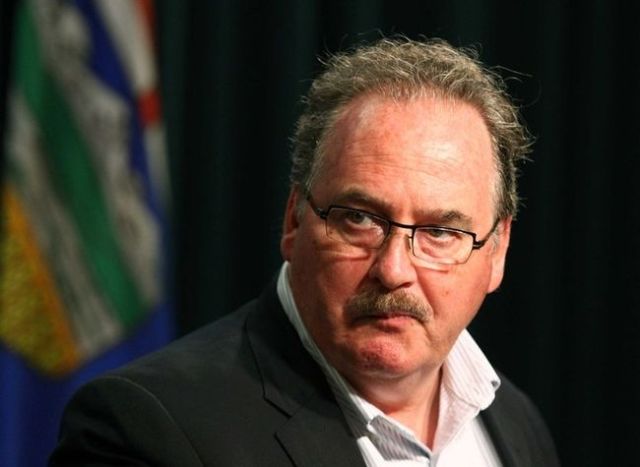
Alberta Party Greg Clark was heartbroken and said there was “still work to do to ensure #LGBTQ community [is] truly equal.”

Even PC leader Ric McIver stepped up and tweeted “So sad to hear of mass shooting at Orlando LGBTQ club. 50 people murdered.  Many more wounded. Hate cannot prevail.”

Only Brian Jean, the leader of the Wildrose, ignored the fact the victims were LGBTQ, tweeting: “Praying for the families of those killed and injured by such a vicious act of hatred and terror in Orlando this morning”.  But for the reference to Orlando he could have been tweeting about any number of random shootings that occur with heartbreaking regularity in the United States.

Why the lack of recognition that the victims were LGBTQ?

Because if Mr Jean wants to stay on as leader of the Wildrose party he needs to stay true to the Wildrose base.

The official word on discrimination Wildrose style

Mr Jean’s vague statement of condolence is consistent with the party’s decision to reject (twice) a principle that expressly protects the rights and freedoms of Albertans, regardless of their race, religion, colour, gender, physical or mental disability, age, ancestry, place of origin, marital or family status, source of income, or sexual orientation.

The Wildrose says it’s already covered in its utterly meaningless promise to defend the rights and freedoms of “all persons” in section 2.2 of the Wildrose Constitution.

Read it and you’ll find “all persons” really means “citizens” (apparently landed immigrants, temporary foreign workers and refugees don’t count).

Read a little further and you’ll find a promise to protect the right to life, safety, liberty and privacy and the freedom of speech, peaceful assembly, property ownership and advocacy on public policies which reflect “their deeply held values”, but no protection from discrimination if a citizen exercising his right to, say property ownership, violates another citizen’s right to be free from discrimination in access to housing on the basis of sexual orientation (or race or gender for that matter).

Welcome to the bizarro world of the Wildrose Constitution.

No rights without protection

But wait, you say, the Wildrose Constitution says all citizens are equal before the law and entitled to fundamental justice.

That’s true, but as Mr Vriend discovered when he was fired by an Edmonton college for being gay, being told that you have equal and inalienable rights and actually having them are two different things when the right not to be discriminated against on the basis of sexual orientation is missing from the legislation intended to protect you from discrimination in the first place.

The Supreme Court of Canada ultimately resolved the case in Mr Vriend’s favour by reading the words “sexual orientation” into the Alberta Individual Rights Protection Act.

Courts can “read in” protection from discrimination, the public cannot.
wildrose

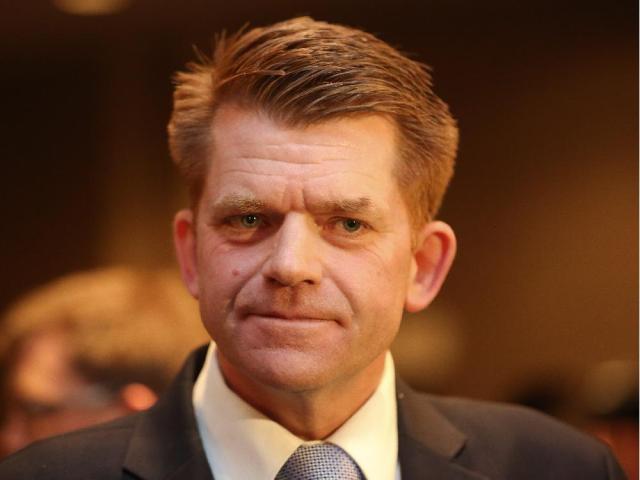
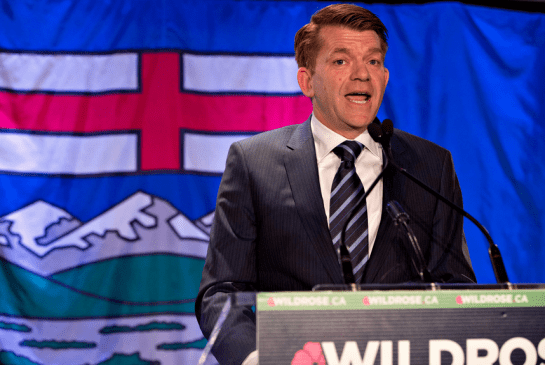
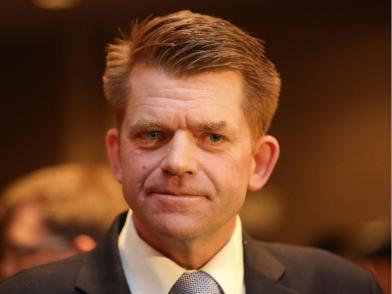
Wildrose Leader Brian Jean

All the public can do is scrutinize the actions of the political parties to see whether their promise to protect the public’s rights and freedoms are borne out in reality.

The Base and the Squishes

A rift has developed between the traditional Wildrose base and more moderate party members (the “squishes”) who want the party to become more progressive in the hopes of winning the next election.

The base is convinced that shifting even slightly to the centre is a mistake and if it sticks to the “old values” Albertans will come back to them.

One of these “old values” is a refusal to kowtow to the 1.5% of the population who is LGBTQ (gosh, before you know it your Christian school will be forced to allow transgendered students into the washrooms!)

Mr Jean hopes to stay on as party leader.  As such he’s trying to appease the base without driving away the squishes by making it blatantly obvious that the Wildrose is not the party for them.

The Wildrose base and squishes will battle this out over the coming months.

In the meantime Albertans should ask themselves:  what does it say about the Official Opposition—the government in waiting—when its leader is prepared to pray for the families of the LGBTQ people who were slaughtered on June 12 but not the LGBTQ victims themselves?
Posted in Culture, Politics and Government | Tagged , , , , , , , | 16 Comments

Rachel Notley and the Wonder Women

Anyone who thinks women are too emotional and unpredictable for a life in politics hasn’t met Rachel Notley and the Wonder Women.

Ms Soapbox had the pleasure of meeting some of the Wonder Women this weekend at the NDP Convention.

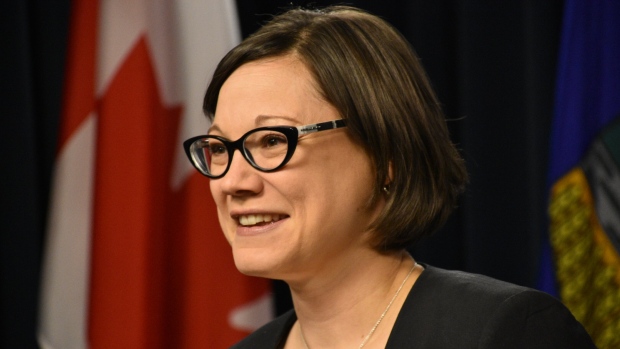
They’re smart and have a wicked sense of humour.  When Finance Minister Joe Ceci told Environment Minister Shannon Phillips he enjoyed watching her take apart the Wildrose Opposition when they attacked the carbon levy, Ms Phillips replied “Actually I’m a nice person.”

And she is.

shannon-phillips

Environment Minister Phillips

She’s also ten times more knowledgeable about the environment and climate change than the Opposition MLAS who are attempting to discredit the Climate Leadership Plan (which has the support of industry, environmentalists and First Nations by the way) with what Ed Whittingham, executive director of the Pembina Institute, characterizes as misinformation and outright lies.

They’re committed and tireless. Rachel Notley and Municipal Affairs minister Danielle Larivee moved heaven and earth to protect the residents of Fort McMurray after the worst forest fire in Alberta’s history.  Both of them have families but their sole focus was on keeping the residents of Fort McMurray safe.  Unlike a previous premier, neither of them checked into the Jasper Park Lodge for a little R&R over the weekend.

Even the crotchety Leader of the Official Opposition gave Ms Notley and Ms Larivee credit for a job well done…or was it credit for having a good communication plan throughout the emergency.  It’s hard to tell with Mr Jean.

The Premier and Municipal Affairs minister will get a short break over the summer but unlike the rest of us they won’t be turning off their cell phones.  They’re on call 24/7.

They’re affectionate.  Ms Notley beams with pride when she talks about Baby Patrick, the first baby born to a sitting MLA, Ms Stephanie McLean, Minister of Service and Status of Women.  Apparently, the cabinet ministers fight over who gets to hold Baby Patrick during cabinet meetings—others have a talking stick, Notley says, we have a baby.

stephanie

Services Minister McLean and Baby Patrick

They like to hug people.  Deputy Premier Sarah Hoffman gave Ms Soapbox “a squeeze” (hug) while at the same time juggling notebooks and a cell phone after meeting Ms Soapbox for the first time in the convention hall.  Premier Notley’s speech was delayed a few minutes to give her time to hug her way up to the podium.  The crowd didn’t care, it was busy waving signs and chanting NDP NDP NDP.

They get things done.  While the Opposition spent an inordinate amount of time cranking up the Angry Machine, the government moved ahead with a royalty review and the climate leadership plan and enacted legislation prohibiting corporate election funding, increasing the minimum wage, establishing a progressive income tax regime, increasing corporate taxes and implementing laws to increase farm safety.

Ms Notley’s first year at the helm brought about dramatic change.

The next three years will be equally challenging—the government cannot continue to borrow, it will have to balance the budget.  The economy may strengthen or it may not.  And while Ms Notley recognizes that the foundation of Alberta’s economy is energy and access to global markets is vital; she also knows she has to move ahead with plans to develop a more diversified, value-added economy (which includes renewable energy) in order to achieve a brighter economic future.

Ms Notley is confident she’ll get there because as she succinctly puts it, when new people are elected to form a new government they take a new look at tough problems.

It’s no coincidence that good things have happened.  Half of the new people in Ms Notley’s Cabinet are women.

Posted in Politics and Government, Uncategorized | Tagged , , , , , | 23 Comments

Physician Assisted Dying: How the SCC got there

It’s a paradox.

Your right to die is an affirmation of your right to live.

In a unanimous decision of astonishing clarity the Supreme Court of Canada (SCC) decided that the Criminal Code prohibition on physician-assisted dying violates your Charter rights to life, liberty and security.

Here’s how they did it.

Section 7:  right to life, liberty and security  

Those who are grievously and irremediably ill may take their own lives prematurely rather than risk of being incapable of ending their lives later when their suffering becomes intolerable.

This violates the right to life.

The prohibition on physician-assisted dying interferes with a person’s freedom to make fundamental personal choices concerning their bodies.

This violates their right to liberty.

Condemning a person to a state of intolerable suffering interferes with their right to control their “bodily integrity”.

This violates their right to security.

Consequently the Criminal Code prohibition on physician-assisted suicide violates a person’s Charter rights to life, liberty and security.

current-judges

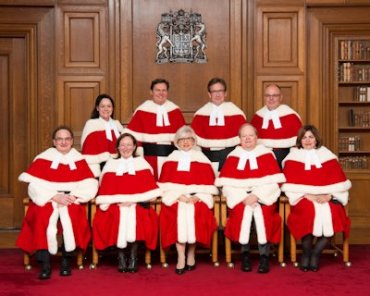
The Supreme Court of Canada

The SCC acknowledged that the state can interfere with a person’s life, liberty or security—in fact it does so all the time—but only if it does so without violating the principles of fundamental justice.

Fundamental justice

The principles of fundamental justice dictate that the state cannot enact laws that are arbitrary, overbroad or grossly disproportionate to their objective.

The objective of the prohibition on physician-assisted dying is to protect vulnerable people from being induced or pressured to commit suicide.

A total ban on physician-assisted dying is not arbitrary in that it achieves this objective, however it is overly broad because it catches everyone, the vulnerable and others who have a “considered, rational and persistent wish” to end their lives.

Having decided that the prohibition was overly broad, the SCC did not have to decide whether it was also grossly disproportionate (ie. was the suffering of those who wanted physician-assisted dying was out of proportion to the law’s objective of protecting the vulnerable).

Section 1: the notwithstanding clause

A law that violates section 7 and runs afoul of the principles of fundamental justice can be saved by the “notwithstanding clause” in section 1 of the Charter if the state can show that the public good justifies depriving an individual of life, liberty or security.

The state could satisfy this burden if it could show that an absolute ban on physician-assisted dying was the only way to protect the vulnerable.

This requires evidence that (1) physicians can’t assess a patient’s competence to give informed consent for medical treatment and (2) patients in permissive jurisdictions have been abused and their lives have been casually terminated.

The state provided anecdotal examples of abuse that were countered by anecdotal examples of systems that worked well.

The SCC relied on the evidence, not competing anecdotes.  It accepted evidence that properly trained physicians can assess a patient’s competence to give informed consent and determine whether coercion or undue influence is at play.  In fact physicians make such assessments today when patients refuse life-saving medical treatment.

The SCC concluded that the risks of physician-assisted dying can be managed by a carefully designed system of safeguards and an absolute ban was not necessary.  As such the state could not invoke invoke the “notwithstanding clause” to save the absolute ban on physician-assisted dying.

The decision

The SCC concluded that physician-assisted dying was legal in cases where a competent adult person (1) clearly consents to the termination of life and (2) has a grievous and irremediable medical condition (including an illness, disease or disability) that causes enduring suffering that is intolerable to the individual in his/her circumstances.

In reaching this decision the SCC confirmed that end-of-life decisions belong to the individual not the state.

This is as it should be.

Posted in General Health Care, Law | Tagged , , | 12 Comments

The Wildrose and PCs Weigh In On Medically Assisted Dying

We’ve seen a lot of fireworks in the Alberta Legislature but nothing can match the rhetoric and misinformation that characterized the response of the Wildrose (and to a lesser extent the Progressive Conservatives) to the government’s motion to regulate medical assistance in dying.

Background

On Feb 6, 2015, the Supreme Court of Canada ruled that refusing to provide medical assistance in dying violates a citizen’s fundamental rights and freedoms.

On Apr 14, 2016 the Trudeau government introduced Bill C – 14 to amend the Criminal Code by creating an exemption to the offence of culpable homicide where a competent adult suffering from a grievous and irremediable medical condition that causes him/her enduring, intolerable suffering clearly consents to his/her death.

On May 31, 2016 the Alberta government introduced Motion 17 to give Cabinet the power to finalize regulations to provide medically assisted death to eligible Albertans under certain conditions.

And on June 6 medical assistance in dying (MAID) becomes a reality.

The debate

The government proposed Motion 17 to address this reality.

hi-bc-110802-euthanasia-picture

It sets out draft regulations that allow Albertans to access MAID, provides safeguards to protect vulnerable Albertans, protects the conscience rights of those who don’t want to participate and ensures accountability by creating a monitoring and regulatory process.

Wildrose MLA Ron Orr characterized the motion as “an earthquake motion”.  He said “the social terra firma of western society, which has been stable for centuries, all of a sudden, [and] without warning, gave a little bit of a rumble and today, without warning, split wide open.”*

Mr Orr’s comment is 18 months too late.  Medical assistance in dying has been in the works ever since the Supreme Court released its decision.

Mr Orr’s reaction was indicative of the Wildrose’s response—instead of debating the merits of the Motion the Wildrose galloped madly off in all directions.

Forget the law   

Unlike the Progressive Conservatives, many Wildrose MLAs refuse to concede that the issue of medically assisted dying was closed when the Supreme Court rendered its decision.

Grant Hunter said “To simply accept the Supreme Court’s decision as ubiquitous is perhaps the high-jurisprudence equivalent of the naturalistic fallacy that exists in philosophy.”  He argued that just because the Supreme Court “concluded that a right to suicide is, paradoxically, a part of the right to life should not mean we should accept legalized suicide as a new moral or a new normal.”**

Ms Soapbox has no idea what Mr Hunter is talking about but it sounds like he’s saying it’s okay to ignore the law.

The power of love

Mark Smith’s key argument was that euthanasia and physician-assisted death are the result of a lack of love.***

He suggested people seek physician-assisted death not to alleviate pain but out of fear—fear of   losing control, losing personal autonomy and becoming a burden to loved ones.

He said people will choose “natural death” (whatever that means) when their fear is allayed by proper palliative care, psychosocial counseling and the knowledge they are loved.

He concluded that “Love…not physician-assisted death, is the answer.”

Love as the basis of analysis of Motion 17?  Maybe you had to be there.    

Religious insight

Mr Strankman asked a rhetorical question:  “Who the H do we think we are to legislate life and death?”****

He said he’d heard from five people on the issue, noting that many of them were “churchgoing people.”  He asked:  “Does that provide special insight into it?  I don’t know.  They feel it does.  It gives them insight into what they believe is another sphere.”

Ms Soapbox does not have insight into another sphere and is not qualified to comment.

Slippery Slope

Moving from the ridiculous to the sublime, Mr Orr raised a frightening scenario.  If we allowed the NDP Cabinet to finalize these regulations what’s to stop a future cabinet from enacting regulations that allow the euthanization of a troubled teenager on the referral of his teacher without his family’s knowledge.*  

That’s so farfetched it doesn’t merit a response.

Lack of public consultation

A more legitimate complaint was that Opposition had not been given sufficient time to get input from their constituents.

However this was not an issue for the NDP MLAs.  Maria Fitzpatrick sought feedback from her constituents six months ago on the recommendations for assisted dying prepared by the College of Physicians and Surgeons of Alberta (CPSA).

Greg Clark (AP) consulted with his constituents and stakeholders the weekend prior to the debate and decided to support the motion.  Dr David Swann (Lib) spoke eloquently in support of the motion as well.

Neither the Wildrose nor the PCs had a satisfactory response to the NDP’s point that it had consulted with 15,000 Albertans through an on-line survey, created an MLA Consultation Panel which met with stakeholder groups including Indigenous peoples, physicians and ethicists, and received 31 submissions from groups representing doctors, palliative care nurses, psychologists, social workers, lawyers, the Council of Imams, Catholic Bishops, faith-based healthcare providers and university faculties like medicine, nursing, and philosophy.

Lack of preparation

Some suggest that the government and the medical profession are unprepared.

Dr Trevor Theman, Registrar of the College of Physicians & Surgeons of Alberta (CPSA) bristles at this allegation, noting that in 11 years as registrar he’s never seen such a high level of preparation and collaboration among Alberta Health, AHS, and the healthcare regulators for medicine, nursing and pharmacy.

A review of the CPSA recommendations in support of medically assisted death bear this out.

They complement Motion 17 and if the Opposition had bothered to review them they would have discovered that many of their concerns (eg providing a cooling off period and providing information on other treatment options like hospice care and pain control) have been addressed.

Bottom line:  The Alberta government did a good job of preparing Alberta for the reality of medically assisted death under less than ideal circumstances.

It ceded its debate time to the Opposition to allow for healthy debate.  The Wildrose squandered its time and the PCs rejected the government’s work but failed to offer an alternative.

As a result, the legitimate concerns of a few opposition MLAs were swamped by meaningless rhetoric and shameless grandstanding for the folks back home.

What a waste.

*Hansard, May 31, 2016, 1334, 1335

**Hansard, June 1, 2016, 1393

***Hansard, June 1, 2016, 1389

****Hansard, June 1, 2016, 1396

Posted in Crime and Justice, General Health Care, Law, Politics and Government, Uncategorized | Tagged , , , , , , | 31 Comments

Dividing Up the Family Home

Ms Soapbox and her sister Elle are on Vancouver Island visiting the folks.  (Elle is not her real name but she values her privacy and bites and throws things if she doesn’t get her way–or at least she did when she was five).

Ms Soapbox’s Mom and Dad moved into their respective seniors care facilities this spring.  That means Ms Soapbox and her sisters, Elle, Roxy and Jay (also not their real names but Elle got a fake name, now everybody wants one) have been making regular pilgrimages to the family home to clear out 40 years of stuff before the house goes on the market. 

Mom and Dad issued instructions about who should get what.  Elle and I weren’t convinced the grandchildren wanted the golf clubs so we told them we had it covered…and we did.

Jay took a teeny weeny art book (no bigger than your palm) and a little wooden apple that opens up to reveal a four piece tea set.  Roxy took two ruby red goblets and the brand new crock pot that’s been sitting in its box waiting for “a special occasion”.  Elle took the world’s smallest sewing machine and the photo albums (she’s making copies for the rest of us).  Ms Soapbox scooped up the silverware and a 50s era chair that she’ll cram into the back of Elle’s car and store in Missy’s apartment.       

img_7934

No one claimed the 15 pairs of reading glasses wrapped in saran wrap and secured with elastic bands or Roxy’s brunette wig that was last worn by Dad to a Halloween party.  We took a pass on the complete set of Funk and Wagnalls encyclopedia and the canned goods that have been under the stairs for as long as we can remember.

These, like the rest of the stuff, will be sold, donated or binned. 

What’s interesting about this exercise is that after 89 years on the planet, Mom and Dad don’t want much stuff.   

What’s even more interesting is that their children don’t either.  Consequently the process of dividing up Mom and Dad’s stuff turned into an act of joy not misery.     

Jackie French Koller is right:  There are two ways to be rich:  One is by acquiring much and the other is by desiring little.   

The Soapbox sisters are rich beyond their wildest dreams!

Posted in Humour, Uncategorized | Tagged | 26 Comments

The Wildrose Vision (such as it is)

Brian Jean, leader of the Wildrose party, has a vision for uniting Alberta’s conservatives.

It’s based on “the best elements” of Peter Lougheed and Ralph Klein’s legacies and rejects the “liberal drift” and “questionable ethics” that forced Wildrose members out of the Progressive Conservative party years ago.

And with that Mr Jean wedged himself on the horns of a dilemma because the “best elements” of the Lougheed legacy and the Klein legacy are utterly incompatible.

For starters, Peter Lougheed supported higher royalties, progressive taxation and a value-added, diversified economy.  Ralph Klein did not.  He reduced royalties, introduced a 10% flat tax and sold off public assets, like the Alberta Energy Company, that were designed to diversify the economy.

Seven principles

Mr Jean says his vision is based on seven principles that will grow the conservative movement.

wildrose

Mr Jean

A review of these principles reveals nothing more than a confusing pastiche of existing legal rights and political platitudes.

One:  Individual freedom

It is unclear just what Mr Jean has in mind given that individual rights and freedoms are already protected by Canada’s Charter of Rights and Freedoms and the Alberta Human Rights Act.

Perhaps he wants to go even further than he did when he voted in favour of the NDP’s Bill 7 which amended the Alberta Human Rights Act by adding gender identity and gender expression to protect Alberta’s trans and gender-variant communities from discrimination.

Mr Jean said “We need to stand up for all people of Alberta…We have to protect each and every one of them the same way:  with passion, with vigour and with common sense.”*

Ms Soapbox thinks it’s laudable that Mr Jean and four members of his 22 member caucus showed up to vote in favour of Bill 7, but she wonders how Mr Jean’s support of Bill 7 aligns with his warning to avoid “the liberal drift” that caused Wildrose members to leave the PC party in the first place.

Two:  Fiscal responsibility

This principle is founded on the assumption that the NDP government is happy taking on debt and running a deficit, instead of being forced to do so to remedy the damage caused in the PC years by low tax and royalty revenues and an economy tethered to volatile oil prices.

It’s a nice campaign slogan but Klein’s austerity budgets didn’t set the PCs up for success when oil prices soared to $100/bbl and the Wildrose’s austerity budget won’t fare any better as we fight our way through an economic slump.

Three:  Religious liberty

Freedom of religion is a fundamental right under the Charter and Alberta’s human rights legislation.

So what exactly is Mr Jean proposing?

One possibility (in fact the only one Ms Soapbox can think of) is that Mr Jean wants to create exceptions to existing legislation that would allow religious organizations to access government funding to provide education or healthcare without having to comply with the laws governing how such services are provided.

We’ve seen examples of this in the past.

The Wildrose opposed legislation requiring faith-based schools to support students who wanted to form gay-straight alliances (GSAs).  They argued that forcing faith-based schools to “sanction” GSAs which promote ideas that contradict the schools’ religious beliefs was disrespectful to a faith-based school board, teachers and students.

Four:  Equality of opportunity and the greatness of Alberta

Equality of opportunity is enshrined in the Charter and the Alberta Human Rights Act.  This principle is nothing more than a campaign slogan along the lines of Donald Trump’s “Make America Great Again.”    

Five:  Welcome Albertans of all backgrounds

The Alberta Human Rights Act ensures everyone is welcome regardless of race, religion, colour, gender, gender identity, gender expression, physical or mental disability, age, ancestry, place of origin, marital or family status, source of income or sexual orientation.

Consequently Ms Soapbox is confused by the use of the term “background” which is more commonly used to describe one’s education, experience or social circumstances and is less specific than the classes protected by the law.

Six:  Take a principled stand, even if it’s unpopular

Wildrose politicians have never been afraid to take an unpopular stand; principled or not.

Last week the Minister of Service, Stephanie McLean, introduced Bill 15 which would reduce the interest rate (which can be as high as 600%) on payday loans from $23 per $100 borrowed to $15 per $100 borrowed.

derek-fildebrandt

Mr Fildebrandt

Wildrose MLA Derek Fildebrandt opposed the bill because (1) the high rate reflects the credit risk to the lender, these people have low credit scores, right? (2) borrowers might turn to loan sharks if payday loans aren’t available and (3) what payday loan borrowers really need is a course in financial literacy.**

Another Wildrose MLA, Jason Nixon, supported Bill 15 on the grounds that a 600% interest rate was indeed predatory.

So back to Mr Jean’s sixth principle:  which Wildrose MLA took a principled, albeit, unpopular stand, Mr Fildebrandt or Mr Nixon?

Seven:  Commitment to accountable and ethical government

Great principle.  Huzzahs all around!!!

Vision

If Mr Jean hopes to make the Wildrose party the party of choice for all conservatives, including progressive conservatives, he’ll have to do better than float a muddled vision that pussy foots around social issues.

As PC MLA Sandra Jansen pointed out during the debate on Bill 15, the Wildrose “have a difficult time talking about social issues…they’re bootstraps people, they think everybody should be able to pick themselves up and that we don’t actually have to have a social safety net because everybody has the ability to go out and get a job and take care of themselves…if there’s anyone shocked at the idea that our two parties might not be simpatico, well, here’s a perfect example of where we differ…”***

Is anyone surprised?

*Hansard, Dec 1, 2015, p 703

**Hansard, May 19, 2016, starting at 1062

***Hansard, May 19, 2016, p 1066

Posted in Politics and Government | Tagged , , , , , , | 10 Comments

The Fort McMurray Wildfire: Another Wasted Opportunity for the Wildrose

On May 10, Danielle Larivee, minister of Municipal Affairs, welcomed Wildrose MLAs Brian Jean and Tany Yao back to the Legislature.  They’d been in Fort McMurray surveying the damage from the wildfire.

Mr Jean received a standing ovation.

He personally thanked the RCMP, emergency officials, first responders, and the families, towns, municipalities, villages, neighbourhoods and faith communities who accepted evacuees.

But he couldn’t bring himself to acknowledge (let alone thank) Rachel Notley and her government for successfully evacuating 80,000 residents and having the right resources in place to help them recover from the worst disaster Alberta’s history.

brianjean-0-jpg-size-xxlarge-promo

A peevish Brian Jean

Mr Jean’s peevishness and lack of common sense coloured his performance and that of his party throughout Question Period.*

Here’s a sampling of the Wildrose’s questions and the government’s answers, plus a running commentary from Ms Soapbox.     

Questions

Q:  What’s the time line to get people back to work?   When can residents expect “to get the call to restart their lives”?

A:  We’re assisting industry in resuming operations as quickly as possible.

Get the call from whom? The government won’t be calling anyone back to work because it doesn’t own the local businesses or oilsands companies.  We live in a capitalist society.  The businesses and oilsands companies will call people back to work if and when they’re needed.

Q:  With 85 to 90% of Fort McMurray still standing why do the residents have to wait two weeks before you’ll tell them when you think they can go back?

A:  We need to make Fort McMurray safe.  Damage assessment is on-going, critical infrastructure is being repaired, the area is being secured.

Just because a house is standing doesn’t mean the air is safe to breathe, the water is drinkable, the power is on, the gas line isn’t leaking and the sewer line isn’t clogged.  It doesn’t mean schools are open, grocery shelves are stocked, gas stations have gas, the hospital is clean and fully functional or the urgent-care facility is ready to take care of you when you trip over a fence post and fall into a basement filled with toxic ash.

Q:  What discussions have you had with the energy companies to survey the damaged infrastructure and what will be done to get them operating at full capacity?

A: There was no major damage to the facilities.  Industry stood by us and we’ll stand by them as we rebuild.  Our first priority is to make the city safe.

Obviously you missed the memo.  Industry came through the wildfire virtually unscathed.  But now that you’ve raised it, are you suggesting that it’s the government’s responsibility to pay for repairs to the industry’s facilities?  

Q:  What “specific infrastructure criteria” must be met before the residents will be allowed to return home?

A: We need to keep working on restoring power, water, sewer and a transition plan so everything will be safe for the residents return.

Specific infrastructure criteria?  How about making sure the physical infrastructure is up to code and the hospital, schools and grocery stores comply with current health, safety and environmental regulations?

Q:  People want to know if their houses are still standing.  Why don’t you make a list of what’s still there as you’re going from door to door?

A:  We’re working on satellite imagery to do that.

Because 85 to 90% of the houses are okay and the damage assessment team, the fire fighters, the first responders and the re-entry team have better things to do…like restarting the power grid, purifying the water supply and checking the integrity of gas and sewer lines.     

Q:  After the June 2013 flood and the Slave Lake wildfire officials arranged bus tours to let residents see their houses.  Is the government going to do the same for the residents of Fort McMurray?

A: No.  The logistics of having 80,000 people return to Fort McMurray are not the same as the flood and Slave Lake examples.  We are working with Google Maps to see if we can set up a video tour.

You want to pick up 80,000 people who’re scattered across the province, pack them into buses for an 8 to 10 hour round-trip journey so they can see whether their houses are among the 85 to 90% still standing?  Seriously?

Better questions

After the Slave Lake wildfire even the crusty Brian Mason gave the PC government credit for doing “a good job”—and Lord knows there was no love lost between Mr Mason and Stelmach’s PCs—then he asked a serious question:  is the government going to work with the municipalities to provide a higher degree of protection from wildfires than currently exists?**

1297786685052_original

The “crusty” Brian Mason

Mr Jean would be wise to take his cue from Mr Mason.

There are many legitimate questions he could ask, for example:

  • Did the government implement all the recommendations in the Flat Top Complex report which was commissioned after the Slave Lake wildfire to reduce the likelihood of catastrophic wildfires in the future?
  • Given fire chief Darby Allen’s assessment that this wildfire rewrote the book on firefighting will the government update its wildfire strategy?
  • What are the immediate and long-term social and financial implications of the wildfire and how will the government address them?

If Mr Jean hopes to become Alberta’s next premier he should start asking thoughtful questions in Question Period instead of squandering the opportunity by being churlish.

*Hansard, May 10, 11 and 12, 2016

**Hansard, Nov 22, 2011, p 1258  

Posted in Disasters, Politics and Government | Tagged , , , , | 45 Comments

Ghomeshi’s Apology

It’s over.

Yesterday Jian Ghomeshi signed a peace bond and apologized to Kathryn Borel.  The Crown dropped the sexual assault charge.

Here’s Mr Ghomeshi’s apology and Ms Borel’s reply.

Ghomeshi’s apology

I want to apologize to Ms. Borel for my behaviour towards her in the workplace. In the last 18 months, I have spent a great deal of time reflecting on this incident and the difficulties I caused Ms. Borel, and I have had to come to terms with my own deep regret and embarrassment.

jian-ghomeshi-apologizes-to-former-colleague-in-court-walks-out-a-free-man-body-image-1462978201-size_1000I enjoyed a position of privilege in my job at the CBC as the host of a program I loved. I was a person in a position of authority and leadership, and I did not show the respect that I should have to Ms. Borel. I did not always lead by example and I failed to understand and truly appreciate the impact of my conduct on Ms. Borel’s work environment. That conduct in the workplace was sexually inappropriate. I realize that there is no way for me to know the full impact on her personally and professionally.

I now recognize that I crossed boundaries inappropriately. A workplace should not have any sexualized tone. I failed to understand how my words and actions would put a co-worker who was younger than me, and in a junior position to mine, in an uncomfortable place. I did not appreciate the damage that I caused, and I recognize that no workplace friendship or creative environment excuses this sort of behaviour, especially when there is a power imbalance as there was with Ms. Borel. This incident was thoughtless and I was insensitive to her perspective and how demeaning my conduct was towards her. I understand this now. This is a challenging business to be in and I did not need to make it more difficult for Ms. Borel. The past 18 months have been an education for me. I have reflected deeply and have been working hard to address the attitudes that led me, at the time, to think that this was acceptable.

I apologize to my family for letting them down and in particular for the impact that all of this has had on my dear mother and my sister. I apologize for the burden my actions have placed on those dear friends who have stood by me throughout this difficult time. I regret behaviour at work with all of my heart and I hope that I can find forgiveness from those for whom my actions took such a toll.

Kathryn Borel’s reply

In December of 2014, I pressed sexual assault charges against Jian Ghomeshi.

As you know Mr. Ghomeshi initially denied all the charges that were brought against him. But today, as you just heard, Jian Ghomeshi admitted wrongdoing and apologized to me. It’s unfortunate but maybe not surprising he chose not to say much about what exactly he was apologizing for. I’m going to provide those details for you now.

2016-05-11-ghomeshivictim-300x169Every day over the course of a three-year period, Mr. Ghomeshi made it clear to me that he could do what he wanted to me and my body. He made it clear that he could humiliate me repeatedly and walk away with impunity.
There are at least three documented incidents of physical touching. This includes the one charge he just apologized for, when he came up behind me while I was standing near my desk, put his hands on my hips and rammed his pelvis against my backside over and over, simulating sexual intercourse.

Throughout the time that I worked with him, he framed his actions with near-daily verbal assaults and emotional manipulations these inferences felt like threats or declarations like I deserved to have happening to me what was happening to me. It became very difficult for me to trust what I was feeling.

Up until recently, I didn’t even internalize that what he was doing to my body was sexual assault. Because when I went to the CBC for help, what I received in return was a directive that, yes, he could do this and, yes, it was my job to let him. The relentless message to me from my celebrity boss and the national institution we worked for were that his whims were more important than my humanity or my dignity.

So I came to accept this. I came to believe that it was his right.  But when I spoke to the police at the end of 2014 and detailed my experiences with Mr. Ghomeshi, they confirmed to me what he did to me was, in fact, sexual assault. And that’s what Jian Ghomeshi just apologized for, the crime of sexual assault.

This is the story of a man who had immense power over me and my livelihood, admitting that he chronically abused his power and violated me in ways that violate the law.

Mr. Ghomeshi’s constant workplace abuse of me and my many colleagues and friends has since been corroborated by multiple source, a CBC fifth estate documentary and a third-party investigation.

In a perfect world, people who commit sexual assault would be convicted for their crimes. Jian Ghomeshi is guilty of having done the things that I’ve outlined today. So when it was presented to me that the defence would be offering us an apology, I was prepared to forego the trial. It seemed like the clearest path to the truth. A trial would have maintained his lie, the lie that he was not guilty and it would have further subjected me to the very same pattern of abuse that I am currently trying to stop.

Jian Ghomeshi has apologized, but only to me there are 20 other women who have come forward to the media and made serious allegations about his violent behaviour. Women who have come forward to say that he punched and choked and smothered and silenced them.

There is no way that I would have come forward if it weren’t for their courage. And yet Mr. Ghomeshi hasn’t met any of their allegations head on as he vowed to do in his Facebook post of 2014. He hasn’t taken the stand on any charge. All he has said about his other accusers is that they’re all lying and that he’s not guilty. And remember, that’s what he said about me.

I think we all want this to be over but it won’t be until he admits to everything that he’s done.

He said/she said

Mr Ghomeshi delivered an apology that characterized grinding his pelvis into Ms Borel’s backside as “behavior” that caused “difficulties”.  He was “thoughtless” and “insensitive” and failed to understand the impact of his “conduct” on a subordinate.

It’s an insipid apology but never mind, Ms Borel has been partially vindicated–after 18 months of denials (effectively calling her a liar) she managed to get Mr Ghomeshi to publicly admit to sexually inappropriate behavior in the workplace.

It’s a small victory.

Posted in Crime and Justice, Law, Uncategorized | Tagged , | 19 Comments

What We Learned from the Fort McMurray Wildfire

The government calls it MWF-009.

Darby Allen, the regional fire chief of Wood Buffalo, calls it The Beast.

Regardless of what it’s called the Fort McMurray wildfire is erratic, unpredictable and extremely dangerous.

It was spotted on Sunday May 1; five hundred hectares burning southwest of the city.  By Sunday May 8 more than 161,000 hectares were ablaze, 80,000 people were evacuated and the province was in a state of emergency.

edm-fortmac-330_2500kbps_852x480_678748739949

The Beast continues to grow.  It’s developed its own weather patterns.  Wind blows where it wants blow and lightning strikes where it wants to strike.  It will continue to grow until it’s extinguished by rain.

The Beast is fearsome, but it’s taught Albertans five remarkable things about themselves and their government.

One: The Government will deliver  

When Premier Notley was asked how she intended to deal with wildfires given the reduction in the firefighting budget she said every resource required would be dedicated, “no holds barred”.

She wasn’t kidding!

From the minute Ms Notley declared a state of emergency she’s been working across all departments and with all levels of government, as well as business and non-profit organizations to protect public safety.

The evacuation of Northern Lights hospital is an example.  Healthcare workers evacuated 105 patients (73 acute care and 32 continuing care patients including 9 newborns and their moms) to 12 receiving hospitals and care facilities.  WestJet provided the planes and Suncor provided the air strip to get it done.

(Healthcare workers completed the evacuation while they themselves were under an evacuation order.)

Twelve evacuee receptions centres have been set up throughout the province.  An emergency cash plan of $1,250/adult and $500/dependent was announced.  Identification documents and healthcare insurance cards will be replaced for free.

Displaced students may attend schools in their relocation areas.  Provincial achievement tests for displaced grade 6 and 9 students are cancelled and a process to address the Grade 12 diploma exams is underway.

The government started re-entry planning work to ensure infrastructure and basic utilities are safe when residents return.  The Alberta Energy Regulator set up an emergency centre to help energy producers restart production once the danger has passed.

Any evacuees who need a breather after their ordeal may visit any of Alberta’s historic sites and museums at no cost.

Two:  The Opposition plays fair  

A crisis brings out the best in people, even politicians.

Drew Barnes, speaking on behalf of the Wildrose Opposition, told the House that the Fort Mac wildfire should not be used for “politics or bluster”.   Rather than ambush the government in Question Period the Wildrose Opposition circulated its questions in advance to give the government an opportunity to better prepare its answers.

Consequently Ms Larivee, the minister for Municipal Affairs, was able to provide additional details on the sufficiency of firefighting resources, the impact of the provincial state of emergency on municipal governments (jurisdiction for all matters relating to the wildfire shifts to the province for 28 days) and other issues such as social support for evacuees and caring for abandoned livestock and pets.

Three:  Fort Mac residents are courageous   

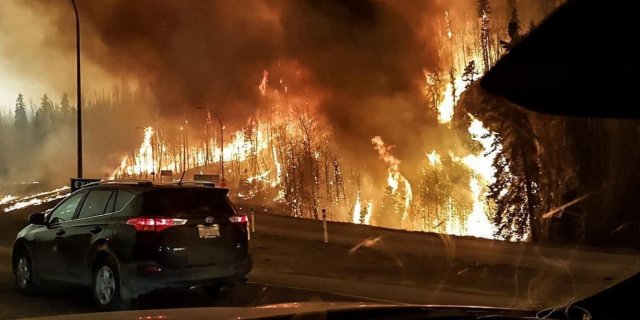
The media is full of harrowing stories of residents tracking down their loved ones, throwing a few possessions into the car and heading north or south in search of safety.  They encountered gridlock on the highway, walls of fire along the roadside and clouds of billowing smoke.

o-fort-mcmurray-wildfire-facebookAnd yet there are no reports of road rage on the highway or fist fights over a tank of gas at a gas station.

The people of Fort McMurray demonstrated remarkable courage, resilience and compassion by responding to an out-of-control wildfire with an orderly evacuation even as glowing embers skittered across the hoods of their cars and their neighbourhoods turned into infernos.

Four:  Canadians are compassionate   

Canadians responded this crisis with an outpouring of charitable donations.  The Canadian Red Cross reported donations in the range of $30 million in less than a week.

The provincial and federal governments pledged to match every dollar donated.

This generosity is mirrored in the cash contributions and in-kind donations made by businesses, banks, the energy industry, industry associations, universities and colleges, professional associations, non-profit groups, churches and mosques and the tiny town of Lac-Mégantic which suffered its own fire-related tragedy in 2013.

Five:  Fort Mac will rebuild

The Alberta government has two messages for the people of Fort McMurray.

The first is a promise from Premier Notley to keep them save and to help them on the road to recovery.

The second is a personal message from Danielle Larivee, the minister of Municipal Affairs, and a survivor of the devastating wildfire that destroyed 40% of the town of Slave Lake in 2011.

Ms Larivee says: “I speak as someone who has been there and through that in Slave Lake:  You can do it.  Your community will be rebuilt.  Alberta will rally around and be behind you…in the end your community will be strengthened by the way you have worked together in this experience.”

Many would be crushed by the challenge ahead, but if we’ve learned anything from The Beast it’s this:  the people of Fort McMurray and their friends in the rest of Alberta and Canada are resilient and compassionate.

They confronted The Beast and overcame the traps that skewered recovery efforts elsewhere–fear, greed, political opportunism and bureaucratic bungling.

Fort McMurray will rebuild because to paraphrase a Fort Mac firefighter, “Albertans will not leave this place without a fight.”

Sources: 

Globe and Mail May 6, 2017, A7 and May 7, A10

Government of Alberta Situation Update May 8, 4:15 p.m.

Alberta Hansard May 5, 2016, p 809 and 813   

Posted in Disasters, Environment, Politics and Government | Tagged , , , , , , | 30 Comments

The Wildrose Sips Leninade. Really?

Just when you thought you’d seen it all the Wildrose Official Opposition upped the ante on red-baiting.

They’re using Members’ Statements, a part of the Legislature’s Daily Order of Business, to push their “NDP-are-commies” narrative.

Members’ Statements 

Members’ Statements give MLAs an opportunity to make brief, uninterrupted statements on matters of concern to them and their constituents.

Originally, Members’ Statements were non-partisan comments that recognized a significant event (such as the death of an important Canadian) or the anniversary of a key historical milestone (such as women getting the vote).

Over time Members’ Statements took on a more aggressive and partisan tone and in 1983 Jeanne Sauvé issued guidelines prohibiting Members’ Statements that were personal attacks, congratulatory messages, frivolous or poetry…poetry?

redscare-h

The Cold War Red Menace

Unfortunately Mme Sauvé did not prohibit Red Scare rants.  Presumably she didn’t think it was necessary to ban gutter politics masquerading as Members’ Statements.  Turns out she was wrong.

How bad is it? 

To be clear it is entirely appropriate for the Wildrose Opposition as the “government in waiting” to use Members’ Statements to evaluate NDP government policies and outline how the Opposition would do a better job if they were in office.

The Wildrose Opposition regularly uses Ministerial Statements to raise the alarm (sometimes to hysterical levels) about the NDP’s decision to maintain social programs and diversify the economy by increasing taxes and taking on debt.

Whether you agree with the Wildrose or not, this is a legitimate use of Members’ Statements.

However when the Wildrose Opposition deploys the “commies at the gate” narrative it crosses the line into unparliamentary and unacceptable behavior.

A few weeks ago Wildrose MLA Grant Hunter rose in the Legislature to deliver a Member’s Statement describing his experience in a new candy store where he tasted a bottle of Leninade.*

Just in case the folks back home were too dense to catch the symbolism he pointed out that Leninade was “spelled after comrade Lenin”.

Mr Hunter couldn’t resist testing the bottle which was offered as “A Drink for the Masses” and while his first sip was smooth, bubbly and effervescent he soon realized that Leninade was an acquired taste which required Albertans to drink a bottle a day for five years in order to become “a Hero of Socialist Flavour”.

He said it didn’t take a Russian rocket scientist to realize that the NDP government had embarked on an unsustainable and unpalatable scheme…one where “orange crush really means high debt, loss of jobs and loss of hope”.  He assured the Premier that he would tell Albertans to stay away from her drink for the next three years.

This gibberish follows on the heels of a similar red-baiting attack, pardon me, Member’s Statement, launched by Wildrose MLA Don MacIntyre.**

Mr MacIntyre said the Premier’s deputy chief of staff was a “Soviet-era communist” and suggested one of her MLAs supported the “Soviet-backed, communist Castro regime[which] repressed an entire nation, murdering and imprisoning dissidents, religious leaders, and minorities”.

Applying Mme Sauve’s rules for Members’ Statements, the Speaker should have shut down Mr Hunter and Mr MacIntyre the minute they started spouting off about Soviet-era communists and comrade Lenin.  Their “Members’ Statements” were personal attacks, frivolous and utterly inappropriate.

wildrose

Another Red Menace?

That the Wildrose Opposition would use Members’ Statements as a political bludgeon is not surprising—their leader, Brian Jean, was a loyal member of Stephen Harper’s Conservatives and learned these tactics at his master’s knee.

The Conservatives’ track record

Evan Sotiropoulos analyzed   Members’ Statements made in the federal 38th (Liberal minority) and 39th (Conservative minority) parliaments.

He discovered that the Conservatives in Opposition made three times as many unparliamentary/partisan members’ statements as the governing Liberals.

More importantly, after the Conservatives took power they continued to make inappropriate Members’ Statements, twice as many as the Liberals in Opposition.

Forming government did little to curb their acerbic conservative tongues.

The Wildrose election plan 

Wildrose leader Brian Jean says his party will spend the next few years “winning the hearts and minds of Albertans.”

If the McIntyre and Hunter Members’ Statements are an example of how Mr Jean intends to do so he’s in for a surprise.

While many Albertans are struggling through the “bust” created by the drop in oil prices they know that the NDP do not control oil prices and their access to public education, public healthcare and other critical services will not be compromised by harsh cuts to the public sector while the economy recovers.

Most importantly, Albertans just aren’t that stupid.  They know NDP Orange is not the same as Commie Red, notwithstanding what Mr Jean wants them to believe.

*Alberta Hansard, Apr 21, 2016, p 746

*Alberta Hansard, Mar 17, 2016, p 280

Posted in Politics and Government | Tagged , , , , | 14 Comments