Flaubert’s Conservative Dictionary

Watching Doug Ford become the leader of the Ontario Progressive Conservatives and Jason Kenney taking shots at Justin Trudeau and gender neutrality in his congratulatory speech, Ms Soapbox’s mind drifted to Flaubert’s Dictionary of Accepted Ideas. (Well, not initially, but after the incredulity wore off).

The Dictionary is Flaubert’s satirical response to “mass produced word and thought”.  It rejects the triumph of prejudice and misinformation over facts.  Flaubert’s translator, Jacques Barzun, describes it as a reaction to “conventional stupidity”.
maxresdefault

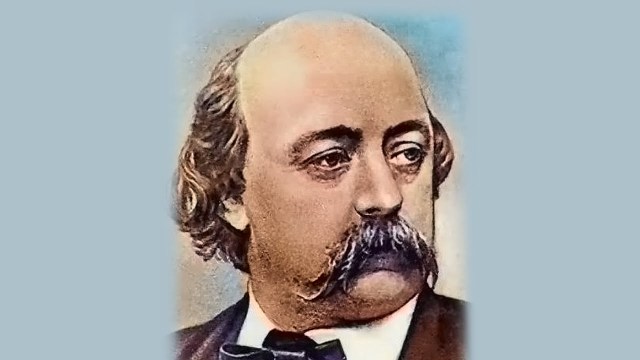
Gustave Flaubert, preferable to Doug Ford and Jason Kenney 

What would Flaubert’s Dictionary look like if Flaubert had turned his critical eye to Canadian conservatism instead of the smug French longing for “order through convention” in the mid 1800s?

Let’s give it a try.

Flaubert’s Dictionary of Accepted Conservative Ideas*     

Alberta Advantage: See Economy.

Budget:  Must be balanced, always, so tomorrow’s generations won’t be stuck with debt.  Today’s generation will be shortchanged on all fronts but it’s a small price to pay for the continuation of civilization as we know it.

Cheating the tax man:  Can be legalized by replacing progressive taxation with a flat tax.  Aren’t you clever. 

Christmas:  The only proper religious celebration (along with Easter), especially sacred when supported by Santa, Rudolph, and the Easter Bunny.

Choice (in healthcare, in education, etc):  Refers to the belief that government must privatize public services.  Occurs after a service is created with public money.   Also known as the public risk/private profit model.

Climate Change: Pretend to be a believer (or not) depending on your audience.  Emphasize the Economy trumps everything including the planet.

Common folk:  Always honest—unless they’re rioting.

Common sense or instinct:  A substitute for intelligence.

Competition:  The heart and soul of the Free Market (never tamper with it).

Compromise: Ridiculous lefty concept.  Better to lay down ultimatums than work out solutions with other governments and industry.

Conservatives:  ”Common sense” politicians who tell the electorate they can reduce taxes and maintain services.  Also known as magicians.  Supported by corporations (good), unlike Socialists who are supported by unions (bad).

Conservative policy:  There is no policy.  Battle cry is:  “Only I can save [insert name of province] from [insert name of progressive female politician].  See Standing Up For:

Economy:  More sacred than anything, including religion.  Only a few people understand it, so politicians are free to promise a booming economy and no one will ask how.  See Alberta Advantage.

Education: Thunder against change; especially if it’s in higher education.  Speak of it only in the context of socialists and a certain professor from Lethbridge.  Let it be known that you are well educated having almost graduated from university.

Elites:  Denigrate them but try to belong, or at least cozy up, because that’s where the real power and money reside.

Evidence:  Is “plain” or “overwhelming” and yet absent in much Conservative policy.  Replace with “common sense” even if there’s no common sense to be found.

Feminist:  Term of contempt applied to women with a mind of their own, especially if they run for public office.  Pro tip: can be applied to men like Justin Trudeau for extra snicker value.

Foundation (The):  The traditional family, property, religion, and respect for authority that form the foundation of society.  Defend the foundation at all costs and against any slights, real or imagined.

Free market: Source of all joy and happiness, the freer the better.

Free speech:  The fundamental right to say hateful things while at the same time denying that you’re a racist, misogynist, homophobe or Islamophobe.

Grassroots:  Venerate.  No one knows what it means but everyone thinks they belong.

Grassroots promise:  Words printed on a piece of paper, often an oversized bit of cardboard, intended to give supporters the impression they’ve signed “a contract” which is “binding” on the party.

Ideologues: Despise them, unless they’re in your own party, then laud them as purveyors of “common sense”.

Idiots and socialists:  Those who disagree with you.

LBGTQSee: The Foundation and Social Issues.

Portfolio:  Carry one under your arm.  It makes you look like a member of Cabinet.  Modern day equivalent:  Blue pick up truck.  Makes you look like the premier of a western province.

Premier:  The pinnacle of human glory…until you decide to run for Prime Minister.

Private sector:  Always efficient, fair and generous, especially in comparison to the Public Sector (see below).

Public sector:  Boo! Hiss!  Starve it until it’s small enough to be drowned in the bathtub.

Rule of Law (The):  No one knows what it is, but politicians talk about it all the time.

Section 92A:  You have no idea what you’re talking about and neither does your listener but mention it often when discussing how you’re going to force the Trans Mountain pipeline through BC.      

Standing up for [insert name of province]:  Only Conservatives can stand up for a province.  If you catch Liberal or NDP governments standing up, claim you thought of it first and they stole your idea.

Social issues:  Official stance is “meh, this is for snowflakes”.  Make social issues the object of ridicule (if possible do so at a speech welcoming a new conservative leader).  Unofficial stance: eliminate or reduce funding to services like safe injection sites and abortion clinics because people who need such services have only themselves to blame.

Socialists:  No one knows what this means.  Thunder against.

Task Force and Experts:  Of absolutely no use whatsoever, replace with “common sense”.

Taxes: Always too high.  Always misspent by spendthrift liberal/socialist governments.  Would be significantly reduced if public services were privatized.

Thinking:  Painful.  Can result in exposure of defective platitudes.  Best avoided.

Tommy Douglas:  Snicker upon hearing his name.  “The gentleman who thought socialized medicine was a good thing, hah!”

Wealth:  A substitute for everything including reputation.


With that dear reader, I turn the fountain pen over to you.  I look forward to your submissions to Flaubert’s Conservative Dictionary.  If you’d like to make submissions to Flaubert’s Socialist Dictionary I invite you to do so on your own blog.

*Many definitions are adapted from Flaubert Dictionary.  Here’s the link.   https://www.scribd.com/doc/187244/Flaubert-Gustave-Dictionary-of-Accepted-Ideas-1954   
Posted in Humour, Politics and Government | Tagged , , , | 39 Comments

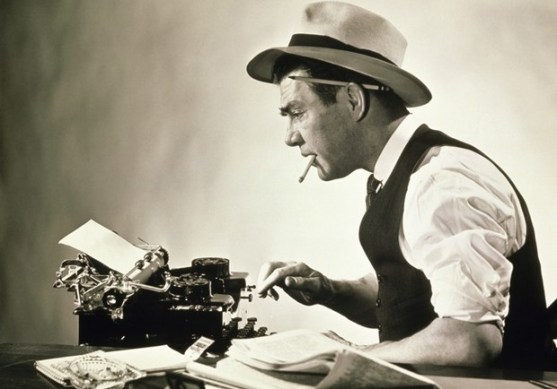
The Role of the Political Journalist

“The journalistic mission remains at its simplest: know your patch and use your knowledge to try to tell readers what’s actually going on.”– Katharine Murphy, Journalism Professor & Guardian Australia’s deputy political editor.

Is it right for a political journalist to simply quote a politician’s comments without challenging their veracity or wisdom?

The answer in Alberta, and I wager most of the civilized world, is no.

Don Braid, a political columnist for the Calgary Herald, learned this lesson the hard way.

Braid, a seasoned political journalist, got a hiding this week for a column on what Jason Kenney has heard from rural Albertans.  As much as I like Braid, the criticism was justified.

Kenney said the UCP’s rural supporters are worried about (1) the escalation in rural crime and (2) Alberta’s response to BC’s objection to the Trans Mountain pipeline expansion.  Braid set out Kenney’s response to these issues; but did not ask Kenney to explain why his solutions had merit.

By allowing Kenney’s words to stand unchallenged, Braid failed to tell readers “what’s actually going on”.

Who, What, Where, When, Why and How  

Here’s what Kenney told Braid:

Rural crime:  Kenney said the province needs to confront rising rural crime with more RCMP officers and faster response times.  He said the problem must be tackled “even if that means more spending” because public safety is a government’s top priority.

Given that “more spending” is conservative code for “increased taxes” and given Kenney’s sensitivity to the T-word, Braid should have pushed Kenney to elaborate.

The province provides rural RCMP policing under a contract with the feds.  What is Kenney advocating:  a province wide tax hike to cover the cost of rural policing, a local levy for additional police protection in crime prone areas, or an increase in the federal share of rural policing?   The first suggestion impacts all Albertans, the second two do not.

Trans Mountain: Kenney wants Ottawa to declare Trans Mountain to be in the national interest.  He’d be tougher on BC and would consider denying permits for oil already in the pipeline on its way to BC, imposing tolls on BC natural gas moving through Alberta to the US, and retaliating against BC goods coming through Alberta by stopping such goods for “safety inspections”

These are ridiculous suggestions.

Braid should have pressed Kenney to explain how he would bring them about.  Specifically, Braid should have asked Kenney:

  • Why is declaring Trans Mountain to be in the “national interest” helpful given the pipeline is already under federal jurisdiction?
  • What statute gives Alberta the jurisdiction to retroactively “deny” permits for oil that were granted by the federal regulator (NEB) when it approved the Trans Mountain pipeline in 1953.
  • How would Alberta impose tolls on BC natural gas given the authority to approve and increase tolls resides with the NEB, not Alberta, and were set by the NEB when it approved pipeline applications made by companies like Westcoast, TransCanada and Alliance after a bid process among the pipeline companies and their shippers.
  • Why does Kenney think it’s okay to waste taxpayers’ money to pay safety inspectors to “inspect” BC goods coming into Alberta. What about rail cars and airplanes carrying goods from BC and overseas, would they be harassed, ahem, “inspected” as well?

No one is suggesting Braid should sign up for university courses in pipeline regulation and interprovincial trade, but a few “who, what, where, when, why, and how” questions would have exposed Kenney’s suggestions for what they are–political puffery totally devoid of substance.

When Braid failed to call Kenney on his proposals he gave them credibility and left Albertans misinformed.

Rise of the Reader

Katharine Murphy says the Age of the Great Disruption (shift to digital journalism) triggered the rise of the reader.  Readers are no longer content to give feedback on the letters page, they’re busy talking to and hassling journalists in the comments section, on Twitter, Facebook, and Instagram.

scoop2

Journalism before The Great Disruption

Braid experienced this first hand after he published his column.  Economist Andrew Leach and others took Braid to task on Twitter for reporting Kenney’s suggestions without adding a countervailing perspective.

Braid responded by saying “it’s noteworthy that after writing about eight positive columns in a row about Notley, I quote Kenney extensively in one and get raked over.”

He’s missed the point.  The fuss isn’t about writing positive columns about Notley and quoting Kenney once, it’s about giving Kenney’s ludicrous suggestions credibility by failing to point out they’re factually groundless.

Placid Journalism

Katharine Murphy says the days of the placid news cycle which amplified “…the messages of politicians in [an] orderly and linear fashion…” are long gone.  Today’s news is a cycle of “constant cross-current, contention and disruption.”  Murphy admits it’s hard “to keep … your nerve and your clarity in such conditions.”

But political journalists have an obligation to try regardless of who’s sitting across the table spinning fantastic stories about why they’re the best choice for premier.

Posted in Culture, Energy & Natural Resources, Politics and Government | Tagged , , , , | 37 Comments

The Magical Thinkers: Horgan and Kenney

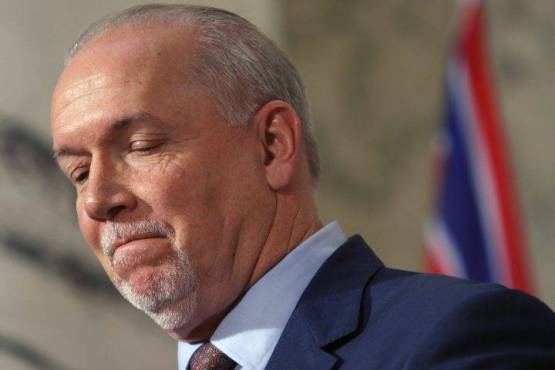
I’m not sure what’s more bizarre, BC Premier John Horgan’s rationale for asking the BC Supreme Court to rule on whether BC can limit the amount of diluted bitumen flowing on Trans Mountain or Jason Kenney’s reaction to Horgan’s decision to take the issue to court.

Magical molecules

Horgan defended his decision to refer the matter to court by saying:  “Resources fall to the province, but trans-boundary issues are a federal responsibility.  But once the boundary is crossed…into British Columbia…the government of British Columbia has the jurisdiction.”

Under this logic, diluted bitumen molecules entering the Trans Mountain pipeline in Alberta are under provincial jurisdiction while they flow through Alberta, magically flip to federal jurisdiction for a nanosecond as they cross the border, and magically flip back to provincial jurisdiction when they land on the BC side.  (Lawyers are extremely creative people, but God help the poor sucker assigned to draft this notice of reference under the BC Constitutional Questions Act).

18206510-e1513117392279

BC Premier John Horgan

Rachel Notley reacted to Horgan’s decision by reiterating that interprovincial pipelines fall within federal jurisdiction; but lifted the wine boycott because BC had stepped back from its initial position.  Trans Mountain said it was pleased BC changed its mind on the proposed regulations.  And the federal government declined to participate in BC’s reference calling it “groundless”.

Magical pipelines

While Notley, the feds and Trans Mountain see BC’s move as a small step in the right direction, Jason Kenney said Alberta had folded under BC’s superior legal strategy.  He held a press conference to outline why this was the case.

Kenney praised Horgan’s decision saying BC was playing the long game (chess) while Alberta was playing the short game (checkers).  A reporter characterized this as “tough words”; but failed to ask Kenney why BC’s strategy was a good one when legal scholars across the country insist it is wrong at law.       

Kenney said the judicial reference was a delay tactic and referred to an old polygamy case that took years to work its way up to the Supreme Court of Canada.  It’s true that difficult cases take time to resolve, however, if the legal scholars are correct the trial court should dismiss BC’s case and the appellate court should refuse to hear an appeal.  The case would be over before it started.

jason-kenney

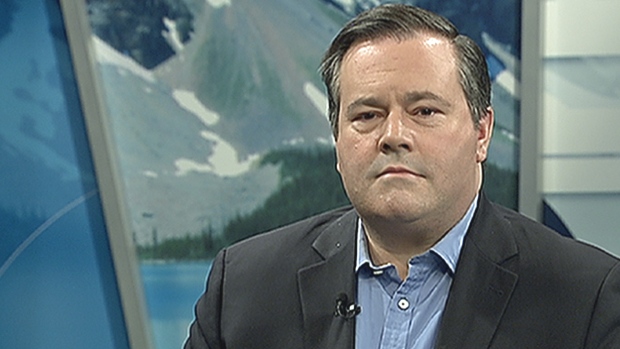
UCP Leader Jason Kenney

Kenney said Notley should reinstate the wine boycott and add further retaliatory measures suggested by the UCP.  No one asked Kenney to explain how the Alberta government could force pipeline companies to shut off shipments to BC when this would cause pipeline companies to violate contracts with their oil and gas shippers and expose Alberta’s largest industry to massive breach of contract lawsuits.

Kenney accused Alberta of backing off and giving BC what it wants; but failed to explain what Alberta could do to stop BC from referring the matter to BC courts under BC legislation.

He called on Notley to demand the federal government step in and act in Alberta’s “economic interest” by invoking Section 92(10)(c) of The Constitution Act and declare Trans Mountain to be in the national interest in order to put an end to any delay tactics.

What?  Section 92 (10)(c) gives the federal government the power to pass a law declaring certain “works” which provincially regulated and wholly situated within a province, to be for the general advantage of Canada.

Trans Mountain is not a provincial regulated pipeline wholly situated within the province of BC.  It is a federally regulated pipeline situated in Alberta and BC.  It is already under federal jurisdiction. 

So, what exactly does Kenney want the federal government to do…take a federally regulated pipeline, transfer it to the province of BC and then invoke Section 92(10)(c) to transfer it back to federal jurisdiction?

Kenney’s argument for magical federal pipelines is as loopy as Horgan’s argument for magical molecules crossing the Alberta/BC border. 

Magical thinking

Kenney’s press conference would have been newsworthy if it had been a call to action supported by fresh ideas, instead it was a repeat of his desire for an all-party motion that would (1) call on BC to stop this “anti-energy, anti-development” strategy, (2) support a fight-back strategy and (3) call on Justin Trudeau to stop the “trade war” by invoking a federal constitutional power (apparently in the heat of the moment Kenney forgot Notley has already done (1) and (2) and the federal government doesn’t wade into “trade wars” between provinces because Section 92(10)(c) relates to federal/provincial jurisdictional conflicts, not interprovincial spats).

At the end of the day Kenney did what he always does, he filled the air with bafflegab, hoping his supporters would mistake talk for action.

If that’s not magical thinking I don’t know what is.

Posted in Energy & Natural Resources, Law, Politics and Government | Tagged , , , , | 20 Comments

Jason Kenney’s Non-Partisan Request

This just in from “the train-has-left-the-station” department.

Let’s see, how should Alberta respond to BC’s announcement that it will limit bitumen shipments from Alberta until it completes consultation on more spill response studies?

Well, the Notley government could impose a boycott of BC wines and create a Market Access Task Force that includes former political leaders, oil and gas executives, economists and legal scholars to develop options and ratchet up the pressure on BC and the federal government.

Justin Trudeau could blanket the media with blunt statements accusing BC of trying to scuttle the national climate change plan (Trudeau says Alberta’s climate leadership plan and the Trans Mountain approval are part of a larger package that includes a $1.5-billion oceans protection plan, investments in Canadian coast guard stations, legislation strengthening protection of Canada’s waterways and species at risk, and overhauling the federal pipeline regulator).

Or we could do what Jason Kenney suggests and talk amongst ourselves.

Kenney’s “non-partisan” request

Mr Kenney presented his request for an emergency session of the Legislature on Facebook and in UCP mail outs.  (He said it was a “non-partisan” request but has yet to remove the negative comments criticizing the Notley government on his Facebook page).

1504886984-300w_300h_kenney

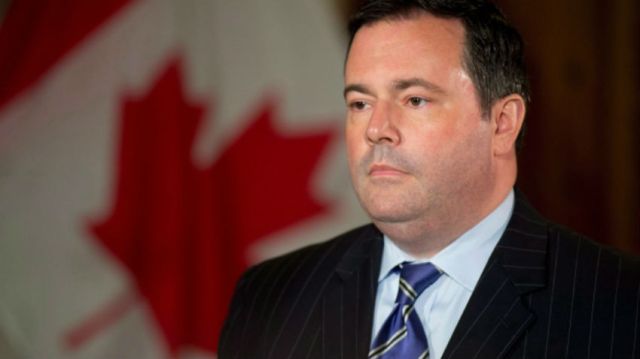
Mr Kenney

Kenney wants an emergency session so all MLAs can “in good faith” engage in “constructive debate” in order to “negotiate” a cross-party motion condemning BC’s decision.  I suppose we could sit around for weeks while various MLAs debate which words best reflect the right level of righteous indignation, or we could get behind the Premier who’s out there right now condemning BC’s actions and developing options to address them.         

He says an emergency session is necessary for Alberta to present a “united front” so the Legislature and all Albertans speak with “one voice”.  Is Alberta presenting a disunited front?  Is there any confusion at the federal level or in the BC government about Alberta’s position?  

Kenney says he supports Notley’s decision to create the Task Force but denigrates the caliber of its membership by referring to them as “non-Albertans”, “lobbyists, bankers and academics”, “industry groups and people even in Ontario”.  He says if Notley is prepared to consult with the Task Force she should also consult with 87 MLAs.  Given that Notley has the support of her 53 NDP MLAs, it’s reasonable to assume what Kenney is really wants is Notley to consult with the 26 UCP MLAs, starting with Mr Kenney.   

With all due respect, it’s hard to imagine what a motion co-drafted by Jason Kenney and his MLAs could possibly add to the deliberations of a Task Force that includes Frank McKenna (bank director, former New Brunswick premier and former ambassador to the USA), Anne McLellan (lawyer, former deputy prime minister and minister of natural resources), Jim Carter (ATB Financial, former Syncrude president), Peter Tertzakian (ARC Financial), Trevor Tombe (UofC economist), Peter Hogg (constitutional law scholar who literally wrote the book on the constitutional law), Ginny Flood (VP, Suncor) and Janet Annesley (SVP, Husky).

Kenney concludes by saying working together, finding a united voice for all Albertans, is “what Albertans expect of us.”  Based on comments from ordinary Albertans, including those with the Canadian Oilwell Drilling Contractors who say Notley is showing “incredible leadership on this file” and the Canadian Association of Petroleum Producers who are “very pleased” with Notley’s actions, it’s safe to say she’s delivering exactly what Albertans expect. 

Jason Kenney can get on board with Notley’s plan or he and his caucus can talk amongst themselves while the train pulls away from the station.

Posted in Energy & Natural Resources, Politics and Government | Tagged , , , , | 31 Comments

An Unfathomable Darkness — The Gerald Stanley Verdict

“There is a darkness that exists in this country and I believe we are going to have to feel our way out of it.” — Chris Murphy, lawyer for the Boushie family

The verdict that found Gerald Stanley not guilty of any crime, not even manslaughter, in the shooting death of Colten Boushie leaves me stunned and mystified.

colten-boushie-gerald-stanley-side-by-side

Mr Boushie and Mr Stanley

I don’t have the requisite knowledge or experience in criminal law to make insightful comments about the trial, nevertheless in anticipation of those who’ve sprung to Mr Stanley’s defence by arguing Mr Boushie was the author of his own misfortune, I would like to share some facts which illustrate how deeply rooted this “darkness” is and how difficult it will be to “feel our way out.”

(NOTE: this post relies heavily on an article by Doug Beazley, published in The National)*

Colonial law in the 21st centuryThere are 615 First Nations in Canada.  They speak more than 50 distinct languages.  More than 1.3 million Canadians identify as having FN heritage.

The law governing the Crown/FN relationship is the Indian Act.  It is 141 years old and contrary to popular belief was not intended to shower FNs with wealth but to annihilate their culture.

Doug Beazley says the Act is “rooted in a 19th-century view of the inherent superiority of Western civilization”.

This bias is reflected in its purpose:  containment and transformation.  The Act broke down FN governance, replacing it with a fiduciary relationship with the Crown.  It set up the reserve band system which allowed the Crown to control the movement, economic activity, and legal rights of Indigenous Canadians while residential schools were established to “kill the Indian in the child”.

Unlike other levels of government where those who govern are accountable to those who elected them, the Indian Act created a “federal municipality” where a “chief’s political constituency is the federal minister and the federal government, not the people living in the community”.   The federal minister has tremendous power, including the right “to void the results of band elections and fire chiefs and council members for cause.”

Given this governance structure, it’s not surprising that members of FNs may feel powerless to address issues facing their community.

Beazley describes the Act as “a weird atavism of 19th century legal thinking, surviving into the 21st.”

He’s right, so why hasn’t it been changed or scrapped all together?

Change? Scrap?     

Policy makers have been trying to do something with the Act for decades.

Some argue for an incremental approach, fearing that reforming or repealing the Act at one go would be too disruptive because it’s become entrenched in “the fabric of First Nations over seven generations”.

Others disagree, arguing that piecemeal changes to the Act undermine Indigenous Peoples’ right to self-determination as set out in the United Nations Declaration on the Rights of Indigenous Peoples (UNDRIP).

In 1969 Pierre Elliot Trudeau’s government made the first (and last) attempt to scrap the Indian Act.  He wanted to abolish the Act and treaties and incorporate FNs under provincial jurisdiction.  Indigenous Canadians soundly rejected this proposal, calling it an attack on their rights and an attempt to fast track assimilation.

The federal government has been tinkering with the Act ever since; the most recent effort being that of Justin Trudeau’s government which wants to reshape the Crown’s relationship with Indigenous Canadians by:

  • Setting up a ministerial working group to examine “de-colonizing” Canadian law
  • Reviewing funding arrangements
  • Developing principles to guide the government’s relationship with Indigenous Canadians, including recognition of an inherent right of self-governance, and
  • Dividing Indigenous and Northern Affairs into two departments, one responsible for service delivery in non-self-governing Indigenous communities and the other responsible for administering the Indian Act

Time will tell whether this effort is more successful than past attempts.

Just fix it all ready

The path to transferring federal power to First Nations is complex and difficult.

Former Conservative senator Lynn Beyak was wrong when she suggested all we needed was for each Indigenous man, woman, and child to take a payout and trade their status cards for Canadian citizenship (apparently not realizing they’re Canadian citizens already).

Anyone suggesting Colten Boushie, a 22 year old man from the Red Pheasant Cree Nation (a band with 1,893 registered members, 608 of whom live on the reserve) could have avoided being killed by Gerald Stanley if he just got his act together, needs to remember the 141 year history and impact of the Indian Act. 

*****

We have a long way to go to find our way out of the darkness.  Let’s start by being honest about how we got here.

*“Decolonizing The Indian Act” by Doug Breazley, published in The National, Winter 2017

Posted in Crime and Justice, Culture, Law | Tagged , , , , , , | 62 Comments

Huffing and Puffing “Leadership”

Last week BC Premier John Horgan said BC would ban any increase in shipments of diluted bitumen (dilbit) to BC until a scientific advisory panel determined whether shippers can adequately prevent and clean up dilbit spills.  If the panel decides this isn’t possible, the ban on increased dilbit shipments will become permanent.

This announcement gave our politicians a chance to show us what they’re made of.

Before we examine how Jason Kenney responded, let’s see what the grownups said.

Enough is enough

For Rachel Notley this was the last straw.

She issued a sharp warning–any action to limit the increased flow of dilbit into BC through Trans Mountain was illegal and unconstitutional.  She confirmed her government is developing a legal strategy to respond to BC’s actions and called upon Prime Minister Trudeau to make it crystal clear to BC that only the federal government has the power to decide what goes into interprovincial pipelines.

image

Premier Notley

She underlined her displeasure by suspending negotiations with BC to purchase electricity, the loss of this deal could cost BC up to $500 million/year and alluded to further trade repercussions.

Horgan tried to mollify Notley by saying he was simply embarking on a “consultation” which could take one to two years.  This just makes things worse because, as Notley pointed out, ongoing regulatory uncertainty is corrosive to business investment.

Come on! Really?

Trudeau stepped up his defence of Alberta’s position by telling 1,700 noisy people, including many belligerent anti-pipeline hecklers, at a town hall meeting in Nanaimo that “It is in the national interest to move forward with the Kinder Morgan pipeline, and we will be moving forward with the Kinder Morgan pipeline.”

When the prime minister of Canada invokes the phrase “national interest” and says the pipeline “will” be built he’s telling BC to back down.    

Horgan responded that BC is an equal partner in Confederation (yes, equal with the other provinces, not necessarily with the federal government) and it won’t be subservient (fine, it might not be subservient to Alberta, but that doesn’t mean it’s not subservient to Canada).

The mature response

Notley fired a shot across BC’s bow warning Horgan not to push his luck.  Trudeau declared his unequivocal support for Alberta in front of an unruly crowd of BC residents.  Both politicians proved they have what it takes to address BC’s position.

And they’ve kept their powder dry.  They’ve done nothing to impair their ability to take this issue to the courts if necessary.

Which brings us to Jason Kenney who’s as inept as John Horgan when it comes to the pipeline debate.

Bad Notley, bad Trudeau

To be fair, it’s a hard for Kenney as the UCP Opposition leader to have any impact whatsoever.  It’s not as if anyone who counts is listening to him.

So, he pitches his comments to his base.

Unfortunately, his comments demonstrate an appalling lack of understanding of the business/legal environment in which Notley and Trudeau operate.

employment-minister-jason-kenney

UCP Opposition Leader Jason Kenney

Kenney argues Notley should have taken a harder line with BC.  He wants Alberta to cut off oil flowing to BC so “BC consumers can see what sky-high gas prices look like”.

Not only is this naïve (the backlash would be directed against Alberta, not Horgan’s government), it creates problems under the New West Partnership Agreement which prohibits provinces from impairing their trade relationships, and most importantly, it hurts Alberta producers and shippers by forcing them to violate energy contracts and pipeline transportation agreements.

Kenney professes to support the free market, but his “cut off the oil” solution is the antithesis of allowing the market to operate free from government interference.

Kenney tried to take credit for Notley’s decision to suspend the electricity negotiations, but unlike Notley who suspended negotiations on a potential trade deal with BC, Kenney’s “solution” impacted the existing trade relationship between the two provinces which creates problems under the New West Partnership Agreement.

When all else fails Kenney, like Trump, reverts to conspiracy theories.

Kenney suggests that Notley and Trudeau don’t really want the Trans Mountain pipeline to go ahead.  Apparently when Notley says the BC government “doesn’t have the right to re-write our constitution and assume powers for itself that it does not have” what she really means is “Well done, John, let’s rip up the constitution”.

Apparently when Trudeau ejects anti-pipeline protesters from town hall meetings he’s really telling them he’s on their side.

Kenney’s conspiracy theory explanations may go down well with his supporters who want to cede from Canada and join the USA, but most Albertans are too intelligent to swallow this hogwash.

Leaders and that other guy  

We need leaders like Rachel Notley and Justin Trudeau who know how to work collaboratively with their provincial and federal counterparts but are prepared to ratchet up the pressure when it becomes necessary.

We don’t need leaders who try to solve difficult problems with ill-considered, half baked, “we’ll show them” solutions.

Some leaders know how to lead.  Others take cheap shots and talk big in memes.

Huffing and puffing can be entertaining but it’s no substitute for leadership.

Posted in Economy, Energy & Natural Resources, Politics and Government | Tagged , , , , | 93 Comments

It’s been one of those days…

Ms Soapbox’s plane got in late last night.  It got wedged behind another plane in Victoria and was blocked from the gate by a giant snowbank in Calgary.  On the bright side Mr Soapbox got us home in one piece.  (Good man!)

Then the boiler died.

Ms Soapbox has lots to say but she’s distracted and will post tomorrow.

Have a good Sunday!

Posted in Uncategorized | 11 Comments

#Metoo?

Can we talk?

Many men (and some women) worry that the #metoo movement has morphed into a man-hating witch hunt where innocent men will be publicly humiliated and deprived of their livelihoods by vindictive women spreading unfounded accusations.

They point to the fate of three Canadian politicians, Ont PC leader, Patrick Brown and NS PC leader Jamie Bailie, both of whom resigned following allegations of sexual harassment and Liberal MP, Kent Hehr, who resigned from cabinet pending an investigation into allegations of sexual misconduct.

word04

They ask why the women who made the allegations of sexual misconduct took so long to come forward;  they wonder whether the women are lying or making a big deal out of nothing; and they’re concerned that suspending or firing politicians in these circumstances is a violation of due process.

Let’s examine these concerns.

Why did the women wait so long?  

Political parties and political institutions were woefully behind when it came to formally recognizing the existence of sexual harassment and developing a policy and process to address it.  The House of Commons didn’t formalize its harassment policy until Dec 2014, decades later than the private sector.

In the past, women who were harassed by powerful politicians were loath to complain lest they torpedo their careers, or heaven forbid, be ostracized for being disloyal.  If they decided to complain it wasn’t clear who they should complain to (the party leader, a sympathetic female colleague, the party whip?).  And if they did complain there was no guarantee things would change.

So, they kept their stories to themselves…until the #metoo movement gave them an opportunity to speak out.

Bottom line:  the women didn’t speak up earlier because the cost of speaking up was too great and the reward for speaking up was practically non-existent.

Mountains, molehills and lies  

Fine, the women had a good excuse for not speaking up sooner, but is it right for them to hang a fellow out to dry because he made a stupid remark 10 years ago?

Context is important here.  What passed for acceptable (if somewhat risqué) conduct in the 1970s and 80s does not cut it today.  But we can’t assume just because something happened years ago it was okay by the standards of the time.  We need to focus on what was actually said or done.

A comment may seem stupid, thoughtless and relatively innocuous when compared to outright sexual assault, but when such comments form a pattern of predatory behavior they’re corrosive.  No one has the right to erode the dignity of another with the constant drip, drip, drip of comments laced with sexual innuendo, “accidental” pats on the butt, or “friendly” shoulder rubs.  The burden of figuring this out falls on the politician not the woman he’s making miserable.

And lest we forget, even in the Mad Men days men were not allowed to force themselves on women, particularly if they were inebriated or underage.

mad-men1

This gets us to lies (although I must admit I’m puzzled at the number of men who think there’s a heartless vixen ready to pop out of their past to destroy them with false accusations).

It is never okay to destroy someone’s career and reputation with a lie.  But know this, no woman embarks on this path lightly.  They’ve seen their peers viciously attacked for speaking up.  They need the courage of Joan of Arc to come forward…and they do so anyway.

All we know at this point is the tsunami of false #metoo allegations has failed to materialize.  And truth be told, the concern that good men will be brought to their knees by lying scheming women feels a lot like the allegations of voter fraud–unsubstantiated and greatly exaggerated.

Due process and the media

Sharing a story on #metoo won’t topple a politician unless it’s picked up and amplified by the mainstream media.

Andrew Coyne and Sylvia Stead point out that journalists takes their responsibilities with respect to such stories very seriously–with good reason, failure to do so would land them and their papers in the middle of a defamation suit.

Coyne and Stead don’t run with the initial allegation.  They look for corroboration from others.  How detailed is the allegation, is it confirmed with contemporaneous evidence, is there a reason the accuser would lie, is the allegation a simple misunderstanding or did it really cross the line.  They check back with the politician accused of misconduct.  They test for credibility.  (Incidentally the “whisper network” is real, MPP Lisa MacLeod says she flagged unpleasant rumours about Patrick Brown for three years and was rebuffed…right up to the day Brown was dumped by his party.)

Some people are concerned that printing such stories, even if they’ve been exhaustively researched, deprives the accused politician of due process.

Lawyers do not agree.  Law professor Alice Woolley recently tweeted: “I believe in the presumption of innocence in criminal trials and the right to a zealous defence.  But it’s not salient to the public’s response to credible allegations of sexual misconduct vetted by reputable journalists.”

It’s not fair

Some people argue that it’s unfair that a harassment complaint or a #metoo post should cost a politician his job.  They act as if the woman who made the allegation had him fired.

This interpretation ignores the fact that it was the politician’s “boss” (his party or his prime minister) who reviewed the complaint and decided the politician’s behavior was sufficiently egregious to merit sanction.

Kent Hehr is under suspension pending the outcome of an investigation into a sexual harassment complaint.  Patrick Brown and Jamie Bailie resigned as party leaders at the behest of their parties due to sexual harassment complaints .  That’s fair treatment.

While we’re on the topic of fairness we shouldn’t forget the impact of sexual harassment on women who are its target.  Harassment makes life extremely difficult for women in politics and deters others from entering politics.  That’s not good for democracy.

Can I still hug you?

Of course, if you hugged us before #metoo you can hug us again…assuming your hug doesn’t go on forever or involve mashing your body into ours.

You’re adults, use your judgment.   And when in doubt, ask.  That’s not too hard, is it?

Posted in Culture, Feminism, Law, Politics and Government | Tagged , , , | 57 Comments

Why Do We March?

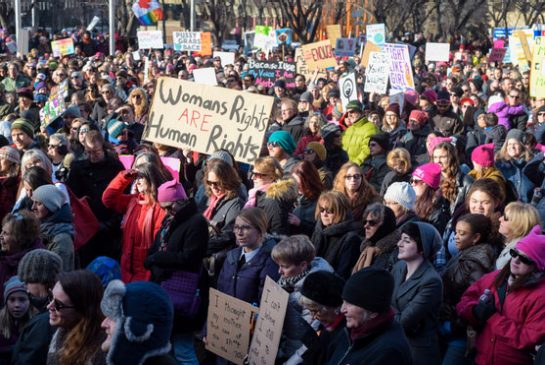
Of the 120,000 people who attended the Women’s March in Canada, 10,000 marched in Alberta and 3,500 marched in Calgary.

They were repeatedly asked, “Why do you march?”

They replied they were concerned about equal pay, violence against women, protecting human rights, and ensuring the ugliness of Trumpism doesn’t seep into Canadian politics.

Ashley Bristowe, Calgary March spokesperson, was even more specific.  She said the focus of the Calgary March was “creating space [and] building community around the issues that we think are important here in Alberta…[and creating] the opportunity for marginalized and disenfranchised voices to be heard.”

calmarch5-size-xxlarge-promo

Women’s March Calgary 2018

NDP, Liberal and Alberta Party politicians put aside their differences to march under the Women’s March banner–one of the clearest examples of common purpose was NDP MLA Sandra Jansen’s tweet of a photo of herself and AP leadership candidate Rick Fraser with the caption “This guy can march with me any day.”

The only political party that skipped the Woman’s March was…you guessed it…the UCP.

Why don’t they march?

Instead of asking us why we march, we should be asking the UCP why they don’t march.

UCP leader Jason Kenney has nothing to say on this topic, but comments of the UCP communications chair, Sonia Kont, and others list various objections to the Women’s March which may explain why UCP politicians decided to pass on the Woman’s March in Calgary and Edmonton.

Here’s what they said.

Objection #1:  There are better ways to empower women than playing identity politics in a march 

This makes absolutely no sense.  Identity politics refers to politics based on the interests of a specific group which is identified by traits such as nationality, culture, ethnicity, age, gender, sexual preference, etc.  If UCP politicians attended the Women’s March they would quickly realize the female, male, non-binary, young, old, gay, straight, white, First Nations, Muslim, racially, culturally and politically diverse marchers do not represent a specific group pushing an identity-based agenda.  They’re marching for a multi-faceted vision of humanity.

Objection #2:  We all have the same rights in society 

Indeed we do; unfortunately the fact our rights are enshrined in the Charter of Rights and Freedoms and the Alberta Human Rights Act does not stop racist, sexist, homophobic, Islamophobic, or transphobic nutbars and the political parties they gravitate to from trying to take our rights away from us.

Objection #3:  The march lacks clarity 

This complaint appears to be based on the fact that marchers carry signs advocating for various causes, all of which can be characterized as demanding equal rights in one form or another.  Why is this a bad thing?  Is there a UCP rule that says you can only march for same-sex marriage on Pride Day and a woman’s right to choose on…oh I don’t know…a day when someone decides to picket an abortion clinic?

Objection #4:  You should be marching for the rights of women in the Middle East not here in Alberta

Two points come to mind here: (1) If the rights of women are not adequately protected in Alberta, we need to march for them in Alberta and (2) the fact we march to protect women’s rights in Alberta does not preclude us from marching to protect women’s rights elsewhere.  The fight for women’s rights (indeed all human rights) here and abroad isn’t an either/or proposition, we can fight for both at the same time.

Objection #5:  We don’t need to march because we’re well represented by female Conservative politicians like Michelle Rempel and Rona Ambrose who are holding Justin Trudeau accountable 

What?  Trudeau is a feminist who appointed the first gender-balanced federal cabinet in history.  His position on women’s rights, including abortion, is well know.  Is the UCP seriously suggesting women should give Rona Ambrose a pat on the back for supporting a Conservative motion that would have resurrected the abortion debate or Michelle Rempel credit when the Conservative party finally decided to recognize same-sex marriage 12 years after the Supreme Court of Canada declared it was legal?

Why we march

Rachel Notley is keenly aware of “social issues” and works hard to address them.  She appointed the first gender-balanced cabinet ever in Alberta.  Her government passed many laws aimed at improving the lives of women and minorities.

It passed laws that allowed students to create gay-straight alliances in schools and protected them from being outed by their teachers.  It increased protections for victims of sexual assault and domestic violence; it protected people from the distribution of intimate images without their consent.  It updated labour and employment standards that hadn’t been reviewed for decades and increased the minimum wage to $15/hour.  It accessed federal funding to set up a $25-a-day day care centres.

Jason Kenney, on the other hand, says he has no time for “social issues” and promises to rip up every law Notley enacted.

So why do we march?

As transgender activist Marni Panas put it, we march because “we are just one election away from losing the rights and freedoms we spent decades fighting for.”

The real question isn’t why we do march;  it’s why do you not.    

Posted in Celebrations, Feminism, Politics and Government, Uncategorized | Tagged , , , , , , | 36 Comments

Thank You Alberta Party!

When Greg Clark stepped down as the leader of the Alberta Party Ms Soapbox wondered whether the party had lost its mind.

When Rick Fraser and Stephen Mandel, two former Progressive Conservatives, entered the AP leadership race, Ms Soapbox wondered whether the party had been taken over by the Progressive Conservatives.

She soon realized such idle speculation was pointless.  Gone were the days of Boss Tweed and Tammany Hall when cigar-chomping party bosses pulled strings to deliver candidates acceptable to their well-heeled patrons.  And gone are the days when Albertans would vote “blue” because that’s what they’d done for the last 44 years.

greg-clark

Greg Clark, MLA and former leader of the Alberta Party

Ms Soapbox isn’t saying the Alberta Party will lead Alberta to the promised land (she thinks Notley’s NDP are doing a fine job) however she wants to recognize the AP’s leadership candidates for pointing out that in this age of memes, Twitter spats, and an 8 second attention span, policies still matter.

Like the pre-Kenney politicians who went before them, the AP leadership candidates are putting policies in front of their membership because they respect their members and are willing to stick their necks out.  Most importantly, they’re not expecting their supporters to jump on the boo/hiss bandwagon just because they say so.

Assuming Ms Soapbox is right and it’s the thoughtful Albertans, not the boo/hissers who’ll determine the outcome of the 2019 election what should we be thinking about between now and then?

Here’s a preliminary list:

Divisive politics are dangerous:  Rick Fraser put it well when he said we need to return to civil discourse because the “old political playbook” won’t cut it anymore.  Albertans will not find solutions to complex problems if they’re at each others’ throats.  Politicians who insist that the path to victory is paved with divisive rhetoric are dangerous and don’t deserve our support.

Show us your policies or get off the air: Running on a no-policy platform is dangerous because hard-core supporters will fill in the blanks, leaving their leader in the peculiar position of trying to back away from a promise he never made or engaging in backroom machinations to deliver the results he secretly wants.

The UCP is already grappling with this problem.

Apparently, Jason Kenney said he’d cut spending by 1% to 2% not 20%.  That’s 10 times less than his base expects.  His base is confused and the rest of us don’t trust him.

Kenney also said his government would focus on economic issues, not social ones; however, when the NDP tabled Bill 24, an amendment to the School Act to ensure an LBGTQ student’s privacy rights were respected, Rick Fraser says the UCP caucus was whipped into voting against, notwithstanding Kenney’s comment that his MLAs were free to vote their conscience.

Are your policies better than the government’s policies, if so why?*

It’s not enough to unveil a policy, a politician needs to show us why his/her policy is better than the government’s position.

AP leadership candidate Rick Fraser has taken this to heart.  He says one way to ensure Alberta has the revenue it needs to provide the services people want is to implement a provincial sales tax.    He didn’t say he would implement a PST but he’s raised the topic for discussion (remember what I said about sticking your neck out).

The NDP’s solution to creating more revenue is to diversify the economy so the reduction in fossil fuel revenues won’t leave a gaping hole in the budget.  This is a long term solution that needs to be weighed against the risk of continued low oil prices and the immediate benefit a new PST would bring.

The UCP offer no solutions.  In fact, they’d like to bring back the 10% flat tax which will make the revenue gap at least $700 million worse (but it would make the top 10% of Albertans who make more than $128,145 very happy, so that’s a consideration).

What is your policy rationale and is it appropriate?

The best example of this issue is the debate over publicly funded “choice”.

The NDP believe publicly funded services should be publicly delivered and is moving services like long term care, lab services and laundry services in house.  The goal is to avoid the conflict that arises when a for-profit corporation that wants to increase costs (in order to increase profits) enters into a contract with a government trying to reduce costs so it can reduce its revenue requirements.

AP leadership candidate Stephen Mandel supports some level of privatization but hasn’t provided a helpful rationale.  He objects to the NDP’s decision to spend $325 million on new lab services saying it should have been outsourced to an Australian company. (The Sonic contract under consideration by the PC government was worth $3 billion, there may be more to Mandel’s rationale, but he has not yet explained it).

The UCP supports increased privatization of services like healthcare and education on the rationale of “choice” but has yet to explain why the public should fund the lion’s share of someone’s “choice” to move to a for-profit or religious service provider.

These are complex policy decisions that deserve thoughtful debate.

Thank you

The Alberta Party is a little party that punches well above its weight.  It will have achieved something remarkable if it manages to pull polarized Albertans out of their respective corners so they can engage in meaningful dialogue.

And for that the Alberta Party deserves our thanks, regardless of which political party we support.

*The discussion of UCP policies is based on media reports of the draft policy going to the UCP policy convention in May 2018.   

Posted in Alberta Health Care, Economy, Energy & Natural Resources, Politics and Government, Uncategorized | Tagged , , , , | 29 Comments