
They’ve learned two important things so far: people expect you to keep the promises you made over 100 years ago and there’s no such thing as too much Maple Syrup pie.
A la semaine prochaine!

Fountain outside the hotel
They’ve learned two important things so far: people expect you to keep the promises you made over 100 years ago and there’s no such thing as too much Maple Syrup pie.
A la semaine prochaine!
Fountain outside the hotel
Last week the NDP government introduced the Fair and Family-Friendly Workplaces Act (Bill 17). It’s intended to update workplace legislation that became increasingly outdated under Progressive Conservative rule.
Premier Notley describes Bill 17 as a balanced middle of the road approach. The Opposition is says it’s a “union-friendly omnibus bill” that should be split in two to prevent the government from “sneaking labour in with everything else.”
Is Bill 17 a unicorn or a chimera? A force for good or a monster?
The Legislation
Bill 17 changes the employer/employee relationship in six areas:
An Omnibus Bill
Horrors! say the Opposition. It’s an omnibus bill in the worst tradition of he-who-tabled-monster-budget bills that included everything from finance and budgets to veterans’ benefits, anti-terrorism measures and changes to the Fisheries Act.
Leaving aside their hypocrisy, they’re just plain wrong.
Bill 17 focuses on the relationship between an employer and an employee, one on one or as part of a group. That’s it. The difficulty for the Opposition is that both aspects of this relationship appear in the same bill—the Opposition will have to be very careful when they explain to their constituents why they voted against it.
Card-based vs ballot-based certification
The heart of the controversy swirls around the elimination of the vote by secret ballot if 65% plus one of the employees (a supermajority) sign certification cards.
Under the existing legislation if 40% or more of the employees signed certification cards, the Board will conduct a vote. If the majority of the employees vote for the union, they’ll be unionized. This is called “ballot-based certification”.
Under Bill 17, if 40% to 65% of the employees sign certification cards nothing changes. The Board conducts a vote and if the majority votes for the union, they’re unionized.
However, if more than 65% of the employees sign certification cards that’s it, they’re unionized. There is no vote unless the Board has some concerns in which case it will conduct a vote. This is called “card-based certification”.
The ballot-based certification requires a majority (50% plus one), the card-based certification requires a supermajority (65% plus one).
What’s the problem?
Intimidation
The elimination of the secret ballot in the case of a supermajority is driving the Opposition bonkers.

A chimera
PC MLA Ric McIver made an impassioned, if incoherent, argument that in the months that elapse between employees signing their certification cards and Board accepting them, everyone will know who is pro-union and who is anti-union, thus leaving them open to intimidation from the company and the union.
This is bizarre argument because the old system also requires employees to sign certification cards; if McIver is concerned that everyone will know who is pro- or anti-union based on their certification cards, then the threat of intimidation exists today.
It will be unchanged if the certification tally results in 45% to 65% signing up for a union because the old system still applies.
It will diminish if the certification tally results in more than 65% signing up for a union because they’ll be automatically unionized. They won’t to wait for weeks or months for the ballot to be scheduled.
Secret ballots
The Opposition argues Bill 17 is a blow to democracy because the cards aren’t secret but the ballots are.
True, secret ballots are a hallmark of democracy, but companies are not democratic institutions. They’re hierarchical institutions with power (continued employment, increased pay, and benefits) concentrated in the hands of the employer.
The blow to democracy argument is a red-herring.
The real issue
Labour researchers like Chris Riddell say management is twice as effective at opposing ballot-based certification—what we have today and will continue to have where 40% to 65% of the employees sign certification cards—than card-based certification as proposed by Bill 17 where 65% plus one employees sign up a union card.
Introducing card-based certification, even one requiring a supermajority, may make it easier for employees to unionize. But this isn’t necessarily a given.
A wise CEO who’s rebuffed many unionization drives said the best way to keep your employees from unionizing is to treat them well.
Is Bill 17 a unicorn or a chimera? It’s neither, it’s simply good business practice.
Say what you will about the Wildrose, they were always grassroots party…that is until Jason Kenney blew them out of the water.
Last week Jason Kenney and Brian Jean unveiled the terms under which the Wildrose and Progressive Conservatives will roll up into the United Conservative Party (UCP). The Agreement in Principle on the Establishment of the United Conservative Party will be presented to conservatives for ratification on July 22. If it’s ratified, a new leader will be chosen on Oct 28. The process is billed as a merger of equals, but it’s not.
Leverage
Jean had all the leverage going into this negotiation.
The Wildrose had 22 sitting MLAs, the PCs just 8. A recent poll asking respondents who they’d prefer as leader of the UCP put Jean’s support at 37% and Kenney’s at 22%. Kenney needed the Wildrose more than Jean needed the PCs.
In a normal world, this would give Jean all the leverage he needed, but this isn’t a normal world, this is politics and Kenney changed the narrative.
It was no longer about which political party was likely to win the most seats and defeat Notley’s NDP in the next election. It was about which politician was prepared to put aside his ego to “save” Alberta from the “socialists”.
In the new narrative seat count and popular support didn’t matter, Jean’s leverage vaporized and he had to demonstrate he was just as selfless as Kenney (the politician with no seat, and no party or MLAs until recently).
Top-down vs grassroots
They say the devil is in the details, of which the Agreement is shamefully short.
The Wildrose wanted “more specifics” but were persuaded to settle for what Kenney dubbed “a more modest approach” that reflects “the key emblematic issues” for both parties. (Merge the parties and vote for a leader, no need to worry your pretty little heads about policy and constitutional details, those can be worked out later).
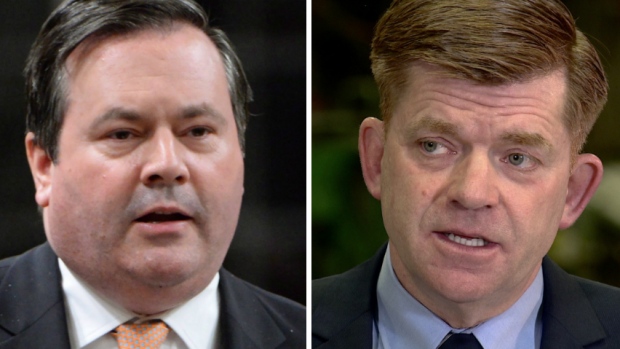
Jason Kenney or Brian Jean: Who will lead the UCP?
Kenney suggests there were trade-offs. He says the PCs accepted “property rights and language around more democratic accountability” in return for the Wildrose accepting “the formulation of progressive social policies and a diverse coalition”.
He makes this sound like a big deal but it’s not.
In the first place, Kenney’s “progressive social policies” are the same as Jean’s. Secondly, the Wildrose lost more than it gained by agreeing to Kenney’s “language around more democratic accountability”.
Democratic accountability
The Wildrose Constitution sets out 12 guiding principles. The most significant for a grassroots party are the principles supporting democratic accountability. Article 4.4 of the Constitution expressly sets out the party’s belief in free elections, fixed election dates, free votes in the Legislature, the right of citizens to recall their MLAs, and the right of citizens to initiate binding referendums
The UCP Agreement describes democratic accountability as: “Parliamentary institutions and the democratic process enshrined in our Constitutional Monarchy, together with greater engagement by citizens in democratic decision making, and greater accountability of government to citizens.”
Setting aside the gibberish around parliamentary institutions and Constitutional Monarchies, this is little more than the PC’s Constitutional principle requiring “respectful, responsible and responsive governance”. It falls far short of the NDP Constitutional requirement that MLAs must hold public meetings with their constituents before the House convenes and after it adjourns to gather their concerns and report back on how they were addressed in the Legislature.
Jean says the Wildrose right of recall is embedded in the Agreement. Presumably he is referring to a reference to “grassroots democracy, including measures to empower Albertans to hold government accountable during and between elections” which appears as one of the guiding principles.
Kenny disagrees. And most lawyers would side with Kenney. The principles of statutory interpretation dictate that unless a right (recall, free vote, whatever) is expressly set out in an agreement it doesn’t exist. This is a critical point, we’ll come back to it later.
It’s not surprising that the man who wants to lead the UCP is going to clamp down on the grassroots (who are prone to spectacular bozo eruptions). Kenney prefers the top-down leadership model that carried his boss, Stephen Harper, to power.
The real leadership question is whether Brian Jean will let Jason Kenney get away with it.
The 5% difference
Conservatives supporting the merger say the Wildrose and PCs agree on 95% of the issues. This is true when they’re discussing conservative ideology and their belief that Rachel Notley’s NDP government must go.
This is not true when they’re discussing how the people can hold a government to account.
This 5% difference is as wide and deep as the Peningagjá chasm. Jason Kenney and the PCs believe in a top-down leader-driven government. Brian Jean and the Wildrose believe in a bottoms-up grassroots-driven government.
The conservatives will likely ratify the Agreement in July. The big question is whether they’ll support a Jason Kenney authoritarian right or a Brian Jean grassroots right.
“ideology” \ˌī-dē-ˈä-lə-jē, -ˈa-, ˌi-\ a systematic body of concepts, especially those of a particular group or political party—Merriam-Webster
The word “ideology” was coined by the French philosopher Destutt de Tracy. Originally it meant the science of ideas; but shrewd politicians like Napoleon Bonaparte corrupted it to mean something more pejorative, even sinister.
This is unfortunate because politicians professing to be free from ideology are in fact admitting that they’re rudderless.
For them politics is simply a contest for power which will be won by capturing the issues of the day in catchy slogans and using them to bamboozle citizens to vote for them.
The trouble with slogans is that unlike ideologies they’re meaningless and/or misleading and provide no action plan for the future.
Speaking of meaningless…
Destructive conservatism
Jason Kenney is working tirelessly to merge the Progressive Conservatives and the Wildrose Party into the Free Enterprise coalition.

Jason Kenney leadership hopeful #1
His slogan (for now) is Restore the Alberta Advantage. How? By beating Rachel Notley’s NDP in the next election and destroying everything the NDP has done over the last four years.
Brian Jean is squarely on board with Jason Kenney’s destructive mission except he says he’ll replace the carbon tax, not eliminate it (smart man, why get rid of a tax after the public has gotten used to it, just repurpose the extra revenue to suit your own agenda).
The theme of destruction is important because it indicates that Alberta’s conservatives are moving along the same spectrum of conservatism that’s engulfed the United Kingdom and the USA.
George Monbiot, the British writer and political activist, says conservatism has three forms:
Alberta conservatism has evolved from the Peter Lougheed’s conservatives, who fell somewhere between the first and second forms of conservatism, and is now closing in on the third form of conservatism, destructive conservatism.
“Destroy the NDP, destroy all they’ve created, erase socialism from every corner of the province”.
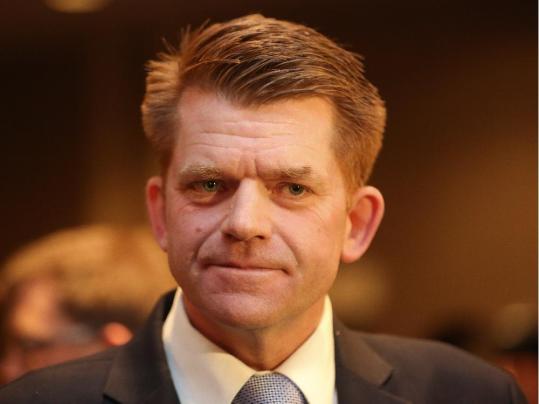
Brian Jean leadership hopeful #2
It’s a slogan mindlessly repeated by Kenney/Jean supporters with no thought about what it might mean.
Destructive conservatism leads to bizarre outcomes.
For example:
There’s only one explanations for this kind of behavior. Destructive conservatives don’t care who gets hurt as long as they win the next election.
Anyone who doesn’t understand the danger of voting for the Free Enterprise coalition whose sole raison d’etre is to destroy the government that went before it need only look south of the border to see why this is a spectacularly stupid idea.
It’s a pity Wildrose MLA Derek Fildebrandt hadn’t read Jane Jacobs’ Dark Age Ahead before he launched into his description of how the ancient Romans dealt with governments that were, in his words, “beyond redemption”.
Fildebrandt said the NDP’s “scorched earth policy of hyperregulation, waste of tax dollars and blind ideology” destroyed the “great pillars of the Alberta advantage: balanced budgets, low taxes and accountable government”.
He predicted a united conservative party will trounce the NDP in the next election and then, like the ancient Romans, declare damnatio memoriae (the Roman practice of dishonouring past leaders by destroying all traces of them and their government) to restore the Alberta advantage by cutting taxes and reducing spending to magically balance the budget.
Sadly, Fildebrandt failed to recognize that the Roman practice of erasing past governments ultimately led to the fall of the Roman Empire.
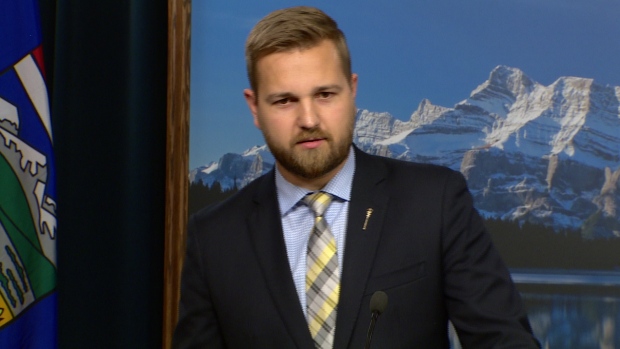
Derek Fildebrandt Wildrose Shadow Minister for Finance
Jane Jacobs says when cultures are buffeted by radical jolts they either change their institutions or cling to the past. Institutions that fail to adapt will collapse. The collapse of one institution weakens the rest. Eventually internal rot sets in and cultures shift from a faith in reason (“logos”) and a future-orientation to “mythos” or a conservatism that looks backwards for answers.
A better plan
Instead of trying to recreate Klein’s glory days (mythos), Albertans would be better served by a government that takes stock of where we are and figures out how to move forward into the future (logos).
Trevor Tombe, assistant professor of economics at the U of C and research fellow at the School of Public Policy, made some observations that are relevant.
In a recent article in the Globe & Mail Tombe said:
Tombe says politicians from all sides distort our view of the province, painting it out as weaker and more dependent on oil than it really is. He concludes Alberta’s economy is strong and growing.
Dial back the drama
The NDP government is at the half-way point in their first term. It has made many institutional changes—eliminating the flat tax, modernizing royalty structures, and adopting the climate leadership plan for example. Premier Notley says the question her government asks every step of the way is whether a proposed change will “make life better for everyday Albertans?”
Notley appears to be following Jacob’s advice to rely on “logos” not “mythos” to adapt to the jolts to the economy that have plagued her government from the day it took office.
The conservatives, on the other hand, react to these jolts by retreating into “mythos”. They’ve lost track of their agenda. One day they’re berating the Premier for “ignoring” the US by focusing on China and Japan (the second and third largest economies after the US); the next day they’re castigating her for not attacking Donald Trump with “every tool at her disposal” à la Christie Clark.
It’s time to dial back the drama.
Let’s start by reminding Mr Fildebrandt of another history lesson from Jane Jacobs: when the Roman emperors failed to pay the army, the elite guard took matters into their own hands. They chose emperors they thought would pay them. This military despotism created havoc and budgetary policy became such a mess that in the 50 years from 235 CE to 285 CE all but one of the 26 emperors acclaimed by the army was murdered or assassinated.
Disgruntled Albertans won’t take such drastic measures when their mythos-based conservative leaders fail to deliver the “Alberta advantage” (which incidentally means different things to different people) however the end of their political careers will be just as ignominious.
Sources: Hansard, May 2, 2017, p 772; May 4, 2017, p 868
Dark Age Ahead by Jane Jacobs, pp 7 – 22
The Wildrose Opposition spent the last three weeks berating the NDP government for not spending millions and millions of dollars fast enough.
Wait, what?
The Wildrose says farmers are being “held to ransom” because they’ve had to delay the 2017 planting season waiting around for AgriInsurance adjusters to declare their crops partially or completely destroyed. The Wildrose is also peeved that some farmers received less than 100% reimbursement.
The Wildrose has a solution to this catastrophe: simply instruct the insurer to do a “blanket assessment based on a nominal site visit and pay out what is owned to our hard-working Alberta families.”
This is an amazingly stupid solution.
No one is “owed” insurance payouts
The Wildrose is a proponent of efficient business practices. Its mantra is privatize, privatize, privatize.
Nevertheless, it’s urging the government to turn the insurance business upside down by making payments based on an inspection of a “nominal site” and extrapolating the damage to what…? The remainder of the farmer’s fields, every other farmer in the area, every farmer in the province?
Not only does this violate the legislative framework on which AgriInsurance is based; it may violate the fundamental principles of insurance including the principle of indemnity (an insured cannot be compensated for an amount exceeding his actual loss), the principle of proximate cause (an insured cannot be compensated for a loss caused by, say, poor farming practices, instead of inclement weather), and compromises the duty of utmost good faith (which prevents fraudulent claims and misrepresentation).
The Wildrose solution is predicated on its breathless assertion that Alberta farmers are in crisis.
But they’re not.
5% does not a crisis make
Mr Carlier, the minister of Agriculture and Forestry, responded to the Wildrose hysteria with some facts:
So why is the Wildrose in a flap? Is there something about the Wildrose’s devotion to conservative values that we’re missing?
Principles vs politics
Wildrose MLA Grant Hunter describes conservative values by invoking a definition provided by Ed Feulner, the founder of the Heritage Foundation. Heritage Foundation promotes conservative public policies based on the principles of free enterprise, limited government, individual freedom, traditional American values, and a strong national defense.
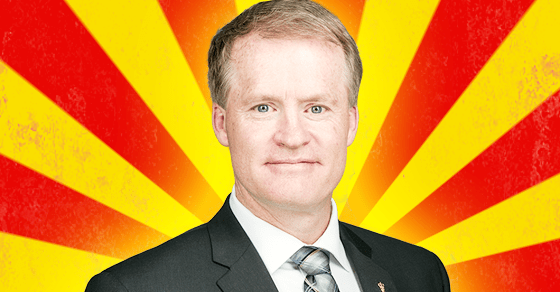
Wildrose MLA Grant Hunter
Feulner believed every government program ought to have limits for budgetary reasons and because governmental overreach would result in a loss of freedom.
He suggested the true value of conservative ideas lay in how they were applied to the problems of the day.
The Wildrose met this specific problem of the day by ignoring conservative values, creating a false crisis, and demanding the government rip up legislation and twist the principles of free enterprise.
Why? To secure the support of their rural base.
In other words, notwithstanding all their talk about principles, the Wildrose is happy to take a page from the Progressive Conservative playbook in which rule number one is take care of your friends and supporters and they’ll take care of you.
Something worth remembering when 2019 rolls around.
Sources: Alberta Hansard, Apr 4, p 520; Apr 18, 644; Apr 19, p 666 and Apr 20, p 711
We will have plenty of time in the coming weeks to talk about the miserable state of the world (it’s getting pretty scary out there, isn’t it?) but today I want to talk about my favourite celebration, Easter.
Hot cross buns, painted eggs, bunnies; what’s not to love?

Beyond the obvious symbols of Easter, there’s this.
Easter is the perfect celebration.
It focuses on life, death, rebirth and renewal. Its name can be traced back to Ostara, the Germanic goddess of fertility. It’s tied to the vernal Equinox which is why it’s celebrated on the first Sunday after the first full moon after the 20th of March and not a fixed date. It incorporates elements from many religious traditions including the Jewish celebration of Passover.
Most importantly, it symbolizes the belief so eloquently expressed by the late Labour MP, Jo Cox: there’s more that unites us than divides us.
Let’s hold on to that thought as we face the challenges ahead.
May you have a peaceful and joyous Easter.
Recently Brad Trost and Jason Kenney made some troubling comments about the whole gay thing and the progressives just won’t let it go.
Trost, a “full spectrum” conservative, believes in all three conservative values: social conservatism, fiscal conservatism, and democratic populist conservatism. He recently shared his views on “the whole gay thing” in a campaign video.
Let’s consider what Brad’s campaign manager said on Brad’s behalf.
The whole gay thing
“Brad is not a big fan of the gay lifestyle but what you do in private is your business.”
This is offensive. Being gay is not a lifestyle choice, it’s a state of being that is protected from discrimination under the Charter of Rights and Freedoms, which incidentally also protects people from discrimination based on race, religion, gender, age and physical and mental disability. Following Brad’s logic, he’s not a big fan of the Charter either.
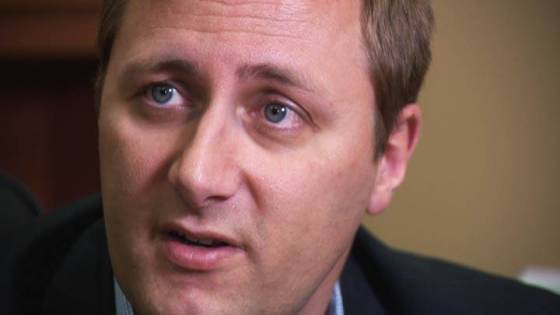
Brad Trost CPC Leadership Candidate
“But what you literally do in the middle of the street needs to conform to some basic community standards. Brad’s concern is that parts of the Gay Pride parade have become so overly sexualized; behavior which is so inappropriate for public viewing that it’s unbelievable.”
People attend Pride parades to show support for the LBGTQ community. Complaining about “what goes on in the middle of the street” is as silly as planning a vacation in Provincetown and complaining you’re surrounded by gay guys in speedos when you get there.
If you don’t support the cause, don’t go to the parade. If you do support the cause and see something that shocks your sensibilities, there are laws against public indecency. Find a policeman and lodge a complaint the way you would if you caught a drunken sports fan urinating on a lamppost after a hockey game.
“If you want to have a parade, have a parade, but don’t ask taxpayers to subsidize it. The fact that we’re going out and borrowing money that future generations are going to have to pay back to subsidize a parade makes no sense to Brad.”
Not subsidizing the Pride parade while continuing to subsidize other parades is discriminatory and a violation of the Charter (see above) and the amount of money Brad would save for future generations by not subsidizing a Pride parade is minuscule.
Trost is running for the leadership of the federal Conservative party. This is a campaign video. It reflects Trost’s social conservatism while at the same time highlighting his appalling lack of understanding of basic human rights.
Outing gay students
Jason Kenney is a guarded and reticent about the whole gay thing.
Periodically he makes statements that sound like he’s catching up to the 21st century. For example, he criticized the Conservative’s opposition to same-sex marriage as being obsolete and failing to reflect the law or social custom.
Jason Kenney “Yet to be named” Conservative Party Candidate
However, his response to the NDP government’s legislation supporting a student’s right to create a Gay-Straight Alliance (GSA) demonstrates a fundamental lack of understanding and support.
Kenney says teachers, principals, and counsellors should use their discretion to decide whether to tell parents their kids joined a GSA. He says this is okay because “most parents are loving and caring, seeking only what is best for their children.”
He’s wrong.
Researchers for the Family Acceptance Project identified more than 100 ways families react to their LBGTQ children; roughly half of these behaviors were not accepting. They include physical and mental abuse, banishing LBGTQ kids from family events, making them keep their identity a secret, saying God will punish them and blocking their access to LBGTQ friends, events, and resources.
Unless Kenney is prepared to send teachers home with the kids they’ve outed to protect them from rejecting behavior he’s significantly increased the risk that outed kids will attempt suicide, suffer from depression, or turn to illegal drugs.
He’s also increased the risk that teachers and school boards will find themselves on the wrong end of a lawsuit because there’s no way to predict how the families of outed kids will react.
Conservative social values
Nineteen years ago, the Supreme Court of Canada ruled that a Christian college could not fire a teacher simply because he was gay.
Some Alberta politicians toyed with the idea of invoking the Constitutional “notwithstanding clause” to allow Alberta to continue to discriminate on the basis of sexual orientation.
Jason Kenney, then a federal MP, railed against the decision in Parliament. He made a prediction: protecting the rights of LGBTQ people would open the door for a far right, populist party with conservative values and an anti-LBGTQ ideology.*
Sadly, it appears that he was right, both on the provincial and federal levels.
And that’s why progressives won’t let go of this whole gay thing.
*Alberta Hansard, April 3, 2017, p 482
We see chaos, Nik Nanos sees trends.
Mr Nanos heads up Nanos Research, a leading Canadian research company and official pollster for CTV News, the Globe and Mail, and Bloomberg News. Last week he spoke at the Merv Leitch Lectures Series sponsored by the University of Calgary.
His topic—politics in the age of voter rage and the tyranny of small swings in public opinion—was a wake-up call for anyone concerned about the impact of populism on the democratic process.
Mr Nanos described three trends; all are troubling and one is downright dystopian.
NOTE: the comments in italics are Ms Soapbox’s reflections on Mr Nanos’ speech. .
“the angry tail”
Brexit and Trump demonstrate the obvious: social and economic change make people angry. Angry people will support politicians who say the system failed you, the “unholy alliance” of lobbyists, politicians, and bankers and “others” who don’t look like you are to blame, and only I, an outsider, can fix it.

Mr Nik Nanos
A small margin of voters—Mr Nanos calls them “the angry tail” wagging the democratic dog—can have a disproportionate impact on an election. A politician who persuades 5% of the voters to switch their vote creates a 10% swing in his favour. (Trump would have been just a bad dream if 60,000 voters switched to Hillary).
The angry tail can mobilize behind any politician who portrays himself as anti-Establishment. Right leaning, beer drinking, cigarette smoking Nigel Farage attacked David Cameron’s integrity. Left-leaning former bookseller Martin Shulz attacks Angela Merkel for being too cozy Trump who’s anti-democratic and anti-Europe.
Canadians are not immune to populist politicians, particularly when they feel uncertain about the future.
Conservative politicians across Canada are working hard to mobilize “the angry tail”.
Kellie Leitch has been endorsed by white supremacists and attended (unintentionally) an event sponsored by an anti-Muslim group, Kevin O’Leary plans to eject asylum-seekers by running roughshod over their Constitutional right to due process and Brad Trost doubled down on his discomfort with “the whole gay thing”.
Here in Alberta Jason Kenney doesn’t step up to a microphone without his “Alberta is a disaster” talking points and says it’s okay to out students who join Gay-Straight Alliances if the decision is left in the hands of a teacher who can’t possibly know how the family will react.
Education and fake news
Mr Nanos says exit poll data following Brexit and the US election suggest educational attainment may be more useful than income level in predicting voter support for the Establishment—voters with higher levels of education are more likely to vote in favour of the Establishment than those with lower educational levels.
Yes, this is a blanket statement; we all have highly educated friends who supported Trump because he was better than the status quo. Nevertheless, it is a statistical trend that can’t be ignored.
Mr Nanos says fake news blurred the distinction between fact, opinion, and misinformation. Main stream media exacerbated the problem by, for example, interviewing “Leave” supporters in front of a bus emblazoned with false slogans promising to fund the NHS with the £350 million a week saved by withdrawing from the EU.
Mr Nanos reminds us that populist leaders are showboats. Trump was a regular fixture in the wrestling world (he owned WWE Raw). In Trump’s mind inciting a crowd to chant “lock her up” was like yelling “kill him” at the bad guy in a wrestling match.
Mr Nanos says Trump’s detractors took him literally but not seriously whereas his supporters took him seriously but not literally.
Ms Soapbox agrees that populist leaders like to reduce politics to a battle between good and evil but thinks this assessment is too glib. Trump treated “lock her up” as a chant, but he’s treating “build that wall” as a promise.
The bots
Invoking dystopian movies where humans fight for survival against “bots”, Mr Nanos explains how political bots impact democracy by distorting the news and public opinion.
Fifty-two percent of all traffic on the internet in 2016 was not human. One-fifth of Hillary’s supporters and one-third of Trump’s supporters were bots. Trump’s bots responded to CNN polls after each debate and skewed the results so Trump could say he’d won.
Public opinion is shaped by the news media, which in times of limited resources relies heavily on social media to identify trending issues. Lord only knows how much damage the fake pizzagate/child sex ring stories inflicted on Hillary Clinton’s campaign.
Some parting thoughts
Mr Nanos says unless we address the fundamental problems of income inequality and the lack of access to education and a living wage, populist politicians will continue to whip up support through xenophobia, racism, and sexism.
Mr Nanos identified some disturbing trends which make it more difficult to make an informed decision about political candidates and what they stand for.
Perhaps the best way to move ahead is to ask yourself: is the candidate asking me to choose between fiscal conservatism and human rights?
If so, choose human rights.
 | susanonthesoapbox on Happy Easter |
 | Susan D on Happy Easter |
 | Carlos on Happy Easter |
 | Carlos on Happy Easter |

 Susan on the Soapbox