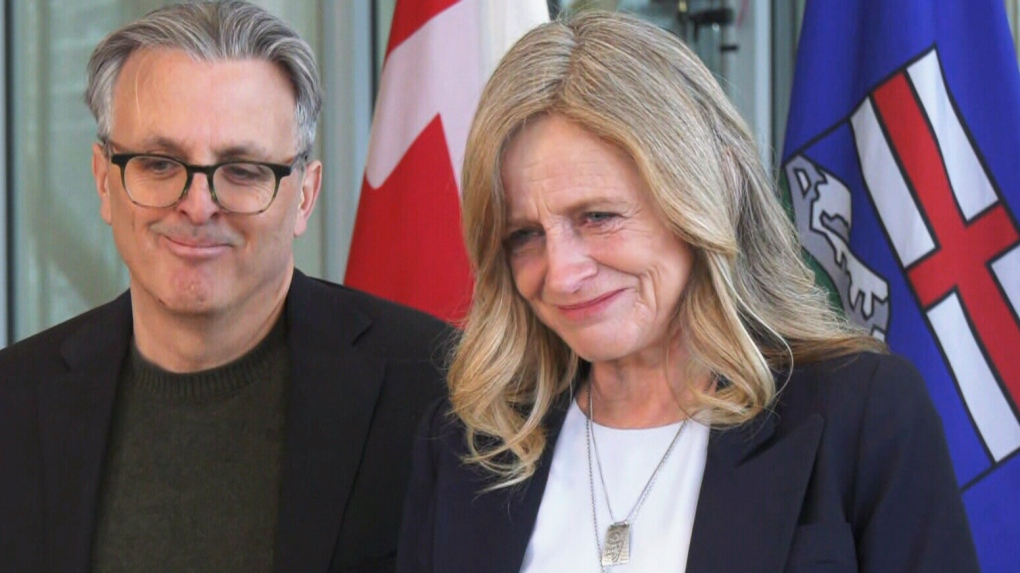
Redford’s Throne Speech: Deja Vu All Over Again

At last, we have the Throne Speech setting out Redford’s agenda.  It was eagerly anticipated by all (okay by some…well maybe a few) and finally it’s here for all of us (okay, a few of us) to dissect and discover exactly what Redford has in store for us over the coming months.

It started with the usual fanfare, literally.  That’s the beauty of reading the Throne Speech in Hansard, it comes complete with stage directions:  [The Premier, the Clerk, and the Sergeant-at-Arms left the Chamber to attend the Lieutenant Governor]  [The Mace was draped]  [A fanfare of trumpets sounded] [Preceded by the Sergeant-at-Arms, His Honour the Lieutenant Governor of Alberta, Colonel (Retired) Donald S. Ethell...and Mrs Ethell, their party, the Premier, and the Clerk entered the Chamber.  His Honour took his place upon the Throne]*

Gives you goose bumps, doesn’t it.

The Lieutenant Governor couldn’t resist commenting on the fact that Alberta was blessed with a female Premier and a female Leader of the Official Opposition.  “They’re taking over the world”. [laughter]* 

And then…the speech.  And what a strangely insipid speech it was.  Here, judge for yourself:

  • Global economic recovery is underway (really?) and demand for our energy and skills will grow.
  • Albertans chose to “engage with the world around them and through investment and innovation [Alberta will] play a leading role in making our world a better place”. (Read: wisely voted PC not Wildrose).
  • The government will find the right balance between progressive and conservative thinking.  (Shot across the Wildrose bow—the PC’s intend to occupy both the centre and the right of the political spectrum).
  • Examples of progressive thinking are subsidized child care payments and more family care clinics (notwithstanding the Alberta Medical Association’s legitimate concern that FCCs will cannibalize existing primary care clinics).
  • Examples of conservative thinking are no new taxes, no sales tax and multiyear budgets to control public spending. (Read: public services will continue to be dependent on revenue from the extraction of fossil fuels and budgets (and people) will live or die based on the success, or lack thereof, of the oil and gas industry).
  • There will be greater openness and transparency in government (this would be a good thing if it really happens).
  • Critical public sectors—education, health and municipal services—will receive stable funding in the form of three year budgets.  (Hopefully the public has forgotten that the last Premier and his health minister, Mr Zwozdesky, rebuffed all criticism of the health portfolio by touting their five year budget for healthcare, oops.)
  • Business will have even greater “freedom” to “operate without interference” because the government will “simplify regulatory burdens” while at the same time advancing world-leading resource stewardship and responsive natural resource development   (that’s confusing if not downright contradictory).
  • Redford will push the Canadian energy strategy with the provinces and pursue improved environmental monitoring with the Feds to create a “comprehensive, transparent and scientifically credible system”  (ie. she’ll continue the dialogue to promote fossil fuels in the face of growing resistance from BC and ongoing efforts by the Feds to hack federal environmental monitoring to shreds).                

Redford pitched her government as the government of change.  One that’s responsive Albertans’ desire “…to look forward…to look outward…to be citizens of the world”**but there’s nothing new here, just the same old reliance on fossil fuel revenue coupled with the same old tinkering with public services, notably healthcare and education.  This strategy failed Albertans in the era of Klein and Stelmach and there’s nothing in the Throne Speech to indicate that it will succeed today.

[Preceded by the Sergeant-at-Arms, Their Honours, their party, and the Premier left the Chamber as a fanfare of trumpets sounded]  [The Mace was uncovered] [The Premier returned to the Chamber].***

And the business of governing carried on just as before.

* Hansard May 24, 2012, p 5

**Calgary Herald, May 25, 2012, p A11

***Hansard May 24, 2012, p 11

Posted in Alberta Health Care, Energy & Natural Resources, Politics and Government | 2 Comments

Did Facebook Do A Face Plant?

If Facebook is such a good investment why did Zynga’s second quarter profits drop 90%?  To understand how Zynga is relevant to Facebook’s success one needs to read FB’s prospectus (oh joy).* There we learn that FB’s success is based on creating “value” for 3 types of customers.

The “user” group is the 845 million people who post on FB each month.  Half of them are grandparents posting pictures of their grandchildren, the other half are people posting pictures of their dinner (sorry, couldn’t help myself).  The second group are “advertisers and marketers” who post personalized ads based on information FB harvests from the user group and sells to the advertisers/marketers.  This explains why I get ads telling me about the 50 things I should do in Calgary before I die while my hairdresser gets ads promoting the best gay bars in town.

The third group are “developers” who use FB to launch applications (often games) and  drive traffic to their sites.  They also access FB’s payment structure to get paid for “visual and digital goods”.  What?  A “visual/digital good” is the bale of virtual hay you buy to feed your virtual cow on the virtual farm you’ve bought from Zynga’s Farmville. 

The FB business model is dependent on the user group as a source of personal information which can be sold to the advertising/marketing and developer groups.  Unfortunately the needs, desires and legal rights of the user group frequently conflict with the economic drivers of the advertising/marketing and developer groups, resulting in a business model is fraught with knotty contradictions.

The biggest irritant to the user group, aside from a lack of privacy, is advertisements.  Some FB users simply ignore the ads, other install ad blockers to eliminate them altogether.

The advertiser’s lack of exposure is exacerbated by the fact that FB users are accessing FB on their cell phones.  In Dec 2011, approximately half of the 845 million monthly users accessed FB through their mobile devices.  There are no ads on a mobile phone—the screen is too small.  Ad revenue is dropping.  In 2009 advertising revenue accounted for 98% of all revenue, in 2010 it dropped to 95% and in 2011 it dropped to 85%.  This hole in the revenue stream must be replaced by increasing the size of the user group, developing ways to put ads on to mobile devices (and further irritating the user group) or developing alternative revenue sources.  And there lies the rub.

FB’s business model is based on FB’s unimpeded ability to sell personal information from its users to advertisers, marketers and developers.  This ability is under attack here and abroad.  In 2009 the Canadian Privacy Commissioner ruled that FB breached Canadian privacy laws by sharing users’ personal information with developers (such as Zynga).  The recent dust up with German data protection officials demonstrates that this problem won’t go away anytime soon—German federal agencies were ordered to take down their FB pages and disable the “Like” button on their websites.   

FB fought these decisions but recognizes that evolving US and foreign privacy and data protection laws could seriously harm its business and that it is powerless to do anything about it. 

So, is FB a good investment?  The fact that FB’s IPO roared out of the gate at $42.05, sputtered and settled gently at $38.23 (just 23 cents above its “reserve price”) does not engender investor confidence.  Particularly when one takes into account the fact that the FB IPO was a “bought deal” which required Morgan Stanley, JP Morgan and Goldman Sachs, as underwriters, to step in at the 11th hour to prop up the share price to prevent it from sinking below $38.

There are two explanations for why the IPO shuddered.  The first is that the investment bankers did such a good job pricing the investment that everyone knew that $38 was the right share price (tell that to the underwriters now holding millions of FB shares on their books).  The second is that a market capitalization of $104 billion—a multiple 100 times earnings—FB will require “bold new revenue streams to justify the mammoth valuation”**and FB’s contradictory business model doesn’t outline a clear way to get there from here.

The correct explanation will emerge in the fullness of time, in the meantime I’m keeping an eye on Zynga.***If Zynga says goodbye to FB, I’ll pack my virtual cow into my virtual truck and mosey over to an investment more closely tied to the real world.

*Facebook, Inc. Form S-1 Registration Statement filed Feb 1, 2012

**Constine and Cutler in TechCrunch Online May 17, 2012 

***Zynga provided 12% of FB revenue in 2011. If Zynga reduces its use of the FB platform, launches games on competitor platforms or becomes dissatisfied with its relationship with FB then FB’s financial results will be adversely impacted.  Registration  Statement p 18. 


Posted in Uncategorized | 5 Comments

A $500 Dinner and a $15 Cab Ride

I left the $500 a ticket fundraising dinner for Premier Redford and stepped into the cab.  I was crestfallen and concerned.  The reason for my unease became crystal clear when my cabbie, a lanky young Frenchman, asked what all the fuss was about (people were streaming out of the Telus Convention Centre and he knew something “big” was going on).

His question kicked off a fascinating conversation as we raced through the city streets taking a “shortcut” to my home.  (It really was a shortcut and not just an excuse to crank up the fare).

It’s the Premier’s Dinner I said.  Oh, he said, did she say anything interesting or was it blah blah blah?

Hmmm.  She started with a slick PR video—inspirational music, Alison with horses, Alison with campaign supporters, Alison with MLAs, Alison’s bus, comments from all 61 MLAs (which was a nice way to introduce her team), ending with more inspirational music and words about building a better future. 

Then she took the podium and spoke about the PCs being written off only to emerge with an historic victory “stronger than ever”.  She talked about building a new future based on the traditional PC values of Peter Lougheed.  She promised to invest in public services, to build schools and hospitals and to fix public healthcare.  

She said Calgary was an exceptional city with the right expertise to make Alberta and Canada a global energy leader.  Energy was “paramount” to the PC party.  She would defend the oil sands and push ahead with her Canadian Energy Strategy.  She was committed to sustainable resource development, free enterprise and a beautiful Canada.  She’d embrace change and lead the charge.  Albertans had a special identity—true and proud. 

So back to the question:  Did she say something interesting or was it blah blah blah?  Answer:  It was blah blah blah.

To be fair, this was a fundraising dinner and not a Legislative debate so some level of blah blah blah was to be expected.  Nevertheless the Premier said very little of substance and the audience became uneasy.  They applauded politely at the appropriate moments but wondered—had she gone too far down the path of social spending?  Could she (or any government for that matter) do anything to calm the stormy waters facing the Keystone and Northern Gateway pipelines?  And, most important, could she keep the disgruntled PC voters who’d switched to the Wildrose and came back at the 11th hour in the fold?

My cabbie was not prepared to let the matter rest.  Politicians promise to build roads, he said, they should stop.  He fixed one eye on me, clearly expecting a response.  Politicians should stop building roads…?  Oh I get it, he’s talking about broken promises!  Yes, I agreed, they shouldn’t promise something and then not deliver.

He changed gears (figuratively).  Albertans are afraid of change he said.  He’d voted Liberal because governments should not stay in power too long or they stop taking care of the public preferring to take care of themselves and their friends.  Even here in Canada.  Wow…who is this kid? 

I agreed with him and he told me about politics in France.  Soon we were sitting in front of my house.  I paid the fare and he turned in his seat, introduced himself and shook my hand.  We were united in the fight for a better Alberta.  My spirits soared.  This election was a miraculous thing.  It stirred the population.  Albertans are engaged and like a dog with a bone, we’re not about to let this one go without a fight.

A $500 dinner and a $15 cab ride.  It was the best $15 I’d spent in a long long time.

Posted in Politics and Government | 10 Comments

Speak in a Loud Clear Voice

The Crystal Palace, that glorious jewel box of the London Exhibition (1851), started life as a massive gloomy shed, more like a bunker than a light filled conservatory.*  It was through the serendipitous intervention of Joseph Paxton, head gardener for the Duke of Devonshire, that the structure was transformed into an ethereal orangery which, at the time, was the largest building on the planet.

Many of us hoped that after this election we’d see a sparkling fresh government under the Dome, however unless there are radical changes we can expect another 4 years of opaque and uninspiring government.  We need our own Joseph Paxton to transform this disappointing outcome into the crystalline transparent government of our dreams.

How do we effect this transformation?  The very same way that Joseph Paxton did…by speaking in a loud clear voice.  The Duke of Devonshire was hard of hearing and hired Paxton when he was hardly more than a boy because Paxton spoke clearly in a strong voice and the Duke could understand what young Paxton was saying.

So rather than sinking into a 4 year stupor it’s time to speak to our government in a loud clear voice.

Connect with your MLA

A good place to start is with your own MLA.  It matters not whether he is PC, WR, Liberal or NDP.  He represents all of his constituents, including those who did not vote for him, so get engaged.  (I’m using the pronoun “he” because even in this post-liberation era most MLAs are male).

The Alberta Legislature website will identify your MLA and provide his email address.  Introduce yourself.  Start a dialogue, focus on the election promises that really matter to you.  Someone from his office will get back to you even if it isn’t the great man himself.

If your MLA stonewalls you (this may come as a surprise but some PC MLAs ignore their constituents because they believe they’d elect a bale of hay as long as it was painted PC blue) then find an Opposition MLA who’ll be more responsive (I guarantee it).  I communicate regularly with Liberal, NDP and WR MLAs who to a man (they really are all men) are happy to discuss the issues of the day.  If you support their policy positions, tell them, they’ll welcome the feedback.  If you don’t, challenge them.  Tell them how you, a voter with friends you can influence, rate their performance.

Communicate your views broadly

The news media were deeply engaged in this election.  The editorial board of the Calgary Herald took the unprecedented (and shrewd) step of supporting both the PCs and the WR.  Some Herald columnists went so far as to claim credit for winning the election for the Tories (yes, Robert Remington went a bit of over the top).**

The Herald’s Letters to the Editor page bristled with opinions about the parties, pro and con.  This was a landmark election and the paper’s interest in the public’s views has not waned.  So write letters to the editor telling them what you think.  Even an unpublished letter has an impact because all letters send signals the editorial board that an issue is of general public interest.  And a story that interests the public will interest the editors because it sells newspapers.

Why is this important?  Because it dovetails with the work of the Opposition which in turn amplifies your voice.   Other social media like Facebook and Twitter achieve the same results but with a less diverse audience.

Understand the issues

Communication is fine, but to be effective it must be well founded.  Given the hype of this election no Albertan can plead ignorance of the issues.  They were spelled out in detail—healthcare, education, the sustainable development of our natural resources and responsible fiscal policies.  It’s all there in the public record.  Use it to monitor your MLA’s performance.

MLA Watch***

It’s time we used crowd sourcing to track the performance of our MLAs and their parties.  Pick your own MLA or the cabinet minister responsible for an issue you care deeply about.  Monitor his performance and publish your findings here or on an MLA Watch page.

And that leads me right back to where I started—connecting with our MLAs and making them accountable for their promises, providing feedback when they’ve got it wrong (or right) and speaking to them, often and in a loud clear voice.

If the PC MLAs ignore us this time, we’ll have to build our own crystal palace under the Dome.  We came close to a minority government in this election, next time we’ll have to push it across the finish line.  None of us deserve to be stuck with a musty old shed any longer.

*At Home, Bill Bryson, pp 7 – 13

**Calgary Herald Online, Apr 28, 2012,

***My thanks to Jill Brown and Carol Wodak for the inspiration


Posted in Politics and Government | 6 Comments

Did Robocallers Sandbag the Alberta Election?

Before we turn the page on this election, I’d like to say a word about robocalls…I like them. No, the stress of this election has not unhinged my mind; I’m serious.  Robocallers are like people, each with their own unique personalities.  Over the past 28 days I’ve met 3 distinct robopersonalities:  the “push” caller, the “press-a-#” caller and the granddaddy of them all, the “I care, I really care” call from the candidate him or herself in all of his/her pre-recorded glory.

The “push” caller

This insidious little robocaller is a Trojan horse who appears to be genuinely interested in your opinion but is subtly undermining the other candidates.  Did you know that Redford’s government is going to spend millions of your tax dollars to send a rocket to the moon?  You didn’t?  Of course not.  Because it’s not true.  “Push” robocalls started out with a bang at the outset of the election but fizzled quickly when the public and the other parties complained.  Guess the Trojan horses weren’t quite as subtle as they thought.

The “press-a-#” caller

My favourite “press a #” robocaller was Susan (and not just because we share the same first name).  Susan is a very perky, very loud young woman who urged me to answer one simple question.  If you had to vote tomorrow who would you vote for?  Press #1 for Raj Sherman’s Liberal Party, press #2 for Brian Mason’s NDP party, press #3 for Alison Redford’s Progressive Conservative party, press #4 for Danielle Smith’s Wildrose party, press #5 for Glenn Taylor’s Alberta Party, press #6 for the Evergreen party, press #7 for the Communist party (we have a Communist party??), press #8 for Undecided.  By the time Susan finished with the instructions I’d forgotten the number representing my party and ended up pressing #8 Undecided.  One thing Susan could do to make her poll more interesting is give us the option of pressing #9 None Of The Above and allowing us to type in T-H-E-G-O-L-D-F-I-S-H-P-A-R-T-Y.

The “I care, I really do” caller

I received robocalls from every party leader and listened to each one of them with the exception of Danielle Smith (my husband picked up Danielle’s call and hung up before I could wrestle the phone out of his grasp).  Roboleader calls are finely crafted and complex.  The leaders have a mere 90 seconds to deliver a message that will (hopefully) capture your vote.  Consequently these calls follow a predictable pattern:  (1) I believe in [insert party platform on healthcare, royalties, environment, etc] (2) those other guys believe in [stupid nasty] policies that will drag Albertans to a previously undiscovered circle of hell, and (3) I care, I really do, so vote for me and a rosy future awaits us.

After I’d listened to all of the roboleaders, I couldn’t remember a single thing any of them had said…with the exception of Raj Sherman—not because he said anything particularly brilliant but because in true Rocky Balboa fashion he said “I’ve got your back”.  I don’t think anyone, robo or real, has ever told me that they’ve got my back.  That was memorable…but not enough to swing my vote over to the Sherman Liberals.  (By the way, why are they now called the Sherman Liberals?  What happened to the liberal Liberals?)   

Unlike me, my friends loath robocalls.  One yelled obscenities into the receiver until she realized that without a “Press #0 Obscenity” option her longshoreman-like opinions would not be registered.  Another delighted in misleading robocallers by pressing #4 when she really intended to vote #1.   (Is it kosher to play mind games with robocallers?)

Time to get serious

Where does all this silliness leave us?  Not in a good place, I’m afraid.  Robocalls played a vital role in this election.  They provided raw data to pollsters who worked their statistical magic and issued overheated predictions of a WR sweep into a majority government.  Unfortunately for the public, the pollsters got it dead wrong and the PCs trounced the WR with a stunning 10 point margin.

What happened?  The pollsters argue that this dramatic reversal was not the result of inadequate polling methodology—what else would they say…that they’re idiots so don’t bother hiring them in the future—but rather a dramatic change of heart by the committed WR electorate in the last days of the campaign.

Fine, but the real question is what caused the 11th hour swing?  Sure the WR bozo eruptions and fortress Alberta talk took its toll, but could it be that the spectre of a WR majority government as predicted by the polls and reported by the media ad nauseum spooked the electorate who simply wanted to bring the PC party to heel not decimate it. Rather than risk this outcome, voters abandoned the WR.  The deluge of polling results magnified this course correction to the point where the defecting WR voters triggered a PC landslide.

It makes one wonder.  Is there any value in continuous polling and 24/7 reporting of the results?  If so, to whom?  The political parties conduct their own polls and develop a pretty accurate idea, riding by riding, of what to expect from the electorate.  The only group that benefits from continuous polling is the media—dramatic poll results create sensational news stories.  Unfortunately they also confuse and mislead the public creating the boomerang effect we witnessed in this election.

It’s not nice to play mind games with a robocaller, but it’s downright dangerous when a pollster plays mind games with the voters.  So here’s a message to loud perky robo-Susan:  although I enjoyed meeting you and your robocaller friends in this election, I will NOT be responding to any robocalls the next time around.  I refuse to participate in an unstable polling process that spits out wildly gyrating results which do nothing more than destabilize the electorate.  Press #1 if you agree.

Posted in Politics and Government | 9 Comments

Strategic Voting…are you kidding me?

This is going to sound harsh but here goes….listen up you lily-livered-small “l” liberals (eg. Liberals, NDP and Alberta Party members) there’s NO SUCH THING as a “strategic vote” in the upcoming Alberta election.  A “vote” is an exercise of choice.  If your only choices are “the devil you know” (PCs) or “the devil incarnate” (Wildrose) then you’re choosing between the devil and the devil.  That is not a “choice”;  that’s an act of resignation and despair.

Furthermore a “strategic vote” in this election is not even remotely strategic.  A decision is “strategic” only if it helps you reach a goal or objective.  Re-electing the PCs under a leader to be determined later (let’s face it, the old guard will dump Alison as soon as this debacle of an election is over) is not moving the centre-left any closer to its goal of forming government.  So ask yourself what is strategic about refusing to vote for the centre-left at a time when the PCs are most vulnerable? 

The answer given by many centre-lefties is galling (I told you this would sound harsh). They won’t vote for the candidates who best represent their values because they’re afraid.  They’ve swallowed the PC line that only the PC party can protect Albertans from the wild-eyed fanatics because the centre-left is too diffuse and will split the vote.  Really?  

This is a very volatile election.  There are 2.3 million voters in Alberta.  More than 40% will turn out (bet on it) on election day.  Given this environment it’s a little early for the PCs to call the results in each riding, don’t you think?

Instead of stampeding like a startled gaggle of geese—no wait, not geese, they’re feisty birds, more like frantic lemmings pushing each other off the political precipice—we would be well advised to heed the words of others who are watching this election very closely.

John Ralston Saul, the philosopher, writer and former Albertan said “the concept of an open, inclusive and egalitarian society…is reliant on individuals seeing themselves as having the power to shape their civilization.”* Let’s not meekly give up our power to shape Alberta’s society simply because the PCs have frightened us into “voting strategically”.

And be aware that by “voting strategically” we’re actually punishing the centre-left parties and the MLAs who’ve struggled long and hard to protect the social institutions we hold dear—public healthcare, public education, a thriving environmentally sustainable economy, an equitable royalty/tax structure and, most important, a democratic transparent government.

Mr Mason, NDP leader, said it best when he urged voters to ignore the “family feud” in the conservative camp and elect as many centre-left MLAs as possible because they will hold the balance of power in the Legislature for the next 4 years.  (Of course he’s hoping that these power brokers will be NDP MLAs, but that’s your call).

If John Ralston Saul and the opposition party leaders can’t convince you, how about Calgary Mayor Nenshi?  He said “It’s always best to vote for someone rather than against someone”.** That deafening roar of approval you just heard came from Mayor Nenshi’s supporters who stuck with the underdog against overwhelming odds and had the supreme satisfaction of seeing him defeat two well known and well funded rivals.

It’s time for the small “l” liberals to man up, to fight the panicky urge to vote strategically and replace it with the analytical process of thinking strategically.  Take a page from John Ralston Saul—stay cool, very very cool.  Listen carefully to what your local MLA candidates are saying.  Weed out the rhetoric, the fear mongering and the overblown promises.  And then vote, coolly, calmly and analytically.

Here’s how I worked through my decision:

  • Not PC because Alison failed to deliver on the promises she made in the leadership race (it doesn’t matter why);  also she’s disavowed any responsibility for her part in the bad decisions made by the PCs during the 4 years she was Justice Minister.  I’m holding her accountable.  Her “I am frightened” campaign was the last straw.  A “frightened” MLA does not deserve my vote.
  • Not WR and not just because of their tolerance of intolerant MLAs (how did those yahoos make it through the candidate screening process?) but because the WR is founded on the belief that the free market is the best solution for all that ails us.  Economic formulae may be elegant but they create a false sense of reality;  when the formula fails to deliver the expected results, the fallout is devastating (the financial meltdown in the US is a prime example).
  • Carefully considered the non PC/WR candidates in my riding which, as luck would have it, is Calgary Elbow, Alison Redford’s riding.  Normally I’d turn to change.alberta.ca for guidance, but there is none.  So I attended forums, met the candidates and did my on-line research.  I’ve made my decision and I’m comfortable with it.

We’re at a fork in the road in Alberta politics.  It’s time to decide.  Do you break left or break right?  You have a split second to consider your decision.  If you break right and vote PC make sure you’re voting FOR the PCs and not AGAINST the WR.  That split second decision will determine whether you are willing to spend the next 4 years governed by fear.

Good luck on election day.  See you on the other side once the dust settles.

*Calgary Herald Online, Apr 18, 2012

**Calgary Herald, Apr 20, 2012, A5 


Posted in Politics and Government | 27 Comments

Notwithstanding the “notwithstanding clause”

Alison Redford has been “frightened” and “fearful” for the last 2 weeks.  The cause?  The Wildrose proposal to allow a citizen initiated referendum.   Her fear is overblown.

Before I tell you why let me be clear about one thing.  I do not support the Wildrose position on conscience rights or using a referendum to slip conscience rights into legislation, however I do not agree with Redford that all referenda are bad.

Redford’s argument is based on her belief that the Wildrose process to protect human rights—vetting the question with a federal judge to ensure it doesn’t violate the Charter of Rights and Freedoms—is a sham.

After the Leaders Debate Redford said:  “It’s important, I believe, to understand that there is no way that an issue will not be dealt by a judge favourably as long as we use the notwithstanding clause”.*  In other words, a federal judge must always allow a referendum to go ahead if the Wildrose shields the legislation by relying on the “notwithstanding clause”.

This is simply not true.

Here’s a quick constitutional law lesson:  The Charter prohibits the federal and provincial governments from passing laws that violate our rights and freedoms (which are nicely set out in the Charter).  But Section 33 of the Charter allows the feds or the provinces to pass laws which operate “notwithstanding” the protection of our rights and freedoms under the Charter.  So if a provincial statute says that it’s operational “notwithstanding” the Charter that statute can violate our rights and freedoms.  But there’s a caveat.

What Redford failed to mention is that such laws will not stand if a court rules that the violation of our rights and freedoms is unjustified.  As a result, the “notwithstanding clause” is rarely used for two reasons (1) the burden of proof is on the province to demonstrate why the violation of these rights benefits the rest of society and (2) it’s political suicide to create legislation that violates basic human rights.

Whether a law stands or falls is determined by a court after it’s been passed.  The Wildrose safeguard goes one step further.  It requires a federal judge to determine the legal validity of the proposed law before the referendum is allowed to go ahead, not after the statute has been passed.

Only a handful of provinces have inserted the “notwithstanding clause” into a piece of legislation.  Quebec tossed it into all of its laws in a fit of spite when the Charter was enacted (it was removed when the Liberals ousted the PQ).  Saskatchewan used it once to legislate workers back to work (it turned out they didn’t need it, the legislation was not offside), the Yukon used it in a land use statute that was never proclaimed and Ralph Klein’s PC government used it in 2000 to prohibit same sex marriages.  (Another curious fact that Redford failed to mention).

Klein’s PC government enacted Bill 202 which amended the Marriage Act by defining “marriage” as a union between one man and one woman “notwithstanding” section 15 of the Charter which guarantees equal rights to all individuals.  Bill 202 passed with 32 votes in favour and 15 against.  The PCs who voted in favour of the Act to ban same sex marriages included Wayne Cao, Heather Forsyth, Ty Lund, Ed Stelmach and Gene Zwozdesky.  The PCs who voted against the Act to ban same sex marriages included Dave Hancock and Guy Boutilier.  Boutilier and Forsyth are now Wildrose MLA candidates.  See the full list of who voted for and against below.**

In 2005 the federal government passed Bill C-38 which defined marriage as a union of 2 persons.  Klein investigated creating new administrative hurdles to prevent same sex marriages but was told by legal experts that with the new federal law in place he’d lose a Charter challenge.  The Marriage Amendment Act expired and is now (thankfully) no longer law in Alberta.

Bottom line:  Notwithstanding the “notwithstanding clause” Redford has nothing to fear from a citizen initiated referendum—except the prospect of going down with the PC party at the end of its 41 year reign.      

*Global TV Post Debate Scrum:   http://www.globaltvcalgary.com/video/redford+in+postdebate+scrum/video.html?v=2222375828&p=1&s=dd#decision+alberta

**Votes In favour of the Marriage Amendment Act which prohibited same sex marriage:  Burgener, Cao, Coutts, Doerksen, Ducharme, Forsyth, Friedel, Haley, Havelock, Hlady, Johnson, Jonson, Klapstein, Kryczka, Langevin, Lougheed, Lund, Marz, McClellan, McFarland, Melchin, Paszkowski, Pham, Shariff, Stelmach, Strang, Tannas, Tarchuk, West, Woloshyn, Yankowsky, and Zwozdesky

Votes against the Marriage Amendment Act:  Bonner, Boutilier, Dickson, Graham, Hancock, Jacques, MacDonald, Magnus, O’Neill, Pannu, Renner, Spaers, Severtson, White, Wickman


Posted in Politics and Government | 14 Comments